

On Golan Heights, IDF fights to keep Israel safe and out of Syria
Syrian rebels, Hezbollah, IS and other extremist terror groups threaten the tense quiet on the northern border, senior officer says
 Add ToI as a Preferred Source on Google
Judah Ari Gross is The Times of Israel's religions and Diaspora affairs correspondent.
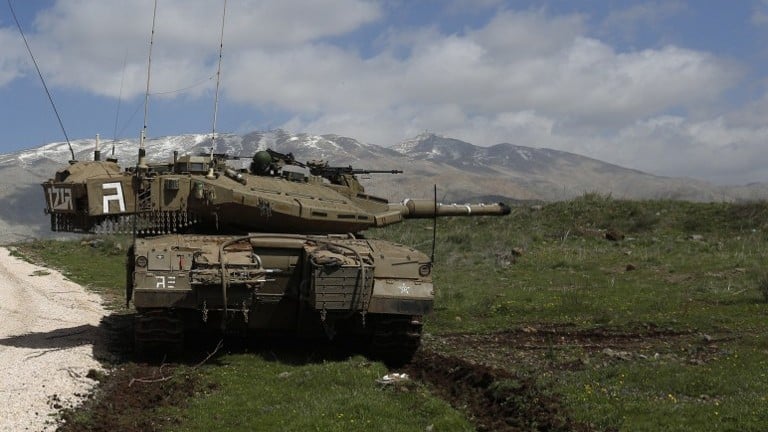
The relative quiet on Israel’s border with Syria can be shattered by Hezbollah, the Islamic State or another fringe jihadist group seeking to make a statement about its dedication to the fight against Israel, a senior IDF official warned on Monday.
For almost 40 years the Israeli-Syrian border was one of the country’s quietest, with a United Nations presence, in the form of UNDOF soldiers, helping to keep the peace.
But in the five years since the outbreak of the bloody Syrian civil war, which according to some estimates has claimed the lives of nearly half a million people, that border has become a powder-keg.
Intentional and inadvertent attacks by the larger rebel groups, as well as the potential for small terror cells to take advantage of the lawlessness and mayhem in Syria to carry out attacks against the Jewish state, threaten to plunge Israel’s northern border into a conflict no one would want.
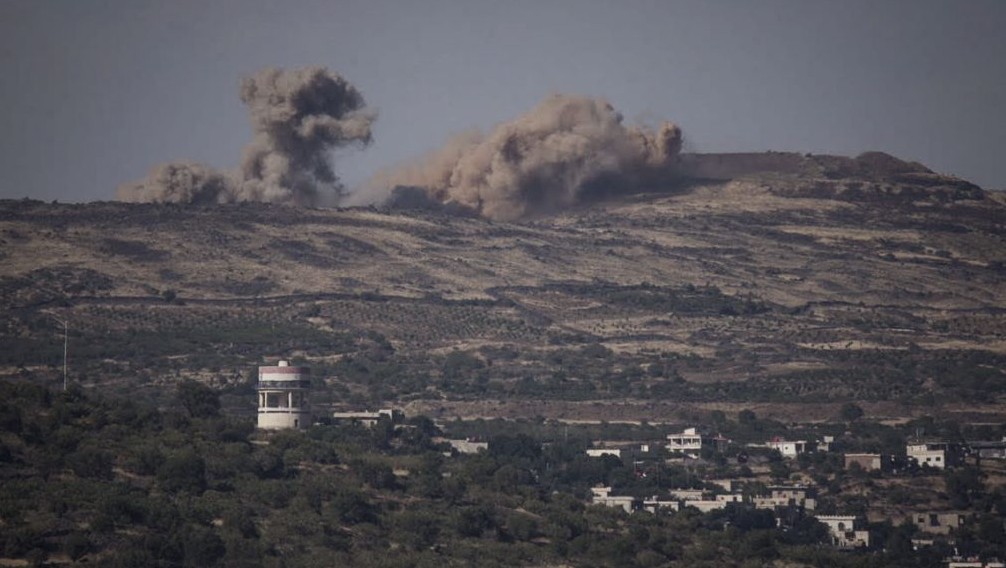
The larger groups — the al-Nusra Front and the Yarmouk Martyrs Brigade — which control the areas surrounding the Syrian border, have little incentive to attack Israel at this stage, the officer from the IDF’s Northern Command said.
The more immediate threat comes from jihadi organizations that are less interested in capturing territory, and more interested in either anti-Israel ideology or a desire to please Iran by carrying out attacks against the Jewish state, the officer said.
Hezbollah, for instance, has a small presence in the Assad-controlled city of Hader, but has much less infrastructure there than it does in Lebanon. That makes it a prime base of operations, as there’s less for the IDF to destroy in retaliation for an attack.
“It’s kind of a no-man’s land, so you can [carry out attacks] without having strong actions taken against you. That will keep up their story that they’re still fighting the IDF and still fighting Israel, but without very harsh consequences,” the officer said.
To stay out of that morass, but still stay safe, Israel must strike a balance between keeping its cool in the face of accidental spillover, while maintaining its vigilance against deliberate attacks, the senior IDF official said.
Our neighbors to the north
Al-Nusra has captured the northern parts of the border with Israel, while the Yarmouk Martyrs Brigade controls an area surrounding the southern portions of the border.
The two have been preoccupied fighting each other for dominance, in addition to their struggle against the Assad regime, putting Israel relatively low on their priority list, analysts have said.
‘They know better than we do, how strong we are and how hard we can hit them’
The precise number of fighters in these rebel groups is difficult to ascertain, as these organizations frequently both join forces and fall apart. But according to most estimates, the Yarmouk Martyrs Brigade has several hundred to one thousand members, while al-Nusra has several thousand fighters.
“Now the strongest organization, which has a few tanks and some light machinery, is al-Nusra. But we don’t see al-Nusra starting a fight against Israel. They know better than we do, how strong we are and how hard we can hit them,” he said.
But al-Nusra is known to have ties with the al-Qaeda terrorist organization, and in a bid to remind its benefactors of its devotion to the destruction of Israel, their fighters could carry out a surprise attack against troops or civilians, the officer said.

The Yarmouk Martyrs Brigade, meanwhile, has reportedly aligned itself with the Islamic State, which makes it one of the primary threats to Israel on the Syrian border, according to the IDF.
“They have an ISIS ideology, even if they’re not getting orders from ISIS. We consider them the most extreme Islamic group on the border, even though they are not pursuing actions against Israel today,” the officer said.
Just a matter of a decision
Looking out across the Golan Heights orchards on the cloudy, blustery day, past the border fence and into Syria, the senior Northern Command official pointed out just how close the pastoral Israeli countryside is to the brutal violence that has rocked the Syrian people for five years — and how easy it would be for Israel to be dragged into the conflict.
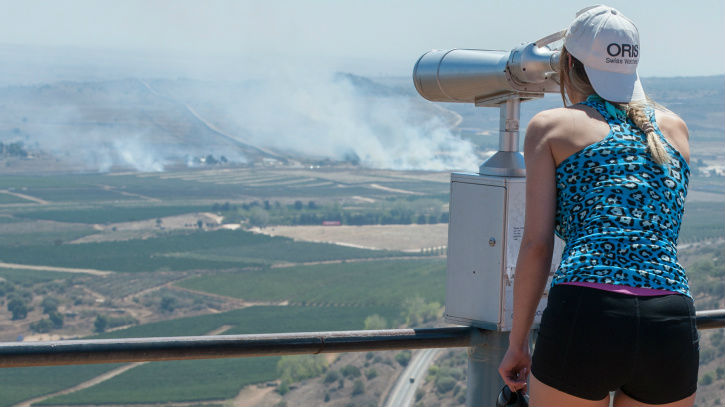
“In Qahtaniya, just over the border line behind Quneitra, ISIS used a car bomb against some Nusra rebels,” the officer said, referring to a late 2015 attack by the Islamic State.
This month in the village of al-Ashe, farther south in the Quneitra Province, a car bomb also reportedly killed 18 al-Nusra members, though no group has officially taken responsibility from the attack, according to Al-Jazeera.
“The decision to bring that car bomb from deeper in Syria and use it against local rebels or to explode it on our border crossing — it’s just a matter of decision. We can’t exclude that possibility,” the IDF officer said.
‘You don’t see the all the tanks and the missiles and the drones — but they’re here.’
“But if you ask me where I prefer to face the enemy, it’s on the border. I’m a lot more prepared to do that here than in Tel Aviv. You don’t see all the tanks and the missiles and the drones— but they’re here,” he said, referring to the thick morning fog that impaired our visibility.
“And if they need to operate across the border, they’ll do that,” he added.
There have already been some deliberate attacks against Israeli forces and civilians, mostly in the form of light gunfire at IDF jeeps, in addition to the occasional errant mortar or missile fire on the Golan Heights.
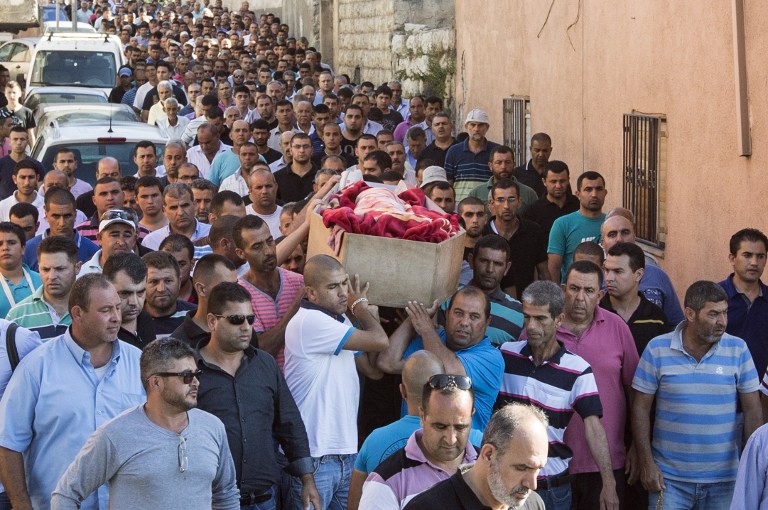
In July 2014, a 15-year-old Israeli teenager was killed when the car he was traveling in was struck by an anti-tank missile, in what the IDF described at the time as an “intentional attack.”
But occasional sniper fire or RPG is only the tip of the iceberg of possible terrorist attacks from Syria. Car bombs, kidnappings and large improvised explosive devices have all been identified as potential forms of attack that could be carried out against Israel, the IDF has said.
“[Terrorists] can drive a car up to the border and decide if they want to fire a rocket at an Israeli target or cut the fence, come in and try to kidnap a local farmer,” the officer said.
“That’s why we keep good intelligence and good control, to be prepared for that scenario,” he added.
Lighting the powder-keg with errant fire
The threat from Syria is not only intentional attacks, but also spillover from both the rebel infighting and the battles against Assad’s forces, which has the potential to escalate the current tense quiet into conflict.
While Israel does not want to be dragged into the chaos of the Syrian civil war, the IDF cannot abide breaches of Israeli sovereignty in the form of errant mortar fire or other spillover from the fighting in the Quneitra Province.
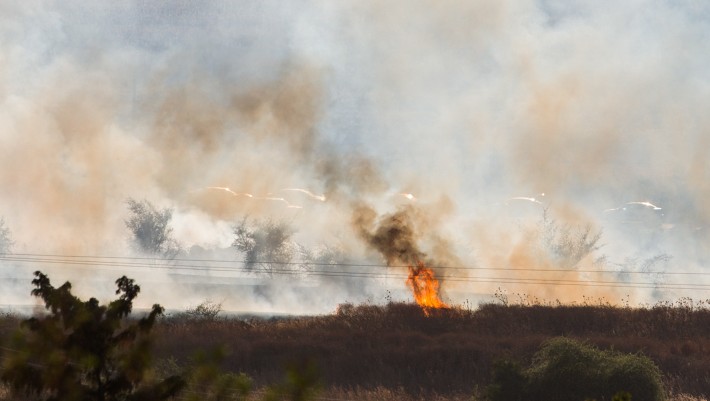
“Just a year and a half ago, a rocket hit a winery and spilled like 10,000 liters of wine in the kibbutz here,” the officer said.
An Israeli man was injured by shrapnel in that August 27, 2014 incident, but only lightly.
“We didn’t retaliate because we understand that it’s a complicated situation and we don’t want to start a fire exchange because of something that’s happening inside Syria,” the officer said.
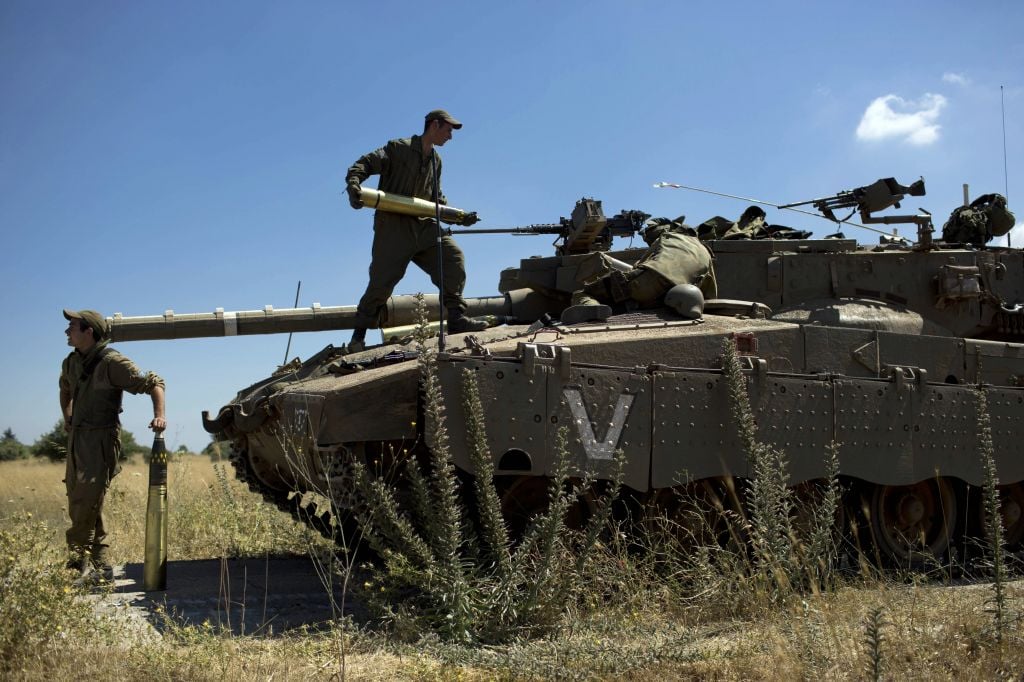
But Israel does have its limits. An intentional attack or a particularly extreme case of errant fire will warrant an Israeli response, the officer said.
“If someone gets hurt or they hit an Israeli village and we see the tank that did it, we’ll destroy it,” he said.
“We’ve done it in the past and we’re upholding our right to do that.”






The Times of Israel Community.