

On Memorial Day, honoring the fallen — and giving solace to the living
A look at two dissimilar organizations, one helping bereaved families, the other helping broken veterans put themselves back together
 Add ToI as a Preferred Source on Google
Judah Ari Gross is The Times of Israel's religions and Diaspora affairs correspondent.
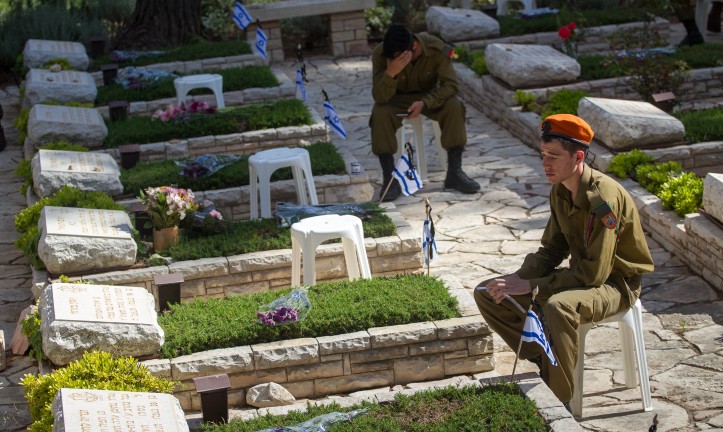
Among the classic images of Israel’s Memorial Day, Yom Hazikaron, are those of widows and orphans crying at a gravesite; of politicians talking about sacrifice, duty and honor at national ceremonies; of a flickering candle next to the portrait of a soldier who fell in battle.
But what about those who didn’t fall in battle? Those who trudge home from the war, grow older, and struggle daily with the memories of things they’ve seen, friends they’ve lost.
On Memorial Day and throughout the rest of the year, the dead — and the families they leave behind — need to be cared for. But so do the living. Two very different, but complementary, organizations look to provide support.
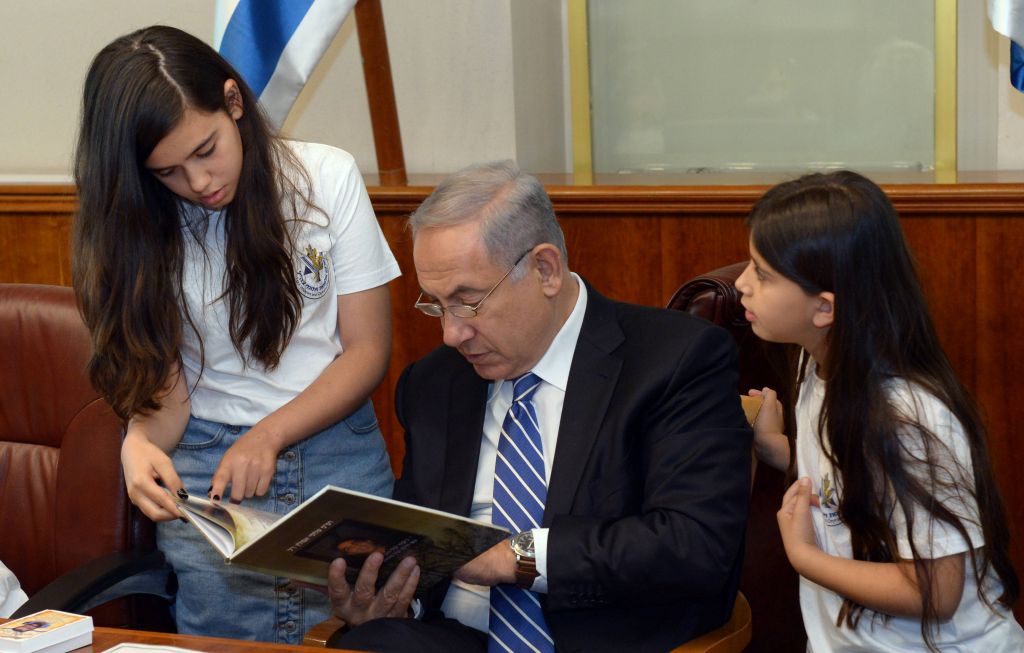
The IDF Widows and Orphans Organization (IDFWO) has existed for decades, with fundraising operations around the world. Founded in 1991, it provides material support for the families of fallen IDF soldiers, police officers, border guards and other security personnel.
Meanwhile Resisim, an organization whose name in Hebrew means shards, shrapnel or fragments, was formed just two years ago and speaks in the language of start-ups. The all-volunteer organization provides a space for veterans to tell their stories and, if need be, connects them with mental health professionals. Its name is a reference to physical shrapnel as well as the fragmented nature of memory and veterans’ need to put themselves back together after their service.
IDFWO draws some of its support from the Defense Ministry, its participants meet with the prime minister, and Israeli superstars perform in its high production value YouTube videos. Resisim, on the other hand, holds its own Memorial Day ceremonies in a nondescript courtyard.
Looking for the story
At sunset in central Tel Aviv, a group of some 300 young Israelis gathers in the space, nestled between a cropping of buildings on Mazeh Street, for Resisim’s self-described “alternative” ceremony.
Yaron Edel founded Resisim along with his wife, Hadas. He realized that though he’d served for five years in the IDF’s Nahal Brigade, after he got out “no one had ever asked [him] anything” about his service, “not parents, not friends, nobody,” he tells The Times of Israel before the ceremony.
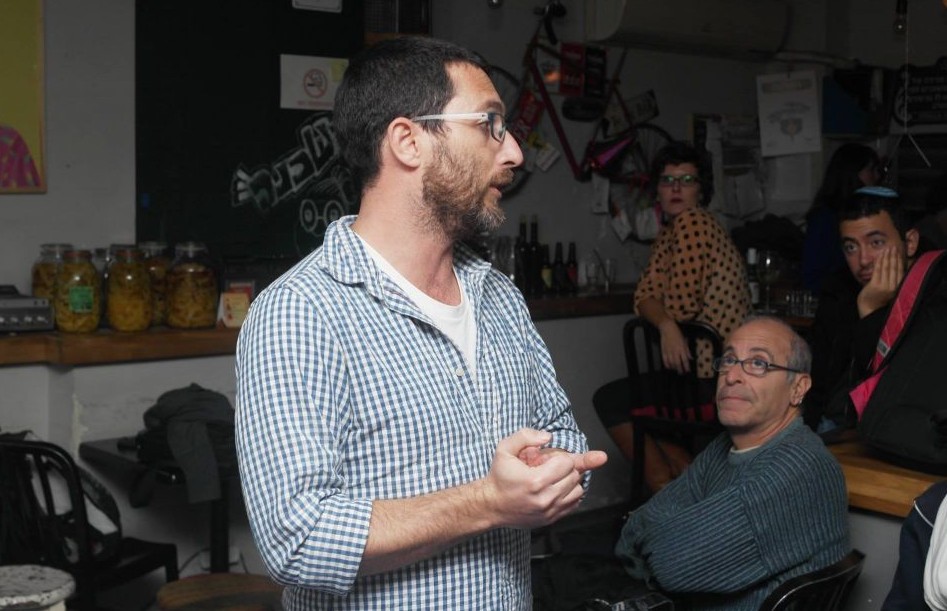
A few years ago, he came across a photograph of his unit, which fought a fierce battle with Hezbollah near the Saluki River in Lebanon during the 2006 war. Seeing that image impelled him to start speaking about what he’d been through, and he hasn’t stopped since.
With a shoestring budget and a few dozen volunteers, Edel’s organization collects the stories of Israel’s veterans.
The bearded, bespectacled Edel wants to eventually “scale up” the organization, he says, borrowing a term used mostly in the start-up scene. Instead of two ceremonies on Memorial Day — in Jerusalem and Tel Aviv — Edel wants to hold 15, in cities and towns all over the country.
Unlike the left-wing Breaking the Silence organization or the right-wing My Truth, which also put together soldier’s personal accounts of their service, Resisim has no professed political agenda.
‘We’re not looking for the truth. We’re looking for the story’
If someone’s story is about how they hate Arabs, “then that’s their story.” And if the story is about how they hate Israel and its control over the West Bank and Gaza, “then that’s their story, as well,” Edel says.
“I’ll go even further: If someone’s story is entirely a lie, that’s still their story. We’re not looking for the truth; we’re looking for the story. Everyone has their own truth,” he adds.
The few hundred participants who have gathered to hear these stories file into the courtyard, dressed mostly in jeans and untucked button-down shirts. They sit on mats or on brightly colored beanbag poofs.
The ceremony begins at 8 p.m. with the memorial siren that pierces the evening throughout the country.
Lior Raz, a former IDF commando who — along with The Times of Israel’s Avi Issacharoff — created and stars in the hit Israeli television show Fauda, presides over the event.
As this summer will mark the Second Lebanon War’s tenth anniversary, the three main speakers, a musical act and a spoken-word poet tell the small Tel Aviv crowd what that war meant to them.
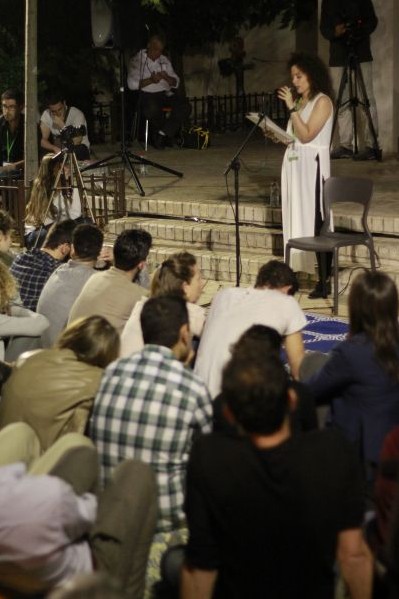
To Reut Stoller, then an Education Corps soldier in the Golani Brigade’s Egoz Unit, it meant going to the funerals of people she didn’t know. It meant “telling mothers who called that everything was OK, even when it wasn’t.”
Stoller, fashionably dressed and curly haired, begins her story with self-deprecation, acknowledging that her wartime experience of attending funerals wasn’t comparable to the experiences of those she’d helped bury. By the end of her speech, she explains that telling her story “peels back another layer” and brings her closer to personal peace.
Uri Hetz, who fought in a tank brigade’s reconnaissance unit, gives what most would consider a more traditional account of wartime service. There was the tense period waiting for his reserve unit to inevitably be brought in, and the dispiritedness and utter loss of energy when he eventually got the call.
The nighttime battles, he recalls, were “exactly like the movies, with cannons and bullets flying through the air.” He is still haunted by the image of a tank getting hit by a Hezbollah missile, seen through a pair of binoculars from two kilometers away. Hetz felt utterly helpless, he says.
“Yotam Lotan, Noam Goldman, Gilad Shtukelman and Nimrod Segev,” Hetz said, reciting the names of the tank crew members he saw perish in the attack, his voice catching slightly.
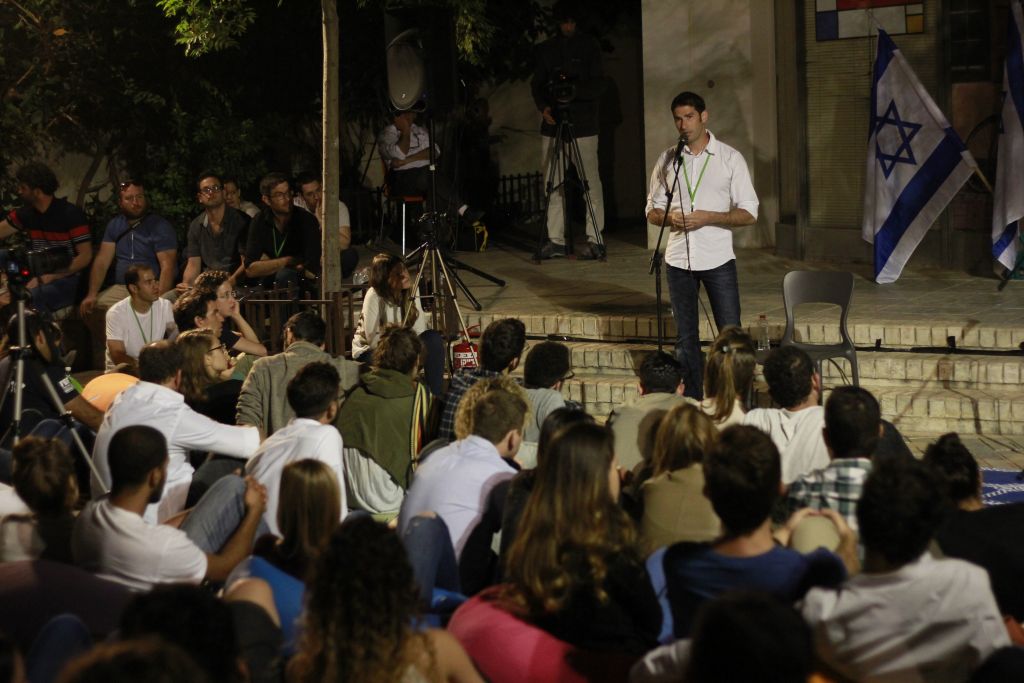
His unit was eventually extracted from Lebanon for a few days to recover. “I called my dad and asked him, ‘What am I even doing here?'” Hetz says. “My dad had fought a bunch of times. He told me, ‘You’re defending your home. You’re defending your mom. You’re defending me. You’re defending your siblings.'”
He appears on the brink of tears when he adds, “That helped me a lot, actually.”
The ceremony ends with the singing of the Hatikva national anthem.
Hugs, scholarships and getaways
For the families of fallen soldiers, every day is Memorial Day. The absence of a parent or spouse is felt not only on the state holiday but throughout the year, Nava Shoham-Solan, chairperson of the IDFWO since 2007, says.
Shoham-Solan is not just a leader of the group, but a widow herself. In the First Lebanon War, she lost her husband, Maj. Ra’anan Shoham, and was left to raise their two young children alone.
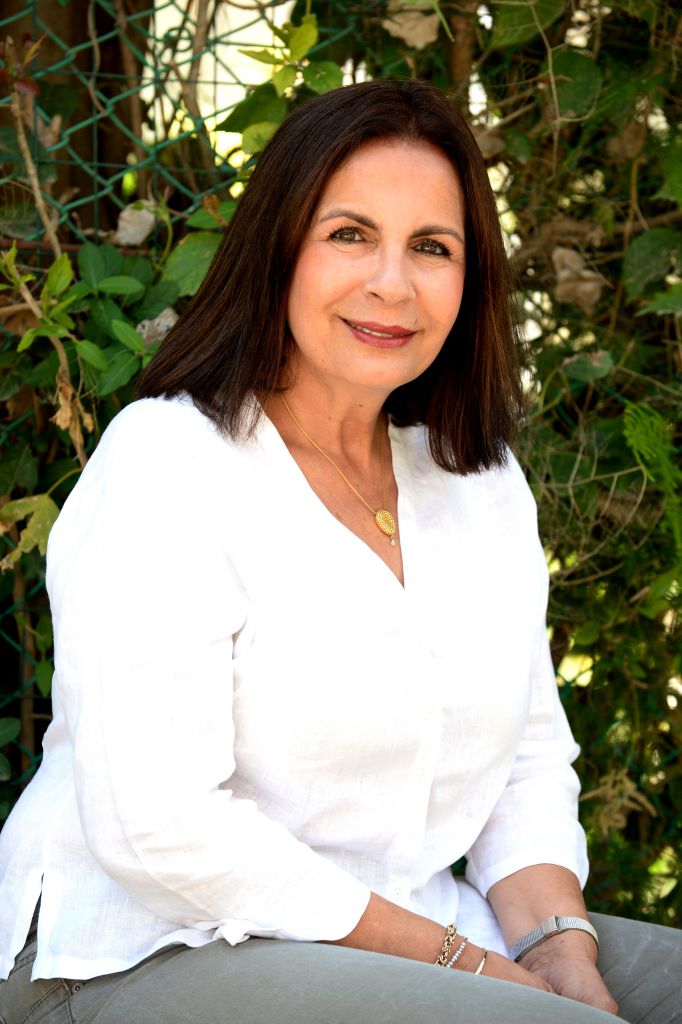
“Every day I wake up with no husband and every night I go to sleep with no husband,” she says. “It’s something that’s in your DNA. Even if you remarry or get a boyfriend, it’s not something you forget.”
Still — with the additional emphasis on the fallen and the friends and family members who don’t know what to say — Memorial Day can be a particularly difficult time for widows and orphans, according to Shlomi Nahumson, youth director for the organization.
Over a million Israelis were expected to visit the country’s 52 military cemeteries on Wednesday. To the thousands of orphans and widows among them, Nahumson wants to provide some additional comfort, he says.
The IDFWO started a program last year of sending volunteers to cemeteries around the country to provide emotional support to bereaved families.
“We will be continuing this tradition that we started last year,” he says over the phone.
Sixty-eight people were set to take part in the initiative on Wednesday, which goes by the moniker Sayeret Hibukim in Hebrew, or “Hugs Squad” in English.
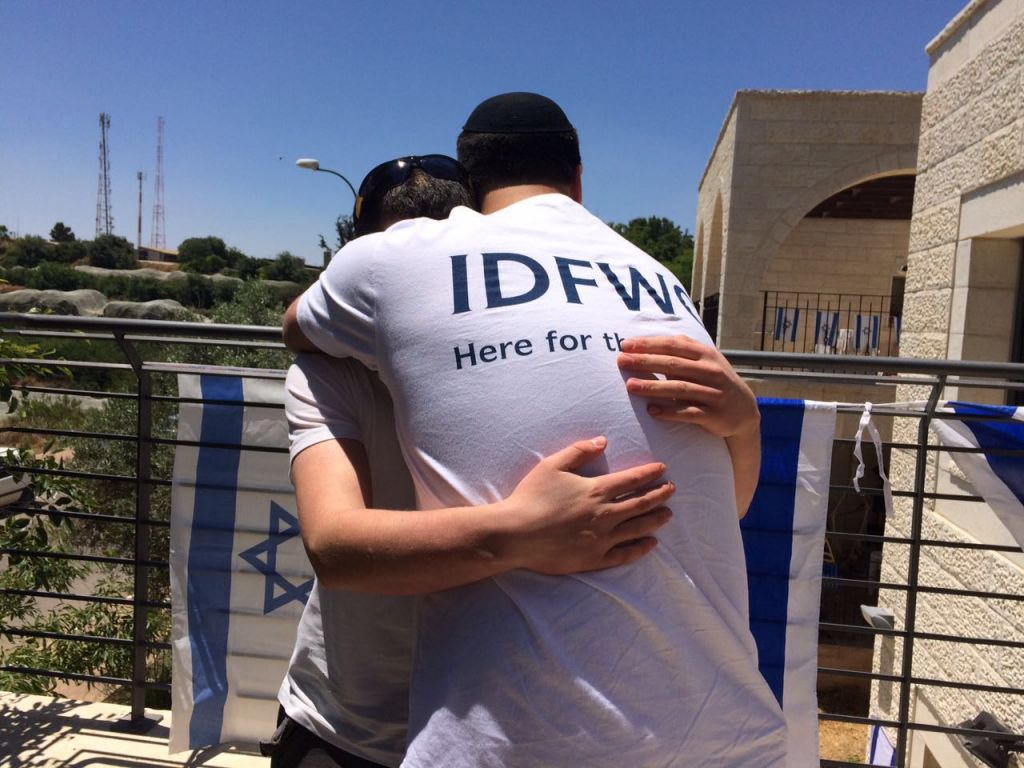
But it’s not just a once-a-year effort, with some stranger giving an uncomfortable hug, Nahumson says. It’s one more link in “a chain of connection and support.”
The volunteers are counselors from the camps the IDFWO runs four times a year — during the summer, Sukkot, Hannukah and Passover holidays. They are people the children have met before.
Those 68 volunteers worked to give families of the fallen “the strength to go on,” he says. “It’s like oxygen.”
The pain never goes away, Shoham-Solan says, “but we can give them a shoulder to cry on.”
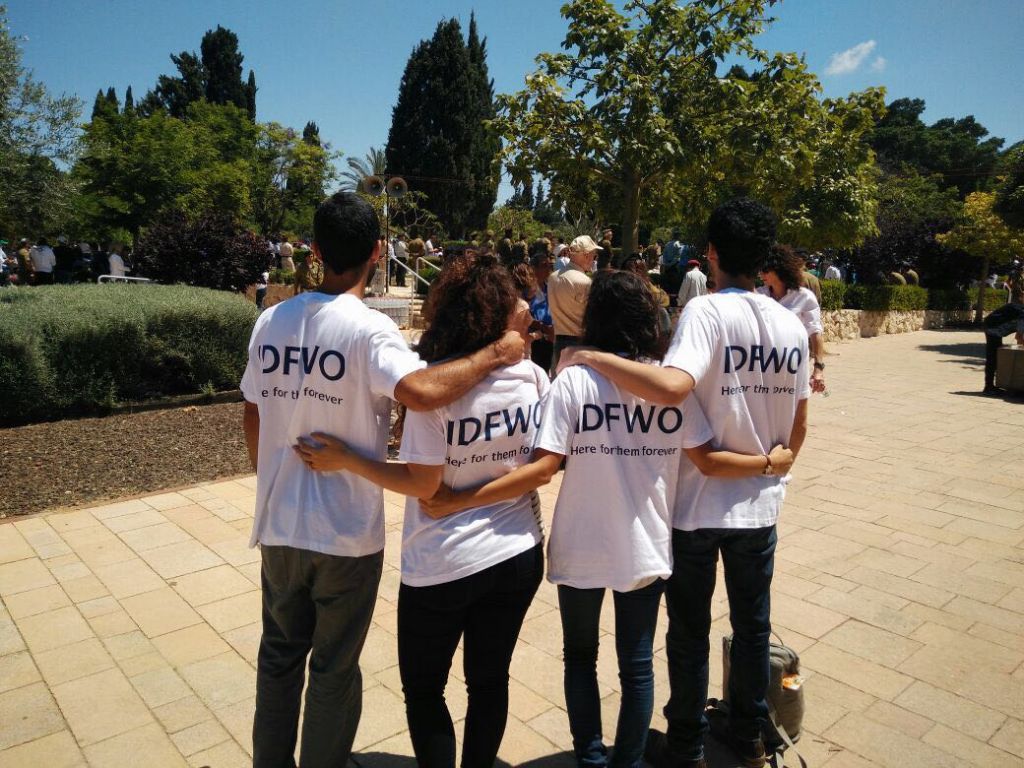
Looking to help other women who lost their husbands, Shoham-Solan began volunteering with the organization early on. It has since become the only officially recognized representative for orphans and spouses of fallen soldiers.
For 25 years, the IDFWO has provided material support for the families of security personnel who died in Israel’s wars. Today, some 8,000 people receive help from the organization, approximately 5,000 of them widows and 3,000 of them orphans, Shoham-Solan says.
The group also provides support for 52 widowers, she adds.
It receives some of its budget from the Defense Ministry — but only some, Shoham-Solan stresses — with the rest coming from private donations.
In addition to the emotional support through the “Hugs Patrol” on Memorial Day and camps for children, the IDFWO provides a bevy of other services.
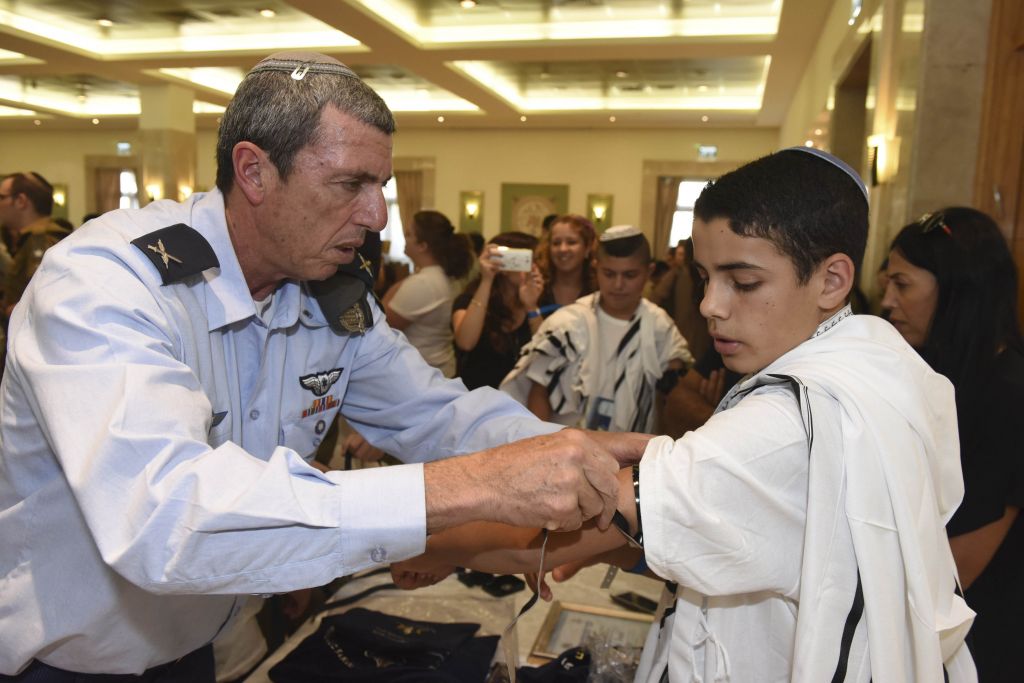
Besides camps for the kids, widows and widowers are invited to their own week-long retreats, a chance to get away from the responsibilities of being a single parent, Shoham-Solan says.
“They can share their pain and they feel comfortable to speak with other widows, who have the same loss,” she says.
Orphans and widows can apply for scholarships and grants. At the start of the year, the children receive school supplies from the organization. The group throws a “massive” bar mitzvah celebration for Jewish orphans and gives Christian, Druze and Muslim orphans religious celebrations of their own.
Nava Shoham-Solan’s IDF Widows and Orphans Organization provides material support for the wives, husbands and children of those soldiers who died in battle. Yaron Edel’s Resisim provides emotional support to the soldiers who didn’t.
One group is traditional, the other unconventional. But on Memorial Day, they both come out to help.






The Times of Israel Community.