

Pakistan may be building new nuclear site — analysts
Experts say construction some 30km east of Islamabad is fresh evidence of country’s intentions to boost atomic arsenal
 Add ToI as a Preferred Source on Google
ISLAMABAD, Pakistan — Pakistan, estimated to have the world’s fastest-growing nuclear stockpile, could be building a new uranium enrichment complex according to commercial satellite imagery analyzed by Western defense experts.
The construction of a new site, based in the town of Kahuta some thirty kilometers (18 miles) east of Islamabad, provides fresh evidence of how Pakistan is seeking to boost its atomic arsenal — a goal which is inconsistent with the principles of the Nuclear Suppliers Group the country is seeking to join, said the analysis.
The analysis was conducted by IHS Jane’s Intelligence review using satellite images taken by Airbus Defence and Space on 28 September, 2015 and then again on 18 April, 2016.
Pakistan, which conducted its first nuclear tests in 1998 is believed to have around 120 nuclear weapons, an arsenal larger than those thought to be possessed by India, Israel and North Korea.
A 2015 report written by scholars at the Carnegie Endowment for International Peace and the Stimson Center said Pakistan could increase its stockpile by 20 warheads a year and have the world’s third largest in a decade.
“The area of interest is approximately 1.2 hectares and is located within the secure area of the Khan Research Laboratories (KRL), in the southwestern part of the complex,” said the statement.
Karl Dewey, a proliferation analyst at IHS Jane’s added: “It is sited within an established centrifuge facility, has strong security and shows some of the structural features of a possible new uranium enrichment facility. This makes it a strong candidate for a new centrifuge facility.”
The structure of the site also bears strong resemblance to facilities built by nuclear fuel company URENCO which also operates several nuclear plants in Europe, it said.
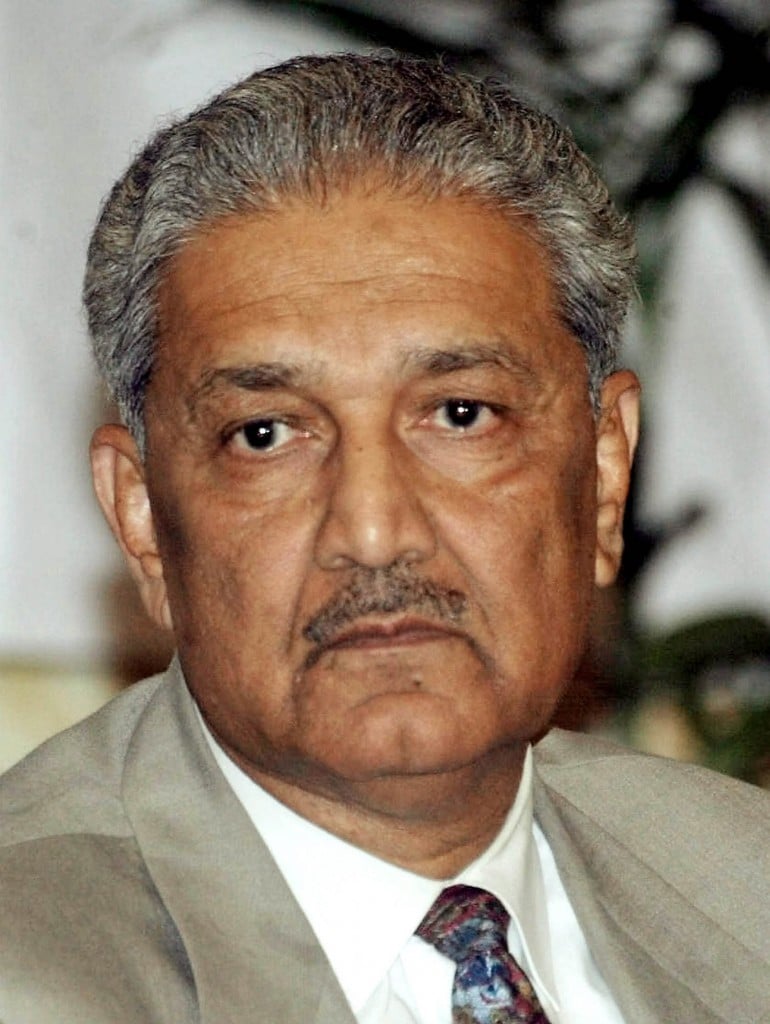
“This may be more than coincidence as A.Q. Khan, considered by many to be the founder of Pakistan’s nuclear program, worked at URENCO before stealing centrifuge designs and returning to Pakistan,” said Charlie Cartwright, an imagery analyst for IHS Jane’s.
Pakistan is currently seeking to join the 48-member Nuclear Suppliers Group that seeks to prevent nuclear proliferation by controlling the export of materials, equipment and technology that can be used to manufacture atomic weapons.
“It is difficult to see how these actions are consistent with the principles of the Nuclear Suppliers Group, a group of responsible nuclear exporters which Pakistan is seeking to join,” said Ian Stewart, head of research group Project Alpha at King’s College London.
Pakistani physicist A.H. Nayyar told AFP if the site was indeed a centrifuge, “then primarily because they are being built inside KRL I would conclude they are being for weapons,” adding that the country’s nuclear power plants were supplied by imported uranium from China.
He however cautioned it was not possible to be definitive about the site’s purpose based on imagery alone.







The Times of Israel Community.