

Pope closes door on rare ‘Year of Mercy’ jubilee
Shutting entranceway at St. Peter’s, Francis marks end of period intended to highlight outreach to downtrodden, in particular refugees and the homeless
 Add ToI as a Preferred Source on Google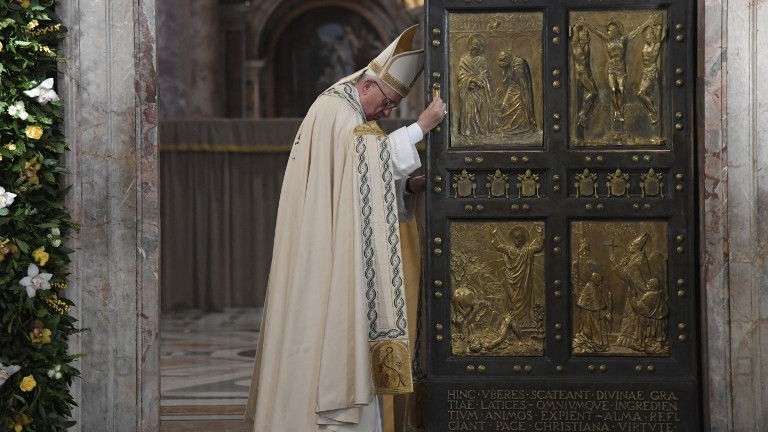
VATICAN CITY (AFP) — Pope Francis on Sunday brought to a close the Catholic Church’s “Year of Mercy,” shutting the Holy Door at Saint Peter’s after a packed 12 months that saw him raise Mother Teresa to sainthood and welcome Syrian Muslim refugees to the Vatican.
The Argentine, who says he is inspired by Saint Francis of Assisi, spent the year with the downtrodden, holding special masses and passing one Friday every month with refugees, victims of sex trafficking, the sick, the elderly, and vulnerable children.
At a solemn ceremony in front of the paneled bronze doors at the Vatican’s basilica — wreathed in white flowers and green foliage and flanked by Swiss guards — the pope paused to pray, clutching the cross he wears around his neck.
He walked slowly up the three steps into the basilica alone and in silence pulled closed the doors, which will later be walled up from the inside as per tradition until the next “ordinary jubilee” in 2025.
The “extraordinary Jubilee” was only the third since the tradition began 700 years ago.
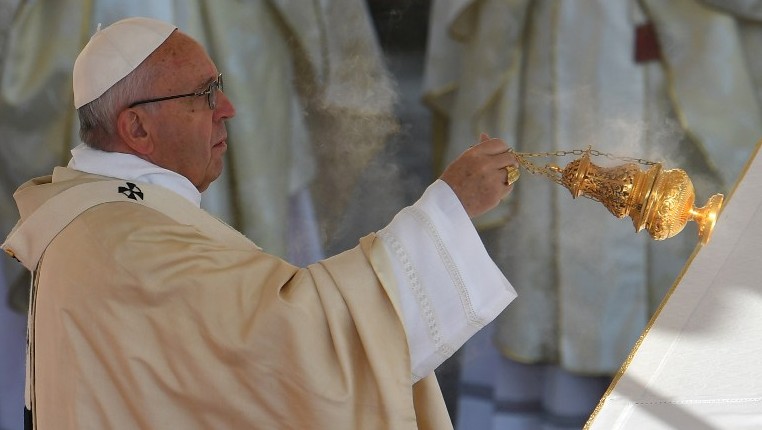
It kicked off amid concerns over possible jihadist attacks. Police with submachine guns stood guard next to Swiss guards around the tiny state.
Not one but two men in white attended the opening ceremony: Francis welcomed his predecessor Benedict XVI in a move that marked the first time a current and former pope launched a jubilee year together.
The watchword of mercy meant helping the unfortunate and welcoming sinners and outcasts back into the fold.
Underpinning the initiative was compassion, which the pope hoped would not only counter xenophobia but also draw people to the church.
Super confessors
Francis, 79, ruled that during the jubilee every priest in the world would be able to absolve the sin of abortion, and handpicked more than a thousand “missionaries of mercy” dubbed “super confessors.”
These were able to forgive sins usually only pardonable by the pontiff, from attempting to kill the holy father to defiling the Eucharist — the rite of consuming consecrated bread and wine in Church — by spitting it out or using it in a Satanic ritual.
He also decreed so-called “Holy Doors” should be opened across the world for the first time, so that people everywhere could pass through them and have sins wiped clean as long as they were truly repentant.
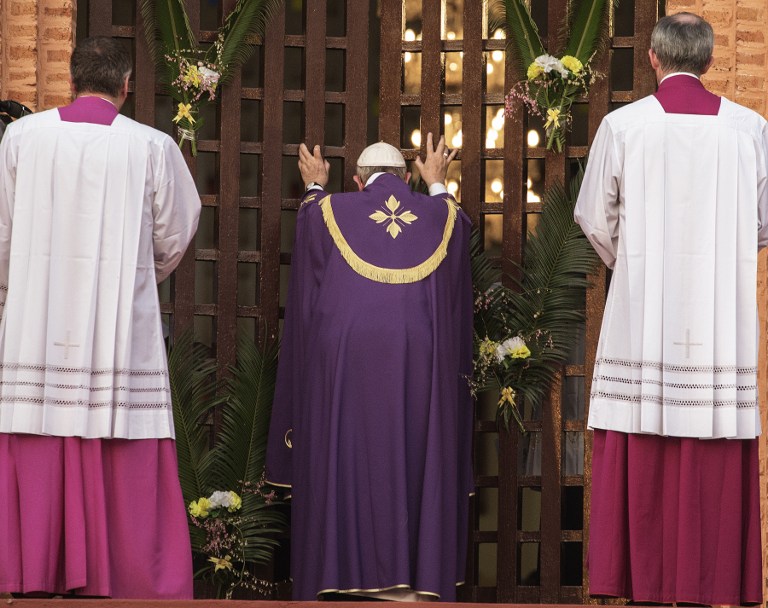
Eschewing tradition, he refused to open the first one himself at Saint Peter’s but in the cathedral of Bangui in the Central African Republic — a sign of the importance of dioceses far from Rome.
In a crowd-pleasing move, Francis had the remains of Saint Padre Pio — a favorite among those looking for compassion and healing — brought to Rome and carried through the streets to the Vatican.
Thousands turned out to glimpse the body of a man reputed by believers to have been able to levitate, read minds and bi-locate, appearing in foreign lands while remaining at the same time in his friary.
Prisoners, homeless, refugees
Over 100,000 pilgrims, including Queen Sofia of Spain and 1,500 homeless people, flocked to the Vatican in September for the canonization of Mother Teresa, who Francis held up as an icon who challenged the powerful and defended the poor.
But the pope ensured the majority of the jubilee events centered on those who were outcast or abandoned, holding special masses for the disabled, poor, homeless and prisoners — including some serving life sentences.
He opened a free medical clinic for the homeless next to Saint Peter’s Square.
Unafraid of angering traditionalists, Francis said protecting the environment should be added to the seven corporal works of mercy drawn from the Gospels, such as feeding the hungry and visiting the sick.
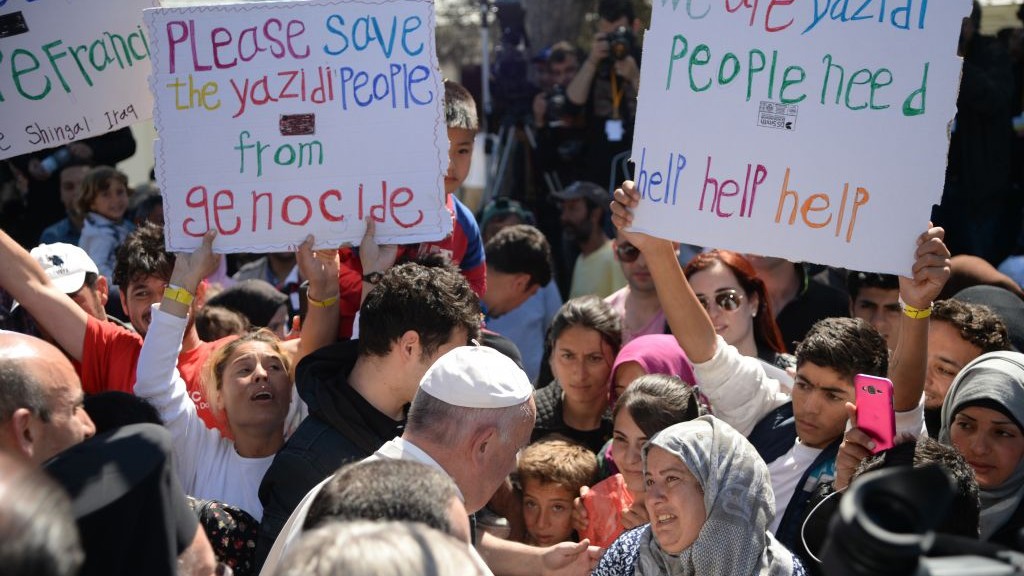
And in perhaps the highlight of the year, he ended a one-day trip to the Greek island of Lesbos — Europe’s migration hot-spot at the time — by taking three Syrian refugee families, all Muslim, back to Rome with him.






The Times of Israel Community.