

Religious soldiers can now avoid interactions with opposite sex
Under new directive, soldiers who feel an event goes against their beliefs can lodge request to skip it
 Add ToI as a Preferred Source on Google
Judah Ari Gross is The Times of Israel's religions and Diaspora affairs correspondent.
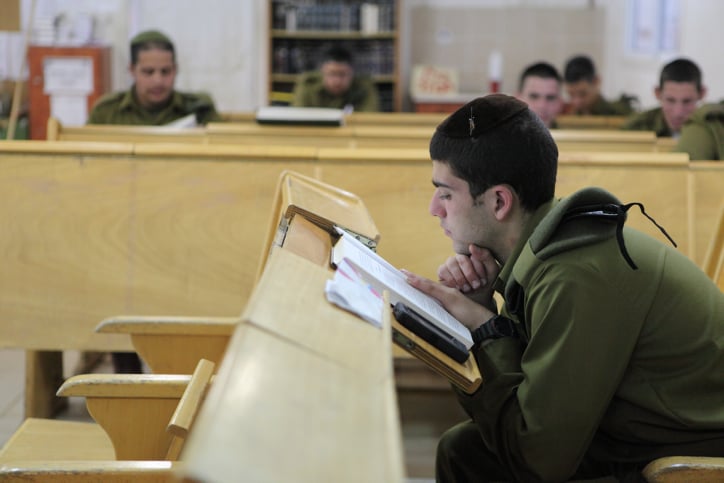
IDF soldiers will now be able to completely avoid interactions with members of the opposite sex, according to a new directive handed down by IDF Chief of Staff Gadi Eisenkot.
As a result of “deep and prolonged investigation,” in a bid to be more inclusive of religious soldiers, the IDF updated its “Order for Joint Service” to allow soldiers who feel that an event would go against their beliefs to submit a request to their commander to get out of it.
Soldiers can also ask to not serve alongside members of the opposite sex, and the order further strengthens the rules against shared living spaces.
“We will allow all male and female soldiers to serve — in accordance with the law — without harming their lifestyle,” the amendment to the order reads.
This new regulation essentially formalized a system that had once been haphazard and occasionally faulty.
In 2014, for instance, Israeli songstress Sarit Hadad’s performance for IDF troops was reportedly canceled by Col. Ofer Winter, then the head of the Givati Brigade, apparently because it may have offended religious soldiers who adhere to the belief that men shouldn’t listen to a women singing, known in Judaism as the prohibition against kol isha, or voice of a woman.
In an about-face just over a week later, Winter, who is religious, then told soldiers they must attend a concert of a military band, despite the participation of female soldiers who performed.
While the implementation of this new order is largely dependent upon individual commanders’ considerations, it sets certain guidelines to make the decision-making process more uniform.
The revised rule separates IDF events into two categories: ceremonial and enrichment.
Ceremonial events — Independence and Memorial Day ceremonies, Holocaust Remembrance Day, services for fallen soldiers, Rabin’s memorial day — will be more difficult for soldiers to avoid, according to the order.
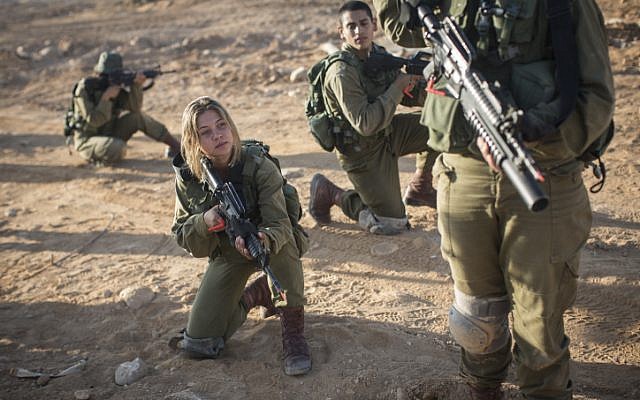
Enrichment events — visits to cultural institutions or historic landmarks — will be based on the “discretion” of the commander.
“If they are convinced that [an event] will harm a soldier’s lifestyle, they can offer a replacement activity,” the order reads.
Soldiers, as well as officers and non-commissioned officers, will also be able to request permission to forgo serving in a unit that contains both men and women.
The revised regulation also clarifies the cases in which men and women can share the same living quarters, limiting it to cases where there is risk to life, “for example if there is only one fortified area.”
In such a case, officers in charge would need permission from the head of their branch, and the soldiers in question would have to sleep fully clothed, according to the order.







The Times of Israel Community.