

Rubbing salt out of a wound, a storied artifact goes on sale
A 16th-century salt cellar, part of a collection looted by the Nazis 80 years ago, will finally be sold for its intended charitable purpose
 Add ToI as a Preferred Source on Google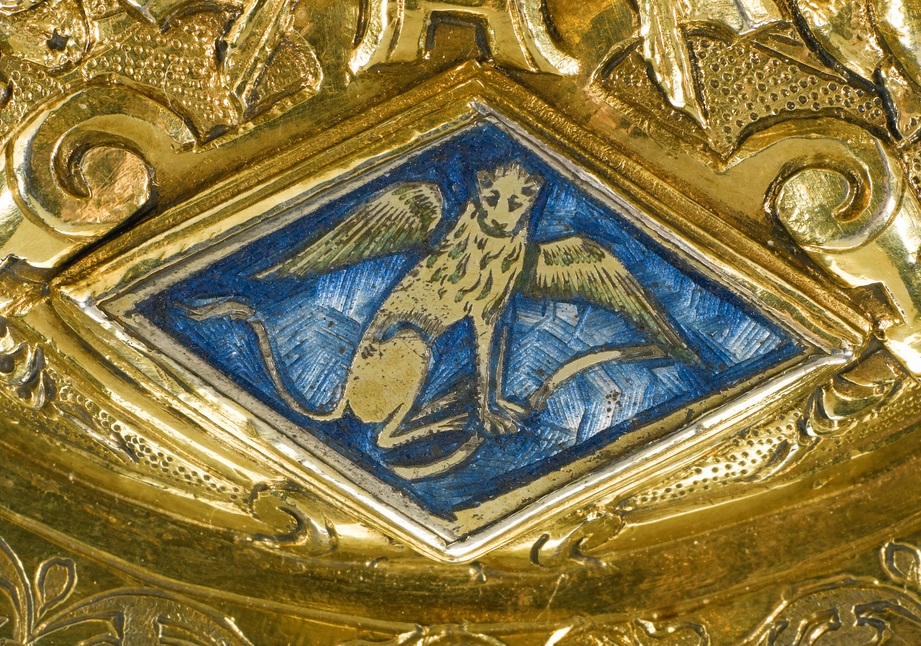
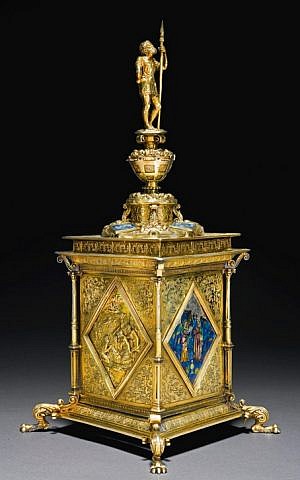
A rare 16th-century treasure recently returned by a British museum to the Jewish family who once owned it will be auctioned this week with an estimate of half-a-million pounds sterling ($776,000). The sale will bring the story of a magnificent artifact to a triumphant end, with the funds it raises to be finally used for its late owner’s intended charitable purpose.
The Ashmolean, the world’s first university museum, received a massive and spectacular bequest in 2012 from the estate of Michael Wellby, a prominent British collector. Among the nearly 500 Renaissance and Baroque-era items it inherited was a salt cellar dating back to 1560, likely to have been used during royal European feasts, The Telegraph reported Sunday.
But researching the item’s history, the Oxford institution learned that while there was no suggestion that Wellby had acted in anything other than good faith, the item was originally part of a collection owned by a German-American Jewish couple that was stolen by the Nazis.
The salt cellar was traced back to Henry and Emma Budge, who had returned to their native Germany after immigrating to the US in the late 19th century, where they flourished financially as bankers and financiers of railroads linking New York, Philadelphia and Boston.
When Emma died in 1935, eight years after her husband, she left the collection to relatives and to the care homes she and her husband founded for elderly Jews and Christians in Hamburg. But the Nazis took over the entire bequest, selling it in a 1937 auction in Berlin that went towards financing the government.
Learning of the salt cellar’s history, the Ashmolean’s directors decided to return the object to the Budge family, who will auction it off in a Sotheby’s Treasures sale on Wednesday. The proceeds will go to the care homes the couple founded, as the owner had originally intended.
Last month, a Nazi-looted painting that was hidden for decades smashed expectations at a rare sale in London. Max Liebermann’s “Two Riders on a Beach” was found among more than 1,200 works of art in the Munich apartment of German recluse Cornelius Gurlitt when police raided it in 2012.
The 1901 oil painting went under the hammer at Sotheby’s for £1.865 million ($2.92 million), more than three times the pre-sale upper estimate of £550,000.
The auction also included a Gustav Klimt portrait lost to Jewish owners during the Nazi regime that had come on sale after the resolution of a dispute between descendants of the artist and the subject. The painting went for £24,789,000, exceeding the pre-sale estimate of £18 million.
AFP contributed to this report.










The Times of Israel Community.