

Settlers demolish 15 Palestinian homes, residents say, as West Bank attacks continue
Palestinian water provider says workers were assaulted by settlers; prosecutors charge man suspected in attack last fall; IDF nabs Palestinians affiliated with Hamas, Islamic Jihad
 Add ToI as a Preferred Source on Google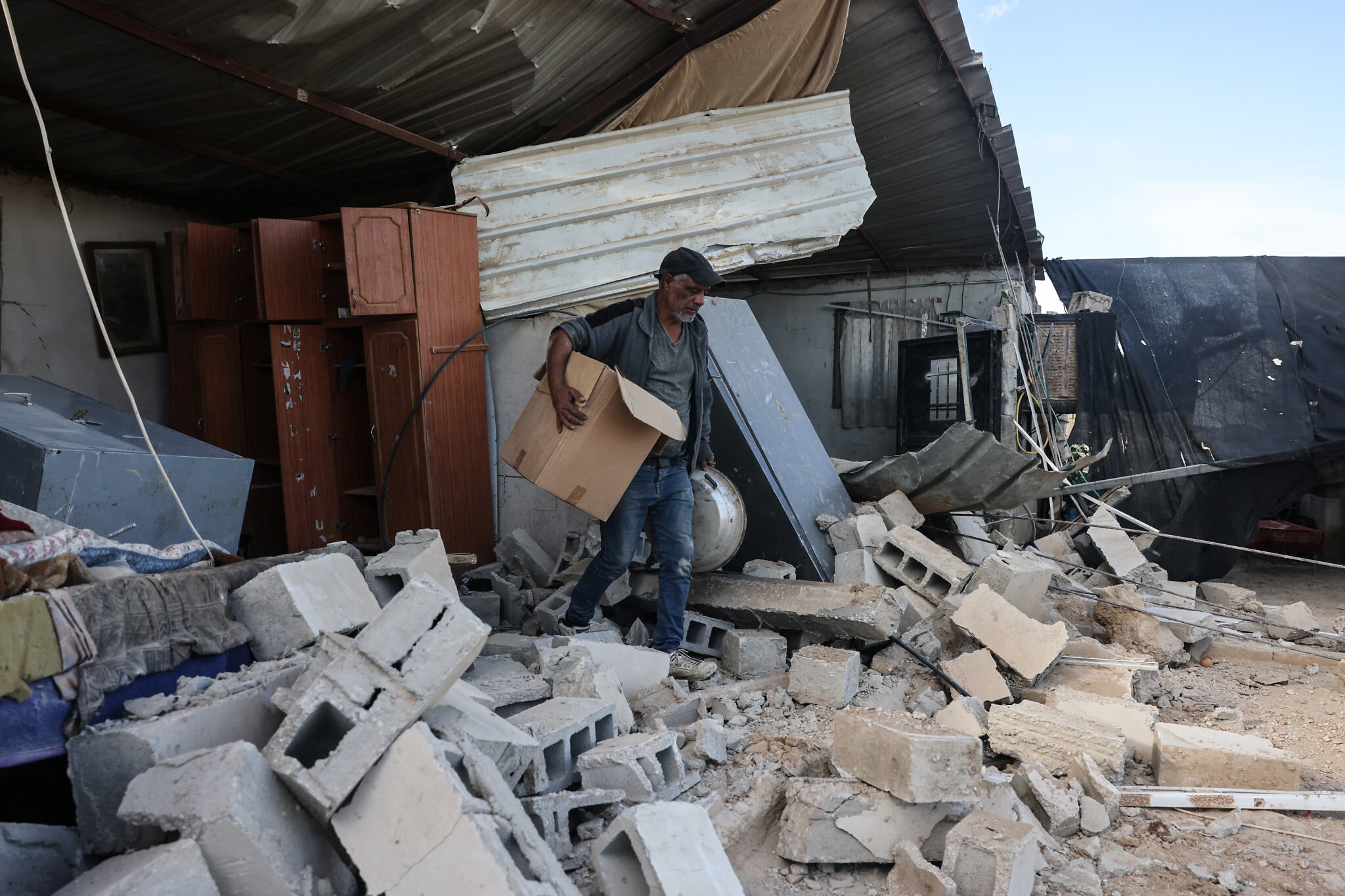
Israeli settlers demolished around 15 Palestinian homes and an animal pen in a West Bank village near Jericho, residents and activists told AFP on Wednesday.
The reported violent incident on Tuesday was one of a few to take place in the West Bank, amid a months-long rise in settler attacks and a continuing IDF crackdown on terror groups.
They also came days after the security cabinet approved measures to tighten Israeli control over the West Bank, meant to pave the way for further settlement expansion. On Wednesday, the United States, which has opposed Israeli annexation of the West Bank, flatly denied reports it was opening an embassy branch in the settlement of Efrat.
In addition, on Wednesday, a Palestinian water provider said its workers were assaulted by settlers. The IDF, meanwhile, said it had arrested a string of Hamas and Islamic Jihad operatives in the territory.
In Al‑Duyuk Al‑Tahta, the village near Jericho, structures, several of them tin shacks, were torn down, residents said.
“About 50 settlers arrived, forced everyone out of the houses, and began demolishing them. Then they took everything — even the chickens,” village resident Mustafa Kaabneh, who has lived in the area for nearly two decades, told AFP.
He said most of the settlers were armed and masked and were accompanied by an Israel Defense Forces vehicle before returning with a bulldozer. The military did not immediately respond to AFP’s request for comment.
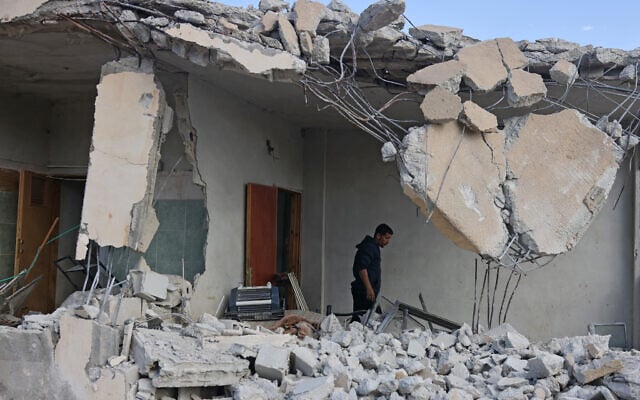
Another resident, Bassem Kaabneh, 23, said settlers beat women and children, expelled families from their homes, and seized personal belongings.
“They told me: ‘Enough, you don’t have a home here anymore.'”
Abu Audi Al‑Rajabi, who owns one of the demolished houses, said no demolition order had been issued. “The house was built 13 years ago and has been lived in ever since,” he said.
Rajabi, who primarily resides in Jerusalem, said he was unable to reach the area because it had been sealed off.
Local activist Jihad Mahaless said the demolished homes lie in Area C, a part of the West Bank that, under the 1990s-era Oslo Accords, falls under full Israeli control.
He said five of the structures were made of stone, while the rest were tin homes and animal shelters.
“We are now living under the trees,” Bassem Kaabneh said.
Israeli settler violence and harassment in the West Bank displaced nearly 700 Palestinians in January, the United Nations said last week, the highest rate since the Gaza war erupted with the Hamas-led October 7, 2023 attack.
The number of such attacks rose by 27 percent in 2025 compared to the previous year, according to data recorded by the Israel Defense Forces and the Shin Bet security agency. The IDF recorded 867 incidents of nationalistic crime and settler violence in 2025. The total for 2024 was 682 incidents.
The attacks, which occur on a near-daily basis, largely go unchecked. Prosecutions of Jewish extremists are rare, and convictions are even rarer. Critics have accused the government, described as the most hardline in Israel’s history, of shrugging off the attacks.
مستوطنون يهاجمون موظفي مصلحة المياه في عين سامية pic.twitter.com/9mQtTZbPVx
— قناة عودة الفضائية (@AwdehTV) February 11, 2026
On Wednesday, the Jerusalem Water Undertaking, a major Palestinian water provider in the central West Bank, says its workers were assaulted and pepper-sprayed by settlers while carrying out maintenance work on a well in Ein Samia, a spring that is used to supply water to several Palestinian villages near Ramallah and Jerusalem.
Footage shared by the water firm, shot from afar, shows three individuals moving away from three white vehicles, two of which back up along the road. The person filming the video can be heard saying it captures the immediate aftermath of a settler attack on workers’ vehicles at a well in Ein Samia.
The “repeated” attacks “negatively affect water deliveries to the villages and communities that benefit from these wells, which form a primary source of water for them,” says the firm, calling on “all concerned parties to fulfill their legal and humanitarian responsibilities” and put an end to the attacks.
Days earlier, the firm said settlers assaulted staff and vandalized offices at Ein Samia’s main pumping station, resulting in the wells going out of service for a day.
Footage published by the firm on Saturday showed two large TV screens were shattered. The Undertaking said the pause in service “directly affected more than 19 communities” and “deprived over 100,000 citizens of their basic right to water.”
???? آثار هجوم المستوطنين على محطة مياه عين سامية قرب بلدة كفر مالك شمال شرقي رام الله بالضفة الغربية#فلسطين#غزة #غزة_الآن #غزة_تُباد #المسجد_الأقصى #القدس pic.twitter.com/gbeV2IueWq
— أحمد عبداللّه علي شيخ الكلدي اليافعي (@ALHIJASHI) February 8, 2026
Meanwhile, in a relatively rare prosecution following settler violence, police announced that state prosecutors filed charges against a man suspected in a large-scale extremist attack on a West Bank Palestinian village last fall.
The defendant, in his 20s, is a resident of Hadera, a coastal city not in the West Bank. He is accused of throwing stones at houses and vehicles and standing by as his accomplices torched Palestinian property in Jaba, a town near Bethlehem that has been targeted several times by Jewish extremists in recent months.
The November attack, which police note caused extensive damage but resulted in no injuries, was carried out in revenge for the Israeli government’s dismantling and evacuation of Tzur Misgavi, an illegal settler outpost, the IDF said at the time.
The defendant allegedly prepared for the attack, donning a face covering and traveling to the village in a motorcade along with dozens of other masked men.
He faces charges on a string of violent offenses, including racially motivated rioting causing damage, attempted malicious damage, and aggravated assault.
Police on Tuesday announced the arrest of three additional suspects in the attack, teenagers aged 17 to 19 from the West Bank settlement of Kiryat Arba and from Ma’alot, in northern Israel. Charges have not yet been filed against the trio, but they will remain in police custody at least until Sunday.
IDF operations also continue across the territory. Israeli troops detained several Palestinians affiliated with the Hamas and Islamic Jihad terror groups during an extensive raid in the West Bank on Wednesday, the military said.
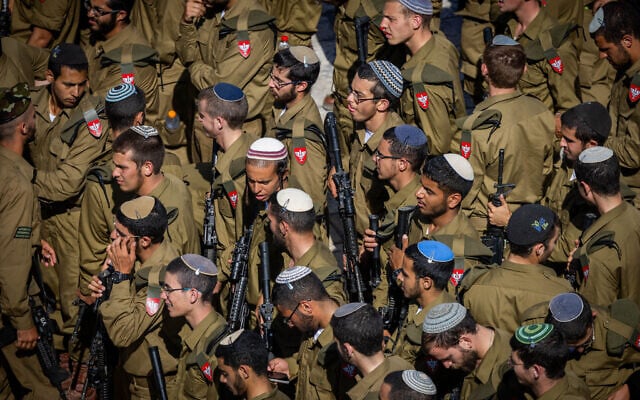
The IDF said troops of the Egoz commando unit and other forces operated overnight and this morning in 12 Palestinian villages in the Jenin area in the northern West Bank and captured “a number of terrorists affiliated with the Hamas and Palestinian Islamic Jihad terrorist organizations.”
The troops also seized tens of thousands of shekels worth of cash that was allegedly used for terror, and questioned dozens of suspects, including those suspected of assisting Palestinians to illegally enter Israel, the IDF said.
The army added that overnight, elsewhere in the West Bank, troops detained another 23 wanted Palestinians and seized several weapons.






The Times of Israel Community.