

Shadowy Hamas official with ties to Iran tapped to lead Gaza
Sources say Imad al Alami replacing Ismail Haniyeh, who is likely filling Khaled Mashaal’s shoes as politburo chief in Doha

 Add ToI as a Preferred Source on Google
Avi Issacharoff, The Times of Israel's Middle East analyst, fills the same role for Walla, the leading portal in Israel. He is also a guest commentator on many different radio shows and current affairs programs on television. Until 2012, he was a reporter and commentator on Arab affairs for the Haaretz newspaper. He also lectures on modern Palestinian history at Tel Aviv University, and is currently writing a script for an action-drama series for the Israeli satellite Television "YES." Born in Jerusalem, he graduated cum laude from Ben Gurion University with a B.A. in Middle Eastern studies and then earned his M.A. from Tel Aviv University on the same subject, also cum laude. A fluent Arabic speaker, Avi was the Middle East Affairs correspondent for Israeli Public Radio covering the Israeli-Palestinian conflict, the war in Iraq and the Arab countries between the years 2003-2006. Avi directed and edited short documentary films on Israeli television programs dealing with the Middle East. In 2002 he won the "best reporter" award for the "Israel Radio” for his coverage of the second intifada. In 2004, together with Amos Harel, he wrote "The Seventh War - How we won and why we lost the war with the Palestinians." A year later the book won an award from the Institute for Strategic Studies for containing the best research on security affairs in Israel. In 2008, Issacharoff and Harel published their second book, entitled "34 Days - The Story of the Second Lebanon War," which won the same prize.
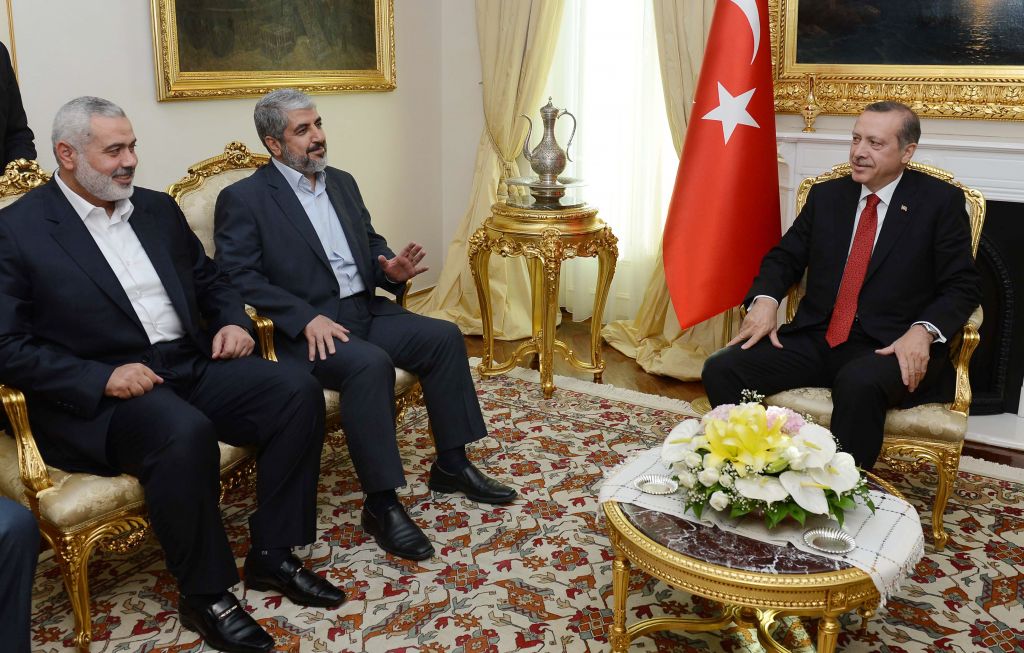
The Hamas terror organization recently appointed a founding member with close ties to Syria and Iran to replace Ismail Haniyeh as the effective political leader in the Gaza Strip, sources said Sunday.
Haniyeh, who has been in charge of Hamas’s political activity in the enclave, left in early September for a series of visits to Arab and Muslim states, apparently aimed at paving his way to replace Khaled Mashaal as head of Hamas’s political bureau in Qatar.
Mashaal has said he will not run in the next leadership elections, scheduled to take place by the end of the year.
Haniyeh’s replacement, Imad al Alami, 60, was born in Gaza, but only returned there a few years ago.
He lived for some time in Tehran, then moved to Damascus in 2008. He returned to Gaza after being the last Hamas leader to leave the Syrian capital; relations with Syrian leader Bashar Assad had soured at the start of the uprising there.
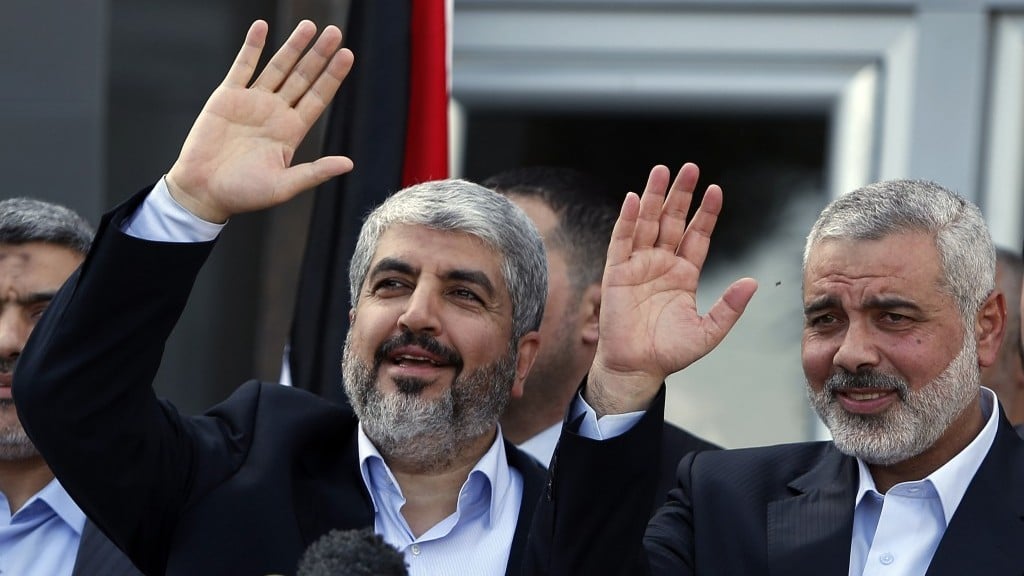
Al Alami has so far avoided the media spotlight. He does not take part in press conferences and uses neither Facebook nor Twitter.
Nor does he visit mourners’ tents as his Hamas colleagues do. In recent months, he has taken part in only one public event.
Amid shifting political sands in the Middle East, Hamas has in recent years walked a tightrope in attempting to maintain support from both Gulf states like Qatar and their Shiite rivals in Iran, Syria and elsewhere.
Haniyeh, who has been based in the Qatari capital Doha since leaving Gaza, along with Mashaal recently met with Palestinian Authority President Mahmoud Abbas there. Haniyeh’s participation in that meeting is a further sign that he is on the way to becoming Hamas’s top boss.
It is his continued absence from Gaza and his relocation abroad that has prompted Hamas to appoint al Alami as a temporary replacement until official leadership elections are held in the Strip in the coming months.
Al Alami suffered serious leg injuries during the Israel-Gaza war in the summer of 2014, in circumstances that are not totally clear.
Hamas leader Imad Al-Alami, with ties to Iran, Syria, gets nod to fill Haniyeh's shoes in Gaza @issacharoff reports. https://t.co/YNl7b2A97Y pic.twitter.com/rHQeEtTW3r
— Joshua Davidovich (@Josh_Davidovich) November 14, 2016
According to one claim, he was hurt when an elevator collapsed inside a tunnel in which senior Hamas members were hiding.
Another rumor says he was injured by gunfire during a battle between Hamas activists. He was treated in Turkey.




The Times of Israel Community.