

Shrimp eyes may hold key to developing nontoxic, non-fading paints and pigments
Israeli scientists link creatures’ gleaming eyes in low light to design of reflectors underlying the retina
 Add ToI as a Preferred Source on Google
Sue Surkes is The Times of Israel's environment reporter
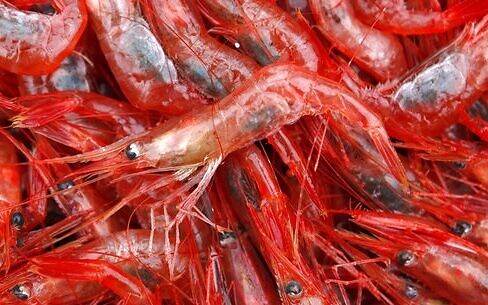
If you’re Jewish and observe kosher dietary restrictions, you likely have never looked into a shrimp’s eye.
However, if you have, you might have noticed that it gleams in low light. That is because the shrimp has a reflector underlying its retina (a “tapetum”) made up of tightly packed nanoparticles that allow the eye to collect more light underwater.
This was discovered by scientists from Ben-Gurion University of the Negev and the Weizmann Institute of Science in Rehovot, central Israel.
And in an example of biomimicry — developing solutions inspired by nature — the secrets of the shrimp’s eye could one day be used to develop nontoxic, reflective and nonfading paints and pigments.

Color in nature comes from three sources: pigments, such as chlorophyll which makes leaves green; bioluminescence, a chemical reaction that produces light as seen in a firefly; and structural colors.
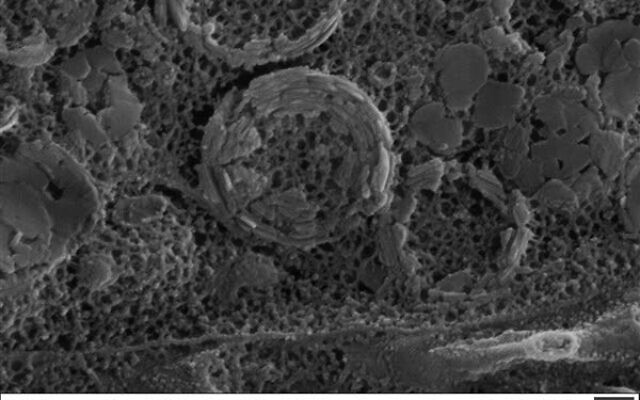
Structural colors result from the interaction between waves of light and tiny structures. In the case of the shrimp’s eye, the color arises from the way minuscule crystal plates are arranged.
“It’s not often that new principles in optics are revealed by biological systems,” said Dr. Benjamin Palmer, a member of BGU’s Chemistry Department, lead author of a paper on the subject published in Nature Nanotechnology, and the recent recipient of a prestigious starting grant from the European Research Council, which seeks studies with the potential to break boundaries of scientific knowledge.
Fascinated by optical crystals in biology, Palmer, from Wales in the UK, began his postdoctoral research at the Weizmann Institute and teamed up with institute postdoctoral fellow Dr. Venkata Jayasurya Yallapragada to map the crystals and determine their properties.
The shrimp’s reflector is composed of a close-packed assembly of spherical nanoparticles. Each nanoparticle is constructed from hundreds of crystal plates arranged in concentric layers around a hollow core, closely resembling an onion.
The Palmer group is now trying to understand how shrimps produce such complex particles in the hope that they can be recreated in the lab.










The Times of Israel Community.