

Ten more Israelis rescued from Nepal’s northern mountains
IDF opens field hospital in Kathmandu; 48 Israeli tourists await rescue in far-flung regions; location of 9 still unknown
 Add ToI as a Preferred Source on Google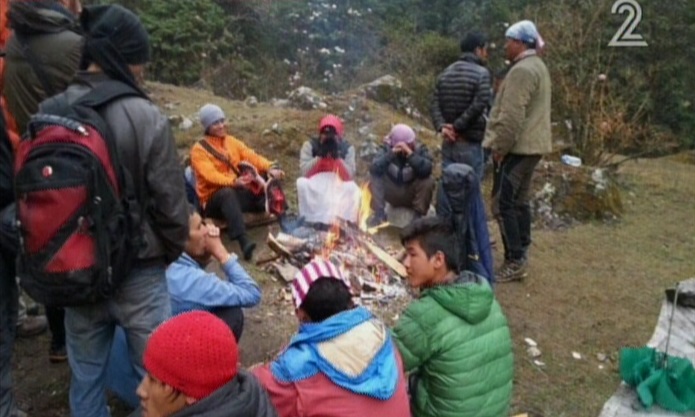
Ten Israelis were rescued Wednesday by the Harel insurance company’s rescue unit in Nepal’s Langtang National Park north of Kathmandu on the border with Tibet.
Dozens of Israeli backpackers were stranded at the park, specifically in the Gosainkunda lakes area, in the wake of Saturday’s magnitude-7.8 earthquake that devastated large swaths of the mountainous country, killing at least 5,000, and leaving some 8,000 wounded and tens of thousands seeking shelter and food.
Nepalese officials expect the death toll to climb to as high as 10,000, and the United Nations estimated that eight million people had been affected.
The latest group to be rescued – 48 Israeli backpackers are still awaiting rescue and nine more have yet to be located, according to Israeli officials – were taken to a local army base, from which they will be driven to Kathmandu.
According to the Foreign Ministry, Israeli rescue teams hope to finish locating and extracting the last of the stranded backpackers by the end of Wednesday.
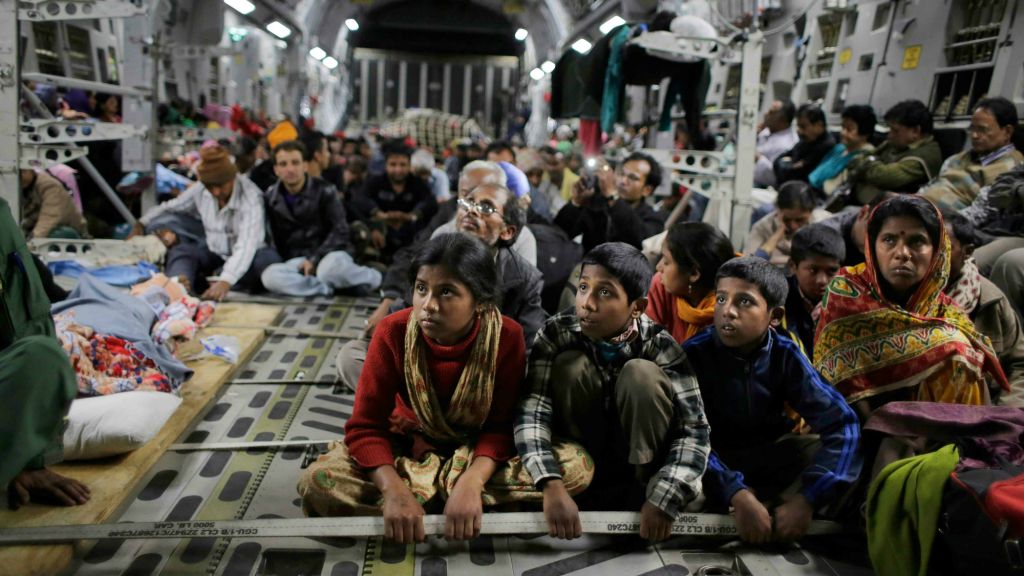
Meanwhile, Israel’s aid convoy to the quake-stricken nation, the largest international team in terms of manpower, ramped up its operations Wednesday with the opening of an IDF field hospital in Kathmandu, the largest ever sent by the army overseas. Israel has deployed field hospitals to Haiti, the Philippines and Japan in recent years following natural disasters.
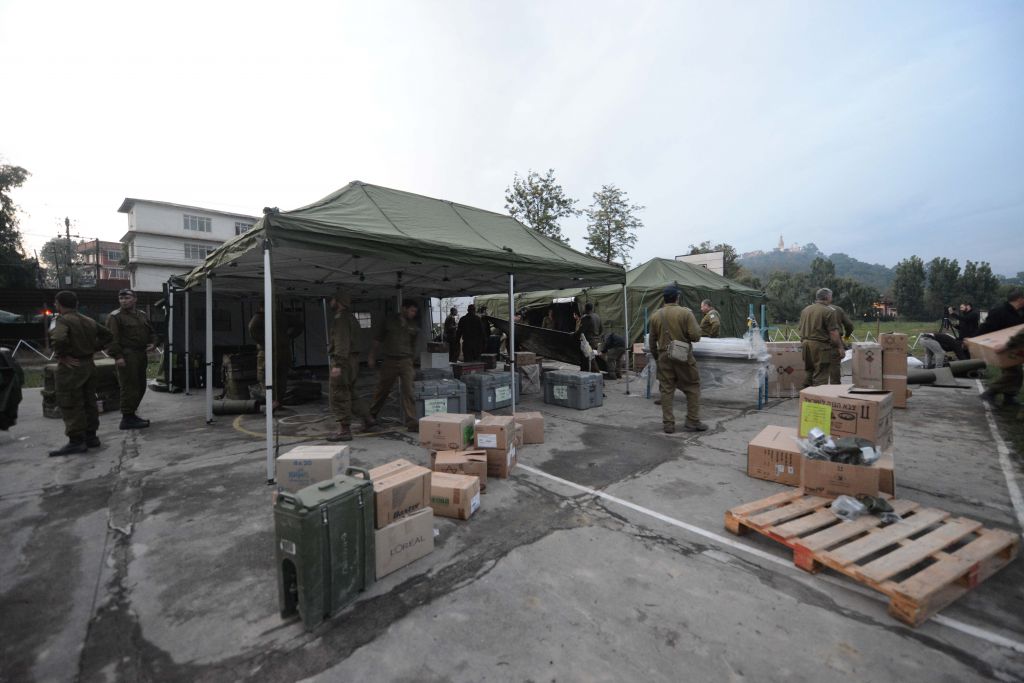
The Israeli hospital and crew landed in Kathmandu Tuesday morning, after a series of strong aftershocks delayed the flight by a day, and soldiers immediately began setting up, said Col. Yoram Laredo, who is heading up the army’s relief effort.
“We landed at dawn here in Kathmandu and immediately unpacked the equipment. As of now we are continuing to get organized, build the field hospital, and see to our other efforts, including the special effort to locate Israelis,” Laredo said in a phone call with Prime Minister Benjamin Netanyahu Tuesday.
“Every Israeli who comes to us will have his needs taken care of. I would like to emphasize that we are highly motivated and ready for our task here; we are proud to represent [our] country and we hope to save lives and achieve results,” he said.
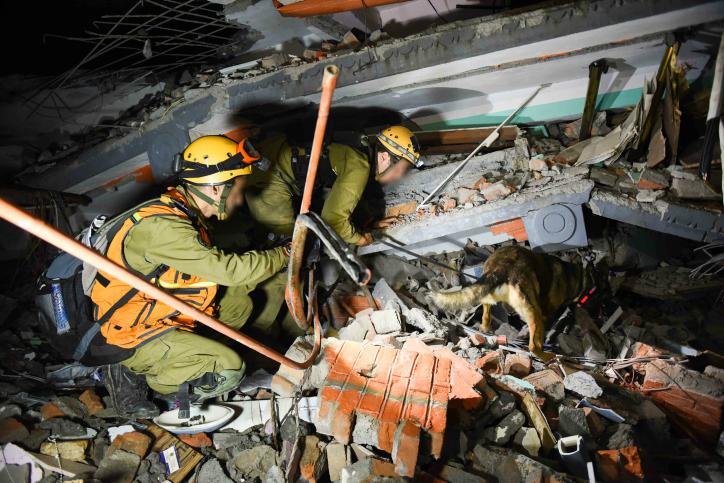
photos from @IDFSpokesperson of #IDF search and rescue teams in #Kathmandu searching for survivors #NepalEarthquake pic.twitter.com/f5Ut2JTo05
— Melanie Lidman (@melanielidman) April 28, 2015
Nepal’s Prime Minister Sushil Koirala and the Nepalese Army’s chief of staff are slated to visit the field hospital on Wednesday and will attend its opening ceremony.
The IDF sent a 230-person team, with approximately 130 medical professionals to operate the field hospital. The remaining soldiers and reservists have begun search and rescue operations.
Search and rescue units went out on their first missions on Tuesday but did not find any survivors, IDF spokeswoman Libby Weiss said via phone from Kathmandu.
“The field hospital will deal with various types of medical issues that come up, including a surgical department, obstetrics, a laboratory for blood samples, and other emerging medical issues,” she said. “We also have an eye doctor and other types of specialists.”
There will be 60 beds and the capacity to treat at least 200 people per day.
Medical teams have noted that natural disasters often force women into early labor, which is why an obstetrics department is essential, Weiss said.
In addition to broken bones and internal organ damage, some people rescued from the rubble have also been suffering from hypothermia from extended exposure to the elements.
The field hospital is located next to the Nepali military hospital, and the Israeli embassy is coordinating cooperation between the Nepali and Israeli hospitals.
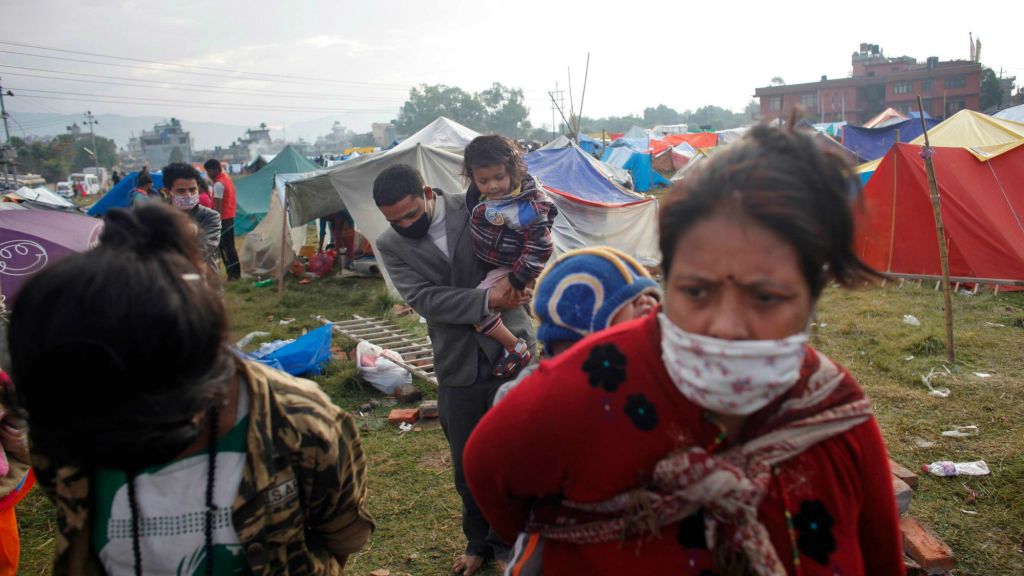
While many villages across Nepal are still waiting for rescue and relief teams, life in the capital, Kathmandu, has slowly been returning to normal.
Municipal workers on Wednesday began cleaning the streets, and the “kalimati bazaar” — the vegetable market — has reopened. Before first light, truckloads of fresh produce were unloaded and customers began to arrive.
Thousands of people are lining up at bus stations in Kathmandu where the government is providing free transportation for people hoping to travel to their hometowns and villages. The government has even deployed school buses to supplement the overstretched service.
Many of the people from other districts who work in the capital have received little news of their families and loved ones since Saturday’s temblor, which devastated the infrastructure including communication lines.
The aftershocks have waned but people are still anxious, many preferring to stay out in the open. Police have arrested dozens of people on suspicion of looting abandoned homes as well as causing panic by spreading rumors of another big quake.
Police official Bigyan Raj Sharma says 27 have been detained for stealing from homes whose owners moved out following Saturday’s quake and powerful aftershocks.
Sharma says another four people were arrested for spreading false rumors of an impending quake through social media and text messages
Many in Kathmandu say they are scared of staying so close to the quake’s epicenter.
“I am hoping to get on a bus, any bus heading out of Kathmandu. I am too scared to be staying in Kathmandu. The house near my rented apartment collapsed. It was horrible. I have not gone indoors in many days. I would rather leave than live a life of fear in Kathmandu,” said Raja Gurung, who was leaving for his home in the mountains of west Nepal.
Suresh Sah, a construction worker from southern Nepal, said that when the quake hit, “the first thing I thought about was my son back in the village. I have been trying to leave but there was no bus available. I just want to hold my family.”
UN food agency emergency officer Geoff Pinnock says the distribution in remote quake-hit villages will start Wednesday, but cautions it would take time.
“Remember Katrina. It doesn’t happen overnight,” he said.
In Gorkha, the neighboring district to the west, five cargo trucks filled with rice, cooking oil and sugar stood on a grassy field in Majuwa village waiting for a helicopter from Kathmandu to take the supplies to the hardest-hit areas of that district.
The World Food Program also expects the delivery of high-energy biscuits, which will be send out to areas without enough water for cooking.







The Times of Israel Community.