

The scrappy co-op that’s banking on breaking the monopoly
Israel’s 3,700-member cooperative bank, Ofek, launched in 2012. No one openly opposes the movement, but it faces an uphill Knesset battle before it can open for business
 Add ToI as a Preferred Source on Google
Simona Weinglass is an investigative reporter at The Times of Israel.
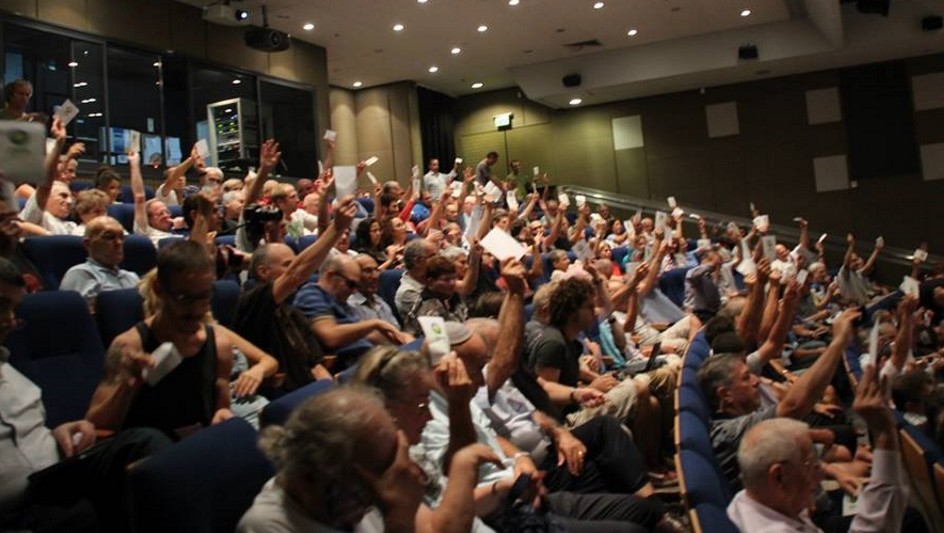
Why is it that when you walk into an Israeli drugstore, shampoo or deodorant costs three times the price in the United States? Why does a pair of jeans, say Levi’s 501, cost $68 in the United States and NIS 450 ($115) in Israel? Meanwhile, the average salary in Israel is a fraction of that in the US at NIS 9,500 ($2,536) a month while the median salary is NIS 5,500 ($1,410). It’s no wonder that at least 35 percent of Israeli households can’t cover their monthly expenses.
If you ask Doron Shorer,founder of Ofek, Israel’s new cooperative bank, which hopes to begin operations in 2016, about the root cause of Israel’s high cost of living, he’ll tell you that it all comes back to the banking system. Israel has one of the most highly concentrated banking sectors in the OECD, with just two banks, Leumi and Hapoalim, controlling close to 70 percent of the market. What does this mean?
According to Shorer, it’s not just that Israeli banks can charge consumers exorbitant fees for everything from withdrawals to sending a letter. It’s not just that they can charge interest rates of 12 to 13 percent to individuals or small business. What it means, Shorer asserts, is that every single time you make a purchase, you are paying a few extra pennies (a total of NIS 3,000 per family per year) in financing costs due to lack of banking competition. It also means that you are paying several pennies on top of that because banking concentration’s snowball effect leads to monopolies in other industries.
“The banking system is the envelope of the entire economy,” says Shorer, a former capital market commissioner in the Finance Ministry.
“In a country where the financial system is competitive, competitive industries can co-exist with noncompetitive ones. But when the banking system is cartel-like, there is no chance for any other industries to become competitive.”

Why does Israel need a cooperative bank?
Concentration in the banking industry, and the way it squeezes the middle and lower classes, is what led Shorer to found Ofek, Israel’s only cooperative bank, in 2012. He drew inspiration from the 2011 social justice movement, which saw over 400,000 people take to the streets to protest Israel’s high cost of living.
“The government managed to kill the protests. They transferred the problem to a committee that made vague promises. They failed to focus on the important thing, which is the financial sector.”
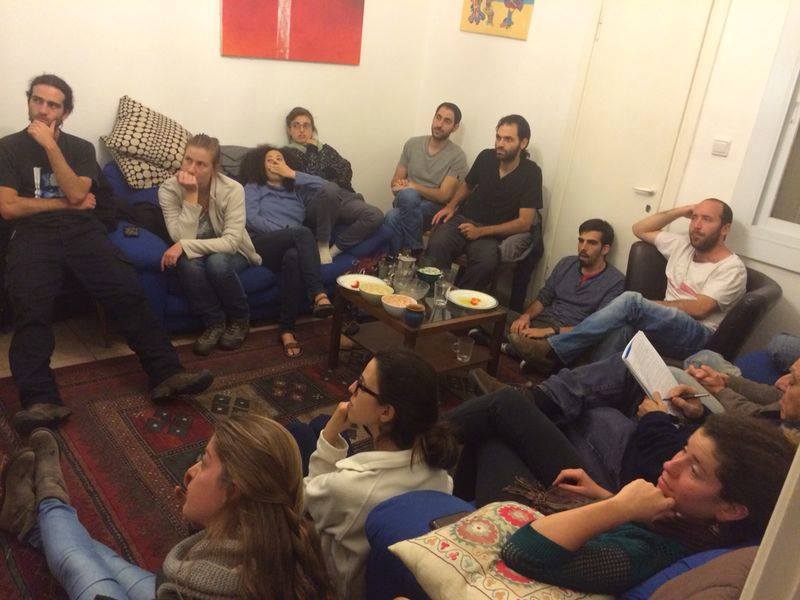
Shorer is an accountant by training who has served in top government and private sector jobs, including director-general of the Transportation Ministry and chairman of The Phoenix Insurance Company. Among the first people to buy shares in Ofek were Labor MKs Shelly Yachimovich and Itzik Shmuli as well as most Meretz Knesset members and prominent Orthodox rabbi Yuval Cherlow. Talk show hosts Orly Vilnai and Guy Meroz are members and Education Minister Naftali Bennett, who was economy minister in the last government, has praised Ofek on his Facebook page.
A share in the bank costs NIS 3,000 ($765), and this one-time fee gives members the right to become customers and deposit money, take out loans and use other bank services. Ofek is a nonprofit that is owned by its customer/shareholders. No one, no matter how rich, can purchase more than a single share.
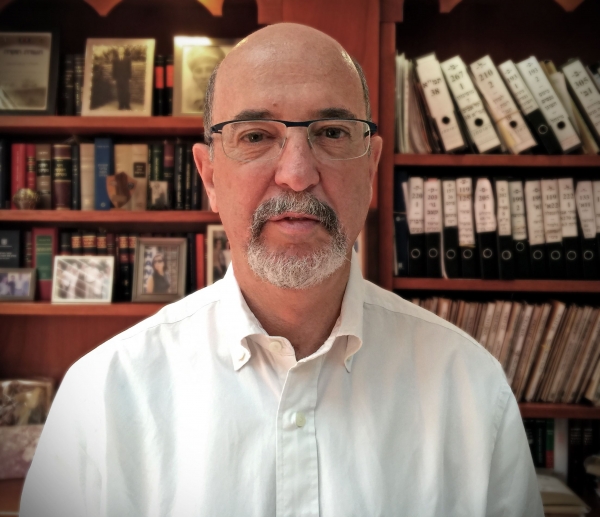
Ofek’s chairman is Yehuda Talmon, the former president of Lahav, Israel’s small business association. Shorer stepped down as chairman because he is currently employed as the director of Massad, a former credit union for Israeli teachers that demutualized and became a regular bank.
“Doron had to resign because the Supervisor of the Banks told him this was a conflict of interest,” Talmon explains. “Ofek is a dream and Massad is how he makes a living, so he chose making a living.”
Ofek will give customers interest rates of 2-3 percent on deposits and charge 6 percent or less on loans, says Talmon.
“These numbers are unheard of in the Israeli banking system. We can do it because we’re not trying to maximize profits; we’re not even trying to make a profit. We will charge what we need to balance our books.”
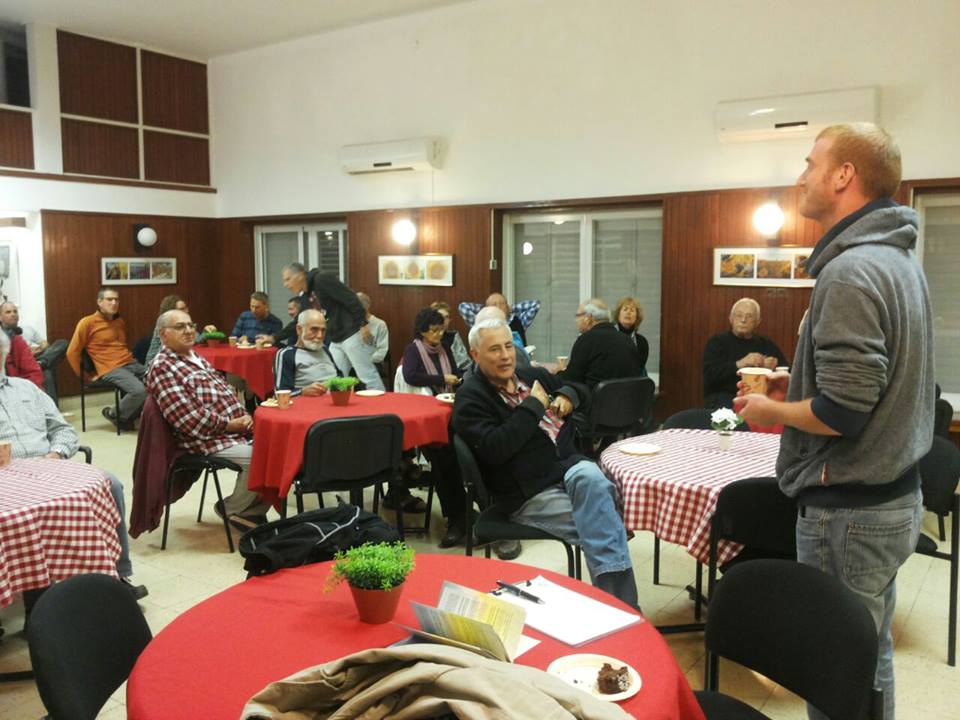
Talmon says the idea of a cooperative bank is not new, but dates back to 19th century Europe. Today, Holland’s third-largest bank, Rabobank, is a cooperative, while tens of millions of Americans do their banking at credit unions, including Stanley Fischer, former governor of the Bank of Israel and now vice chair of the US Federal Reserve.
Ofek currently has 3,700 shareholders.
“We’d like to have as many as possible,” says Talmon, “but our business plan says that once we reach 15,000, we’ll be viable.”
What’s wrong with Israel’s current banking system?
“The big banks are terrified of Ofek,” Shorer says, “because we’re puncturing a hole in their balloon and letting the air out. Since the establishment of the state, not a single new bank has been established. In fact, in 1948 there were 120 banks. Now there are five.”
The mobile communications market perfectly illustrates the problem, says Shorer. In 2012, something so unprecedented happened in that market that it became known as the “cellular revolution.” Prior to 2012, the country’s cellular market had been controlled by a cartel of three companies: Cellcom, Partner and Pelephone. Communications minister Moshe Kahlon managed to open the market to new players, including Golan Telecom. Within months, the average cost in Israel of minutes of on a mobile phone fell from NIS 0.42 to NIS 0.10. Kahlon became a national hero, then launched his own political party, Kulanu, and won ten of the Knesset’s 120 seats in the March 2015 national elections. Kahlon’s party ran on a platform of reducing Israelis’ cost of living by opening up other markets to competition, including banking, and he entered the governing coalition as finance minister.

But late last month, Israel’s symbol of competition and lower prices, Golan Telecom, announced that it is seeking to be bought or to merge. Many analysts believe this may spell the beginning of the end of low cellular prices. What happened?
Shorer says he doesn’t know what happened in Golan Telecom’s specific case, but in an economy with so much banking concentration, the number of players in other industries tends to shrink as well.
This is often because new players can’t get loans from banks due to what he calls “cross-interests.” To make his point, he recalls that when the mobile carrier tender was issued in 2011, Golan was not the winner.
“The company that won was called Bezalel. Bezalel approached Bank Leumi and asked for credit. The bank said, sorry, buddy, we can’t do it. Just so you know, Bank Leumi had a large stake in Partner Communications, a competitor.”
Is that legal?
“It is not for me to judge,” Shorer says, laughing.

What happened next is that the next bidder, Michael Gelfand, tried to secure a loan from an Israeli bank and was also refused. Golan was the third candidate. The company’s CEO, Michael Golan, was from France and didn’t need Israeli financing.
“He showed up with several suitcases of dollars and got the license,” says Shorer. “But he didn’t fund it through Israeli banking. If he had to get money in Israel, there would have been no competition in the cellular market.”
The Times of Israel tried repeatedly to reach Bank Leumi for a response but no one in its spokesperson’s office answered the phone.
Shorer asserts that in the United States, banks don’t have same the power to shut out new businesses.
“In the US, there are 20,000 banks.”
Inflated fees
Due to lack of competition, banks can raise interest rates and fees as high as they like, says Shorer. Much of this bloating goes toward salaries for management.
“The salary agreements in the banks are such that you couldn’t earn more unless you’re a robber. For instance, every year the salary of every bank worker has to rise by 5 percent in real terms. Inflation is 1 percent – so that’s a 6 percent raise every year at a time when the average wage is stagnant or declining.”
A recent Bank of Israel study found that 16 percent of bank employees (or over 7,000 people) earn over NIS 45,000 ($11,500) a month.
What do they do to earn that kind of money?
“It doesn’t matter what they do. There is no connection between what they do and what they earn. The Trajtenberg Committee and the research department of the Knesset found that Israeli banks collect NIS 8 billion per year above the OECD average. That’s about 3,000 shekels per family.
“If you buy a bottle of Coca Cola, part of what you’re paying for is the financing costs.”
But what’s even worse, claims Shorer, is that those costs are borne by households and small businesses.
“Teva [the giant Israeli pharmaceutical company], for example, can get financing abroad. So they came to the big banks and said, give us the same conditions as we enjoyed abroad. They’re right to say that because they have shareholders.”
So to make up for the shortfall in revenues, Israeli banks practice price discrimination, says Shorer. Regular Israelis pay higher fees and interest rates to subsidize the big companies.
Why housing prices keep going up
“Take the housing market,” says Shorer, “all the governments say we will lower prices and yet the price keeps going up. How does this happen?”
Shorer says it’s because banks have an interest in apartment prices going up.
“Let’s say tomorrow the finance minister went crazy and divvied up all the land for free. If you get land, what will you do? You’ll say, I want to build a house. You’ll go to the bank and ask for credit. The bank will say, am I nuts? All of my collateral is in apartments. If I let people build houses the prices will go down. If the prices go down, I’ll go bankrupt.”
Aren’t there objective criteria for who gets a loan and who doesn’t?
“If you live in the United States, credit scoring is something you take for granted. In Israel we’ve been trying for 40 years to pass a credit score law and we don’t have one, because Moshe Pearl is against it.”
Moshe Pearl is the CEO of the Association of Banks in Israel, the organization that protects the interests of Israel’s banks. Pearl refused a request for an interview, communicating through an assistant that “if this is about the cooperative bank, we’re not interested in participating.”
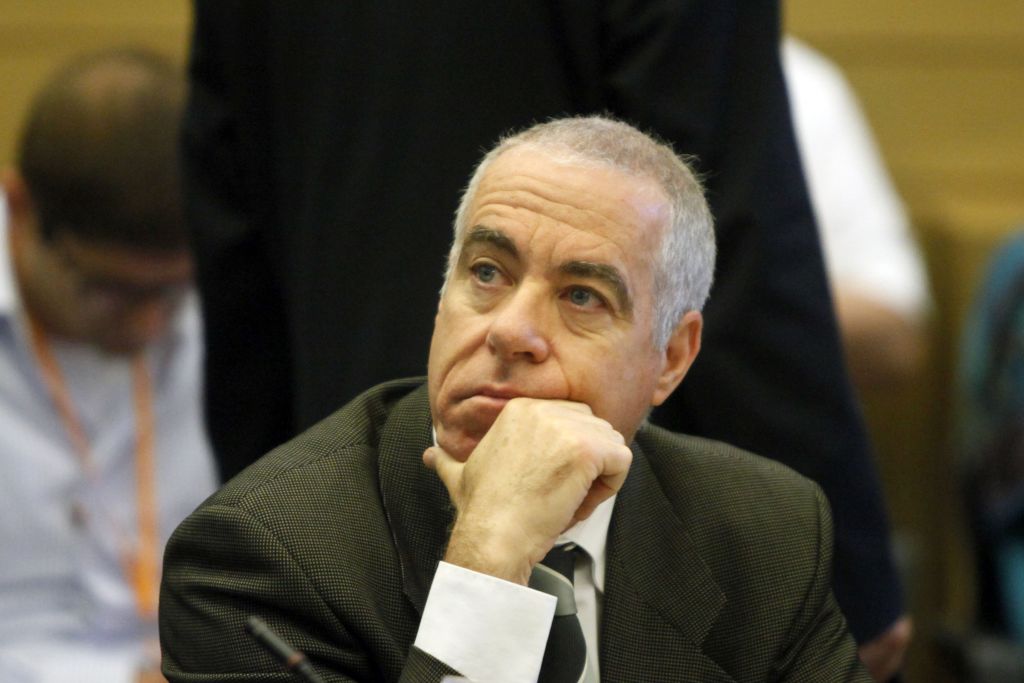
“He says if we have credit scoring it will hurt the weak. Does that make any sense? Whatever you think of the American system, the idea is to provide as many tools as possible to allow trustworthy people to do business. The idea in the Israeli system is to do everything possible to allow untrustworthy people do business by making it impossible for trustworthy people to know who isn’t trustworthy. They call it protecting an individual’s privacy. It’s a joke.”
The next steps for Ofek
A year after Shorer founded Ofek he had a meeting with then-finance minister Yair Lapid. “This bank will help households and small businesses by providing credit at a lower interest rate and minimal fees,” Lapid was reported as saying at the time.
Shorer says, “I came out of the meeting with tears in my eyes because of all the wonderful promises he made. But he must have changed his phone number, because he eventually stopped answering my calls. The banks threatened him.”

They threatened him?
“Not with a gun. They just said, do you want to topple a bank during your term? If you give Doron a license to open a bank he’ll lower prices and the banks will start to lose money. The economy will destabilize, people will withdraw money from banks, and foreigners will stop investing in Israel.”
Is Finance Minister Moshe Kahlon helping you?
“He wants to but he doesn’t have enough power.”
A hint of the opposition to Ofek and others who want to decentralize the banking system came in an interview that Bank of Israel Governor Karnit Flug gave to Channel 2 in late August. “I am in favor of reform to the financial system, but it’s important to do it while maintaining stability and protecting consumers. I don’t think we want to have an Israeli subprime crisis. We have to do things responsibly.”
MK Eli Cohen of Kahlon’s Kulanu party told The Times of Israel through a spokesperson that he is confident his party will be able to pass banking reform.
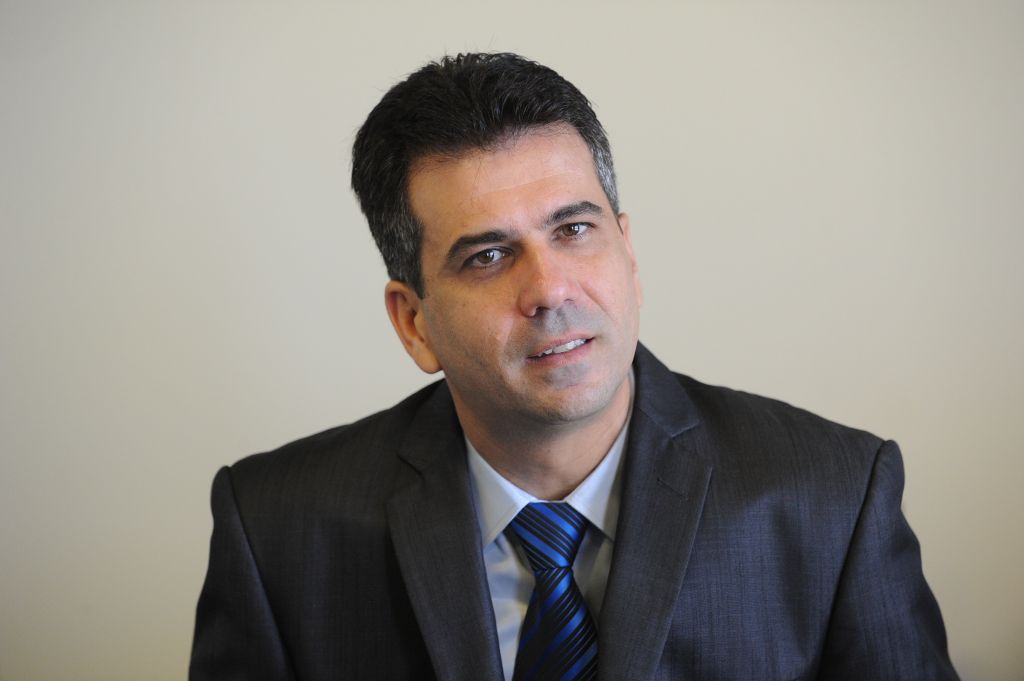
“One of our reform goals is to increase competition in the financial system through Internet banks. The cooperative bank [Ofek] is part of this.”
There are three major laws that Kahlon and Cohen are trying to pass to achieve this.
First, there is a deposit insurance law, which ensures that the government will back up deposits even in banks that have less than 5 percent market share.
“People don’t want to put their money in a bank they haven’t heard of. But if the state guarantees the deposits, it gives these banks an advantage,” explains Cohen.
A second law will allow non-banks to provide credit to consumers, while a third law would separate the ownership of credit card companies from that of banks.
Opponents are quiet — for now
Asked who opposes these reforms, Cohen does not mention Moshe Pearl or the Association of Banks in Israel.

“When it comes to a vote, we’ll see who opposes it and what their arguments are. At present there is no one in the coalition or opposition who will say no to increased competition. The prime minister sees eye to eye with Kahlon. There is some opposition from the Bank of Israel, which is more focused on stability than competition. They say if we let these small banks in it could destabilize the economy.”
How do you respond when Doron Shorer says Kahlon doesn’t have enough power?
“The power is in passing laws. Our chances are very high. Of course it would be better to do it in agreement with the Bank of Israel but there’s actually been a breakthrough since [Flug’s] TV interview last month. The new Supervisor of Banks Hedva Ber said she is backing us. It’s a huge turnaround in their policy.”
The Times of Israel contacted at least six banking insiders in an effort to present the large banks’ point of view on the proposed reforms. Finally, Dror Strum, an adviser to Finance Minister Moshe Kahlon, agreed to paraphrase what he thinks the Association of Banks in Israel would have said had it agreed to an interview.
“The banking industry claims that when you compare Israeli banks to banks in the OECD and elsewhere, the prices in terms of fees and interest rates are not high — in fact, they’re inexpensive. If the prices here are not dramatically higher, then why do you need reforms?”
Ofek’s wish list
Shorer says that in order for Ofek to start operating, the government has to amend the Banking Law to allow a cooperative to become a bank. Beyond that, the Knesset will have to pass a deposit insurance law as well as let new banks use some of the existing banks’ infrastructure, like their online banking platforms and ATMs.

“It’s like with the cellular reform. The government let Golan use the existing companies’ infrastructure at first.”
And there’s also a credit scoring law, without which small banks have no idea how risky a potential borrower is.
“Once these things happen, a lot more members will join our bank. It’s a chicken and egg problem because people say let’s see the government pass the laws and then we’ll join, but if more people join we’ll have more sway with the government.”
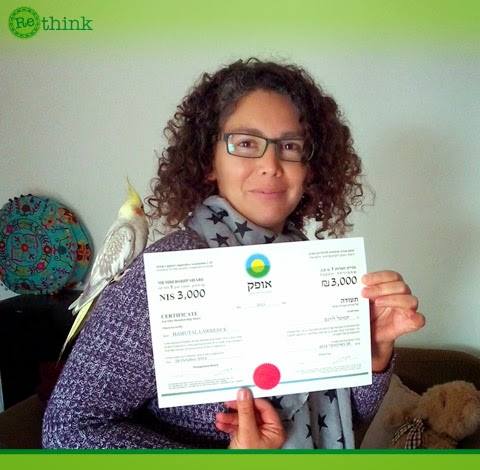
One critic of Ofek told The Times of Israel “the price of a share is 3,000 shekels. I’m not sure there is a critical mass of people who will pay this thinking that one day there may be a bank.”
Yehuda Talmon, Ofek’s chairman, says that Ofek will open no matter what.
“Any law the government passes will make it easier for us to enter the market. Even so, we won’t give up, we’ll enter the market and start operating in the hope that the government and certainly the finance minister understand that we need tax benefits, deposit insurance and a credit rating law.”
But this isn’t just about Ofek, explains Talmon.
“These laws will ensure that there are as many new players as possible. We welcome the competition. The very last thing we’re looking for is exclusivity or a monopoly.”









The Times of Israel Community.