

The storm before the calm
Temple Mount tensions look headed for resolution on Thursday, but papers are a souvenir from Abbas’s attempt to puff up his chest and turn protests into points
 Add ToI as a Preferred Source on Google
Joshua Davidovich is The Times of Israel's Deputy Editor
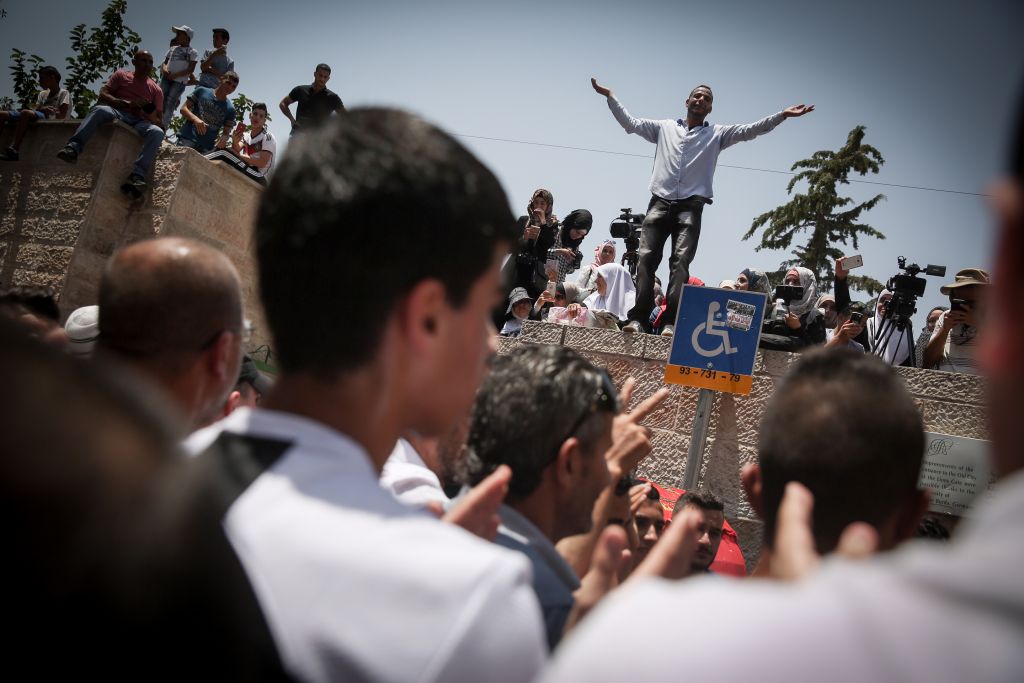
In the end Israel didn’t only blink first, it gouged out its own eyes and tried to smile about it. But before Prime Minister Benjamin Netanyahu, with a fear of more violence on his mind, ordered that every security measure at the Temple Mount hit the road, things looked Wednesday night to be headed in some quite scary directions as the Palestinian Authority decided to ratchet up the heat over the issue.
That pressure from Ramallah and Netanyahu’s seemingly vain attempts to win back his besties on the right form the crux of news coverage on Thursday morning, even as the nearly-two-week-old crisis over the security measures at the flashpoint holy site looks to finally be ending.
The headlines of both tabloid Israel Hayom and Haaretz point at PA President Mahmoud Abbas as the man behind the escalation in tensions, even after Israel removed the hated metal detectors earlier this week. (Yedioth Ahronoth strangely buries the story almost completely, leading off with an item about a possible medal for the soldier who shot a terrorist in Halamish last week.)
“US and Jordan exert pressure to calm Temple Mount protests, Abbas refuses,” reads the top headline of Haaretz, reporting that “A senior Palestinian official confirmed that there have been attempts to calm tensions and prevent an escalation over the past two days, but the Palestinians decided to continue with their protest.”
Israel Hayom’s headline is the somewhat more accusatory “Abbas is behind the escalation, he wants to inflame the ground,” quoting from a chorus of “senior defense officials.”
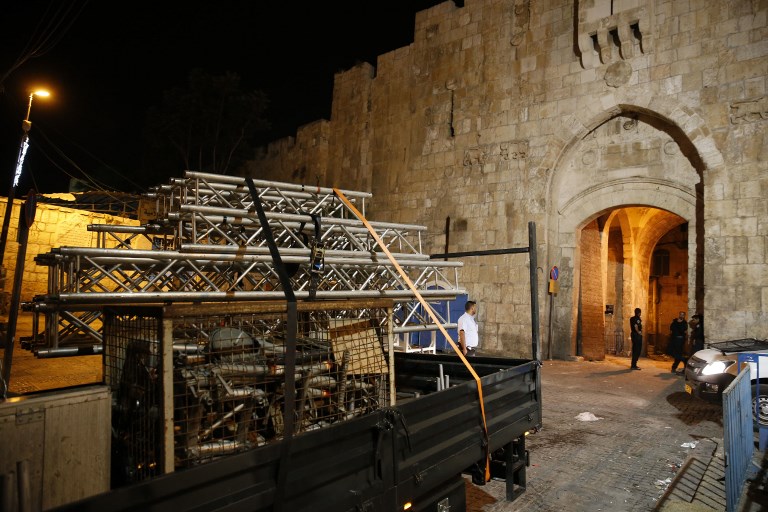
Apparently not realizing just how much Netanyahu could give in, Yaron Blum starts off an accompanying analysis by wrongly predicting that the crisis is far from over, and focuses most of his opprobrium on Abbas for “playing with fire.”
“Abbas’s statements and his direct involvement in the escalation is striking and extraordinary, but what’s new is that he is not bothering to hide behind excuses. He is doing this without acrobatics because he believes that the bullets in his loaded gun are running out and maybe this is the step that will improve his standing, which is a low ebb,” he writes.
Also (justifiably) predicting the proverbial dung hitting the proverbial fan is Amos Harel in Haaretz, who writes in a front page analysis that things are only getting more complicated and that many think Abbas “fears that Hamas is winning the ‘most patriotic’ contest, together with frustration at not being taken seriously during the crisis.”
In the same paper, Jack Khoury points out that Abbas is showing himself adept at turning the crisis in his favor.
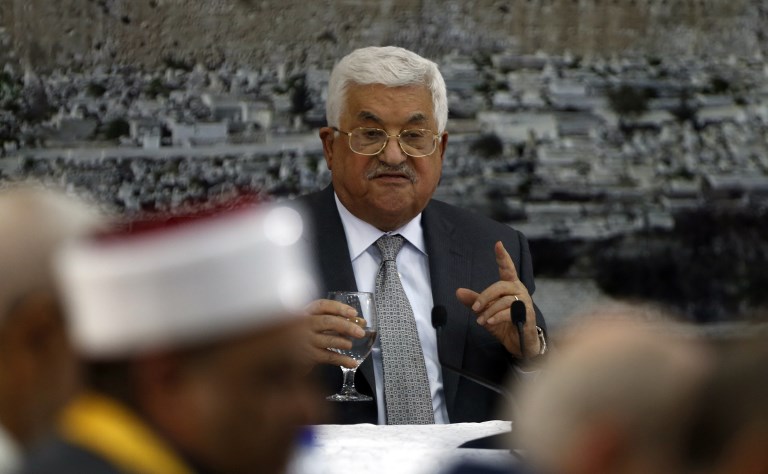
“One doesn’t need to be a political genius or strategist to ride this wave, exploit it the fullest, and drive home messages to Prime Minister Benjamin Netanyahu and his government, to the Israeli public and to the entire world: this is Palestine, and the Al-Aqsa compound should be in our hands,” he writes.
While Abbas enjoys newfound strength, Netanyahu has found himself at a low point, abandoned even by Israel Hayom, long seen as in his pocket. But Yedioth Ahronoth seems to be filling some of that hole, running a picture of Netanyahu hugging an Israeli Embassy guard who returned from Jordan for a second day in a row for a story about Jordanian anger over Israel’s welcome for him.
The paper mostly ignores all the bad stuff about to go down, and instead a Ben-Dror Yemini analysis looks at a decision by the EU to keep Hamas on its terror blacklist as a “brief moment of pleasure.”
“There aren’t a lot of nice moments we get from the EU. Yesterday, for a change, we won one,” he writes, but adds that this is not yet a turning point in European attitudes toward Israel. “Far from that. As long as Europe keeps funding groups that are used as a PR arm for Hamas, it’s tough to talk about a change. It’s a step in the right direction. But the path to change is still long.”
Meanwhile, Israel Hayom continues to show that it and Netanyahu are no longer an item, ignoring two separate moves by the Prime Minister seemingly designed to win back brownie points from his right wing base.
One, a decision to order Al Jazeera shut, doesn’t get any coverage, perhaps because of the late hour it was announced. Another, Netanyahu backing a plan to extend Jerusalem to several neighboring settlement blocs — effectively annexing them — makes front page news in Haaretz, and gets some play in Yedioth, but is left totally out of Israel Hayom.
“The goal of the bill is to bolster the capital’s Jewish majority and, in the words of its explanatory notes, ‘restore Jerusalem’s status as a symbol,’” Haaretz reports. “The bill’s sponsor, MK Yoav Kish (Likud), insisted on Wednesday that the bill will not apply Israeli sovereignty to the settlements. Rather, the settlements will be autonomous boroughs of Jerusalem, and remain under the military administration that governs the other settlements.”
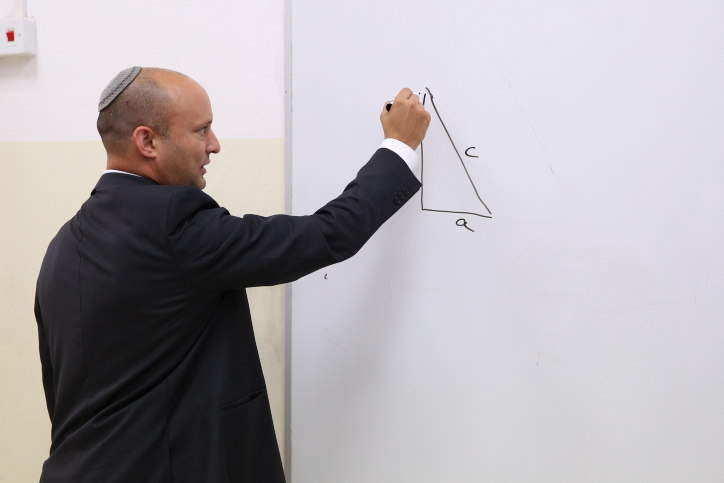
For a look at who Israel Hayom is backing instead, one need only glance at the play it gives to a plan by Education Minister Naftali Bennett to place special needs students in regular classrooms, with the story not mentioning a whiff of the controversy that follows the plan wherever it is implemented.
“There’s nothing more exciting and important than a regular student learning under the same roof as a student with disabilities,” the paper quotes Bennett saying. “This will contribute much to the students and turn our society into a much better society. Every student is being given the same chance to succeed.”
Yedioth, meanwhile, reports on the impending evacuation of the Machpela House in Hebron, where a group of settlers are holed up and where Netanyahu is hoping to reach some sort of compromise and win back a few right-wing bona fides, even though this is really Defense Minister Avigdor Liberman’s mess to deal with.
“The possibility is being checked of leaving representatives of the residents there and having everyone else leave of their own volition until the Civil Administration makes a decision on the matter, expected only in a few months,” the paper reports, adding the representatives from Netanyahu’s office were involved in the talks.

On the op-ed page, though, the settlers are whopped by Ariella Ringel Hoffman for their crappy timing.
“The clashes around the Temple Mount have not ended, and they are already singing and jumping around the three-story building next to the Tomb of the Patriarchs, as if there’s no yesterday and no tomorrow,” she writes. “The settlers of Hebron take advantage of every opportunity for a provocation and to inflame new conflict zones under the great idea that the days of ‘spilling of Jewish blood, mourning and sorrow,’ are auspicious days to ‘lift mightily the flag of the settlement movement and the Land of Israel faithful’”








The Times of Israel Community.