

The terrorist misfire that deepened the conflict
Never mind that the deaths in Gaza’s Shati camp were caused by Islamic Jihad. The incident prompted a series of Hamas attacks on Israel

 Add ToI as a Preferred Source on Google
Avi Issacharoff, The Times of Israel's Middle East analyst, fills the same role for Walla, the leading portal in Israel. He is also a guest commentator on many different radio shows and current affairs programs on television. Until 2012, he was a reporter and commentator on Arab affairs for the Haaretz newspaper. He also lectures on modern Palestinian history at Tel Aviv University, and is currently writing a script for an action-drama series for the Israeli satellite Television "YES." Born in Jerusalem, he graduated cum laude from Ben Gurion University with a B.A. in Middle Eastern studies and then earned his M.A. from Tel Aviv University on the same subject, also cum laude. A fluent Arabic speaker, Avi was the Middle East Affairs correspondent for Israeli Public Radio covering the Israeli-Palestinian conflict, the war in Iraq and the Arab countries between the years 2003-2006. Avi directed and edited short documentary films on Israeli television programs dealing with the Middle East. In 2002 he won the "best reporter" award for the "Israel Radio” for his coverage of the second intifada. In 2004, together with Amos Harel, he wrote "The Seventh War - How we won and why we lost the war with the Palestinians." A year later the book won an award from the Institute for Strategic Studies for containing the best research on security affairs in Israel. In 2008, Issacharoff and Harel published their second book, entitled "34 Days - The Story of the Second Lebanon War," which won the same prize.
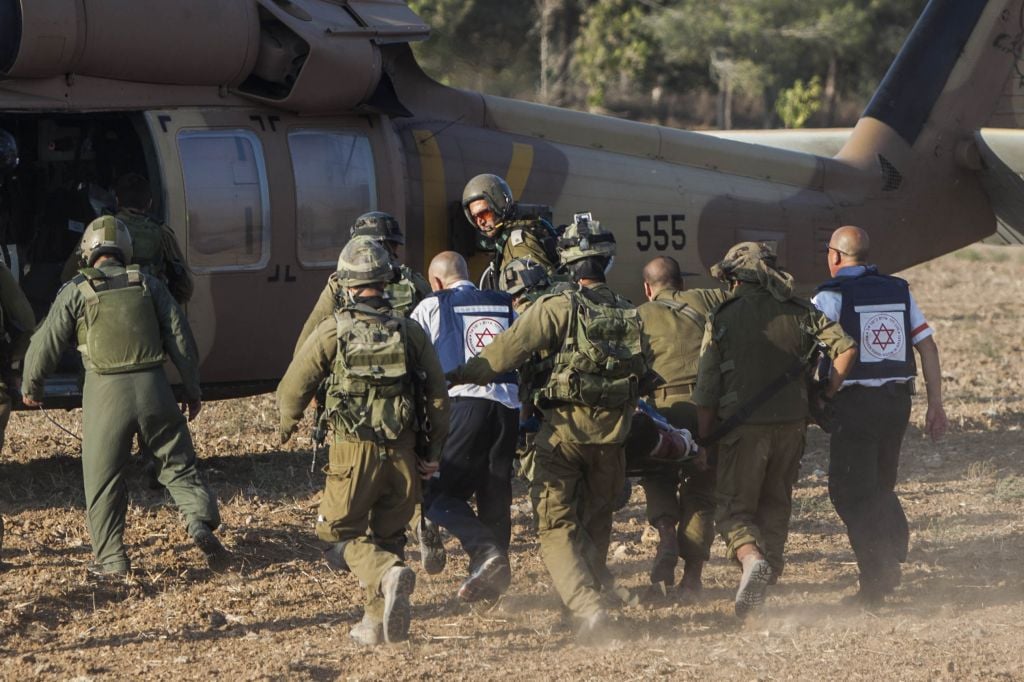
The explosion Monday at northern Gaza’s Shati refugee camp could easily become the incident that changes the face of the current Israel-Hamas conflict.
The incident, apparently born of a misfire of an Islamic Jihad rocket, prompted Hamas to embark on a series of fatal attacks on Israeli targets later Monday, leaving numerous Israeli army casualties.
The prospects of an expanded Israeli ground offensive grew more likely, with no sign of Operation Protective Edge coming to an end.
For Gazans, this is bad news — more dead and wounded; more devastated neighborhoods. It may turn out to be bad news for Hamas, too, despite its “success” in killing Israeli troops.
The explosion at Shati — which in Gaza is widely blamed on Israel — may have given Hamas fresh legitimacy to attack Israel in order to avenge the children who died there. But it may not be able to withstand intensified Israeli attacks.
Monday had begun with relative calm. Hamas had been signaling since Sunday that it was not seeking an escalation of the conflict, certainly not during the three-day Eid al-Fitr. Gazans’ public pressure on Hamas appeared to be having its impact, and the Islamists seemed to be looking for an exit.
After Monday morning’s relative calm, Hamas officials even told key Fatah officials that they would soon join negotiations on a ceasefire according to the Egyptian proposal, not the Qatar-Turkey version. Egypt was to have assembled a delegation of Fatah and Hamas officials after Eid al-Fitr to begin discussing a cessation of hostilities, and simultaneously to have held talks with an Israel security delegation on ways to ease the Gaza blockade.
And while there was sporadic mortar fire throughout the day, it was mostly ineffective.
Then came the Shati incident, which was initially reported as an Israeli attack on a public kindergarten. The area was packed with children enjoying a respite from the fighting. Initial reports said eight children and two adults had been killed. The pictures broadcast from the Strip showed scenes of horrific devastation.
However, soon afterward, the IDF made plain that it had nothing to do with the incident. Yoav Mordechai, the IDF’s coordinator of activities in the territories, said, in reports that were also carried by official Palestinian media, that Islamic Jihad had tried to fire rockets at Ashkelon, and one had fallen in the kindergarten, and the second in the outpatient clinic of Gaza’s Shifa Hospital.
Unsurprisingly, Hamas vehemently denied the claim, calling it a Zionist fabrication. But this marked the first such clarification issued by the IDF in the course of this conflict, and thus could not be easily dismissed.
Still, Hamas chose to react by staging a tunnel attack, more mortar fire across the border, and long-range rocket strikes on Israel, with devastating consequences. Apparently, Hamas had prepared for this kind of eventuality.
Nonetheless, Hamas’s position is not significantly better than it was at the start of Monday, when it was looking to halt the conflict. It has killed more Israeli soldiers, but knows that the price will be heavy for the residents of Zeitoun and other areas where the IDF is operating or set to operate.
Hamas is now, ironically, hoping that the international community, led by the US, will moderate the Israeli response, and prevent too harsh an Israeli assault on Hamas and its Gazan home.







The Times of Israel Community.