

To Bar Ilan and back: Benjamin Netanyahu’s changing views on a Palestinian state
The prime minister was against a Palestinian state. Then he was for it. Then he was against it again. His main rival, Benny Gantz, hasn’t endorsed it either

 Add ToI as a Preferred Source on Google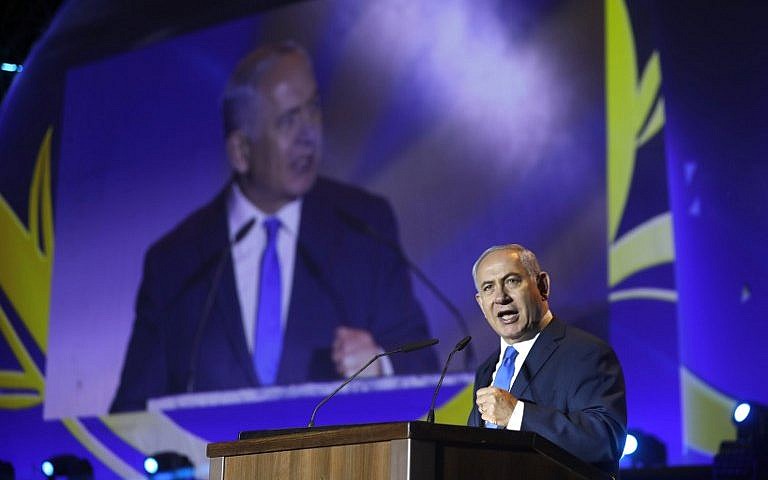
JTA — It wasn’t so long ago that most major Israeli politicians supported establishing a Palestinian state.
Now it’s not clear that any of them do, including the current prime minister, Benjamin Netanyahu.
Netanyahu began his political career in the 1970s opposing a Palestinian state, an idea that once had been off the table but was gaining traction. Three decades later, in 2009, he gave a pivotal speech endorsing the idea in principle. In 2015, however, Netanyahu retreated from the idea on the eve of the last Israeli election.
Since then, he has made his position clearer: The prime minister opposes full Palestinian statehood, including Israeli withdrawal from any of the West Bank. In Netanyahu’s meetings with his ally, US President Donald Trump, both leaders have avoided committing to the idea of a two-state solution. Netanyahu’s right-wing partners are even more opposed to Palestinian statehood, instead pushing Israeli annexation of the West Bank settlements — perhaps with an “upgrade” of Palestinian autonomy with borders and military affairs still controlled by Israel.
Netanyahu’s rivals also haven’t come out in support of a Palestinian state. Blue and White, the centrist coalition running against Netanyahu in the upcoming April elections, has not endorsed the idea. One of Blue and White’s leaders is a longtime opponent of the two-state solution.
Here’s a short explanation of how the solution that was once taboo, then seemed inevitable, has faded from Israeli politics.
Does Benjamin Netanyahu support a Palestinian state?
Netanyahu was against a Palestinian state. Then he was for it. Then he was against it again.
In 1978, as a 28-year-old private citizen, he argued against a Palestinian state in a debate on local Boston television.
“The real core of the conflict is the unfortunate Arab refusal to accept the State of Israel,” he said, using the Americanized name Ben Nitay. “It is unjust to demand the creation of the 22nd Arab state and the second Palestinian state at the expense of the only Jewish state.”
As Netanyahu shot up the ranks of Israel’s right-wing Likud party over the next 15 years, his position did not change: He saw a Palestinian state as an unacceptable danger to Israel’s security and territorial integrity.
“I fear for my home, for my land, I even fear for my son,” he said in a speech to supporters following the 1993 Israeli-Palestinian peace agreement, which was meant to lead to permanent-status talks on the issues of borders, refugees and Jerusalem. “What is at issue here is the essence: The land of Israel is at issue, and we are all standing for the land of Israel.”
That changed in 2009. He returned to office that year, and endorsed the idea of a Palestinian state under certain conditions.
“[I]f we get a guarantee of demilitarization, and if the Palestinians recognize Israel as the Jewish state, we are ready to agree to a real peace agreement, a demilitarized Palestinian state side by side with the Jewish state,” he said in a landmark speech at Bar-Ilan University.
But actual negotiations toward a peace treaty went nowhere. A short round of talks in 2010 ended after a few weeks, and a longer nine-month negotiation in 2014 was just as fruitless. Then came the kidnapping of three Israeli teens and the 2014 Gaza War. Since then, there have been no negotiations.
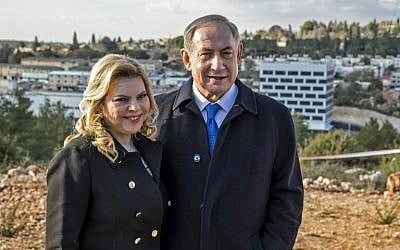
All along, West Bank settlements have expanded. Even during a 10-month settlement freeze in 2009, Netanyahu said, “You might think we’re going to dismantle the settlements, but you must understand that we’re going in the exact opposite direction.”
In 2015, Netanyahu was in a tough race to win another re-election. To rally his right-wing base one day before the election, he came out against a Palestinian state, again.
“Anyone who is going to establish a Palestinian state today and withdraw from territory is giving territory to radical Islam to attack the State of Israel,” he told the Israeli news site NRG. Asked whether that meant a Palestinian state wouldn’t be established on his watch, he replied, “Indeed.”
So what does he believe now?
Netanyahu says he wants Palestinians to have autonomy, but not a fully independent state.
In October, well before the current election campaign, he said he wanted a Palestinian “state-minus, autonomy-plus, autonomy plus-plus.”
And that means?
“A potential solution is one in which the Palestinians have all the powers to govern themselves but none of the powers to threaten us,” he said at the General Assembly of the Jewish Federations of North America in October last year. “West of the Jordan” — that is, in the disputed areas where 2.5 million Palestinians and 623,000 Jews live (in settlements and post-1967 East Jerusalem neighborhoods) — “Israel and Israel alone will be responsible for security.”
Netanyahu added: “It’s not just a question of hot pursuit. It’s also having the ability to be there all the time.”
That means Israel’s military will stay in the West Bank, where a Palestinian state has been envisioned. Netanyahu has also said he will not uproot any Israeli settlements. Palestinians have long demanded a full Israeli withdrawal from the West Bank as a condition of a peace treaty.
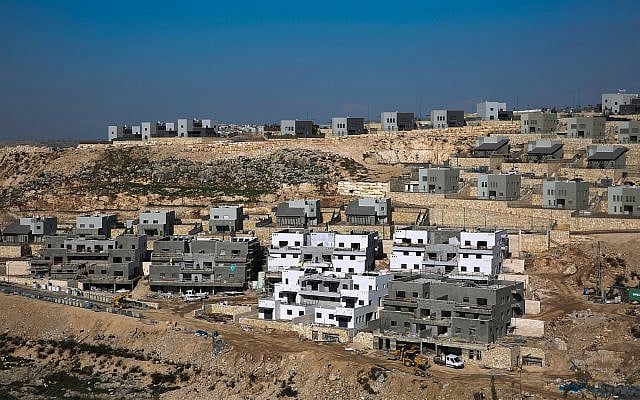
Many of Netanyahu’s allies on the right want to go further. Education Minister and New Right chairman Naftali Bennett for at least six years has supported formal Israeli annexation of all the settlements. Now plenty of politicians in Netanyahu’s own Likud party also support annexation, which would make the settlements — but not Palestinian cities — officially part of Israel.
So do Netanyahu’s opponents believe in Palestinian statehood?
That’s unclear. Benny Gantz, the main rival to Netanyahu in next month’s elections, wants a peace agreement with the Palestinians. But like Netanyahu, he has stopped short of endorsing a Palestinian state.
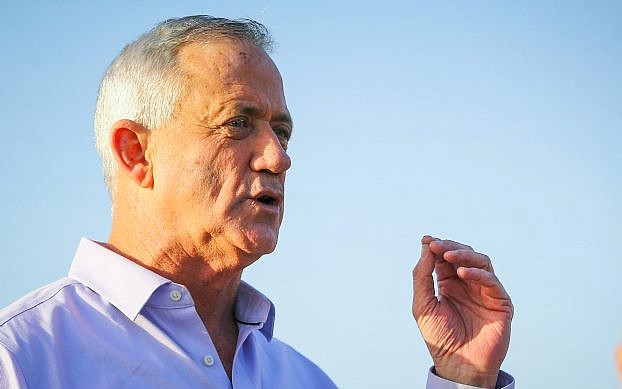
One of Blue and White’s senior politicians, former defense minister Moshe Yaalon, explicitly opposes Palestinian statehood.
Does that mean Israelis don’t want peace with the Palestinians anymore?
Israelis as a whole still want peace. But they don’t believe it will happen anymore.
A majority of Israelis (57 percent) want negotiations between Israel and the Palestinian Authority, which has civil administrative and security responsibility in parts of the West Bank. But only 23 percent believe those negotiations will go anywhere, according to a December survey by the Israel Democracy Institute think tank.
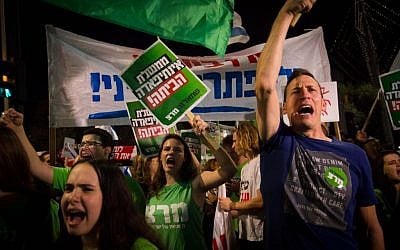
Support for the two-state solution has also fallen among both Israelis and Palestinians. As of last August, only 43 percent of both populations supports independent Palestinian and Israeli states existing side by side.
That’s “the lowest in almost two decades of joint Palestinian-Israeli survey research,” according to the groups that conducted the survey — Tel Aviv University and the Palestinian Center for Policy and Survey Research.
So what should I expect after the Israeli election?
Israelis go to the polls on April 9. As of now, no one knows who will win. But no matter who the next Israeli prime minister is, he probably won’t come into office explicitly supporting a Palestinian state.




The Times of Israel Community.