

Two years after collapse, Caesarea aqueduct to be restored in joint project
The Carmel Beach Regional Council, Caesarea Development Company, and Israel Antiquities Authority sign NIS 39 million joint agreement to preserve and develop the site
 Add ToI as a Preferred Source on Google
Rossella Tercatin is The Times of Israel's archaeology and religions reporter.
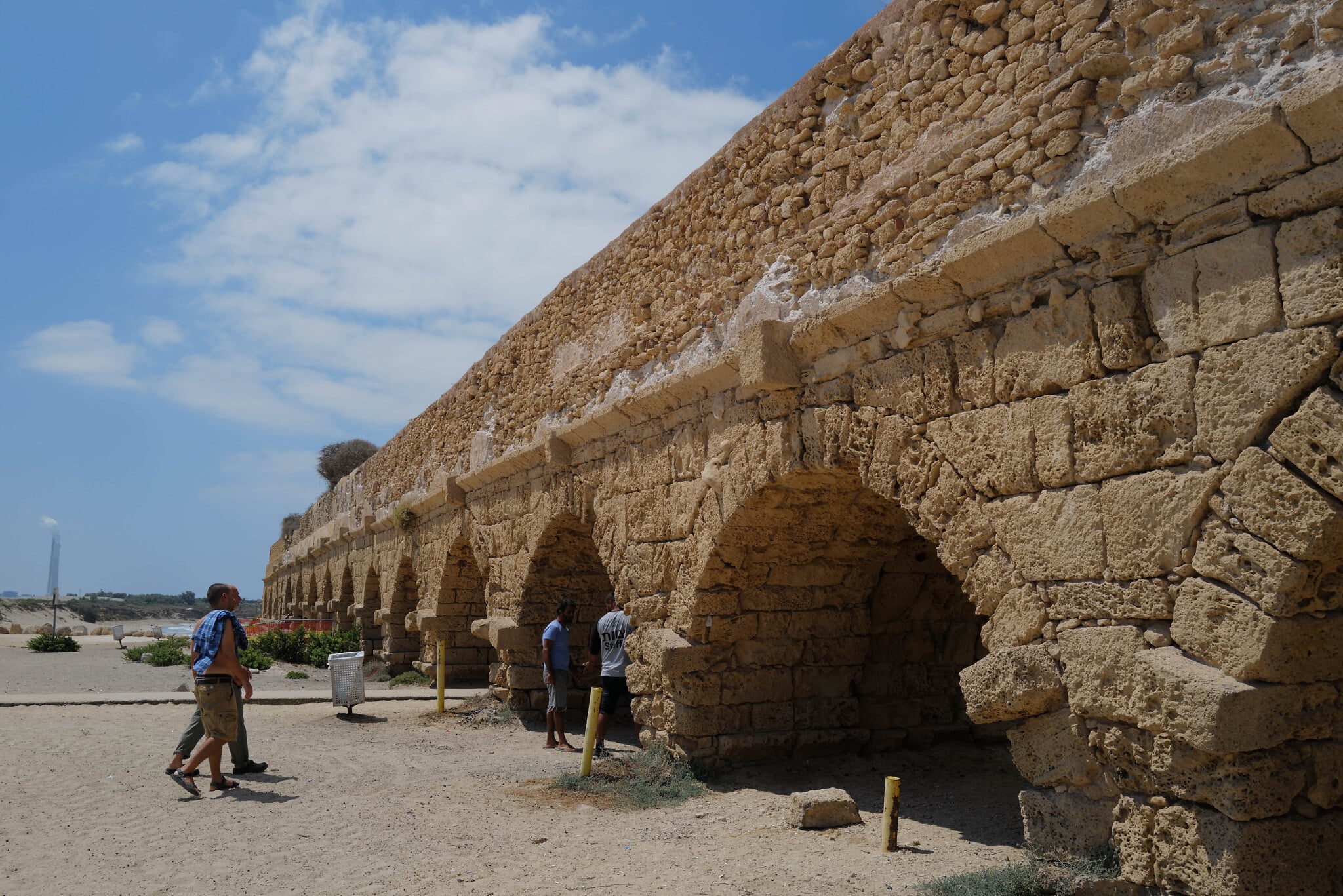
The Carmel Beach Regional Council, Caesarea Development Company, and Israel Antiquities Authority (IAA) signed a NIS 39 million ($12.6 million) joint agreement to preserve and develop the 2,000-year-old aqueduct in Caesarea, the three organizations announced this month, two and a half years after one of its arches collapsed.
“This is one of our most important heritage treasures, not only for the Carmel Coast but in all of Israel, located in the country’s leading tourist site,” Carmel Beach Regional Council head Assif Isaac said in a statement. “After years of structural deterioration, we have embarked on a joint path that ensures its preservation, its safety, and provides the highest quality restoration – for the benefit of the public, and for future generations. This is an excellent example of regional cooperation that puts the public interest above all else.”
Located on one of the most iconic beaches in Israel, the aqueduct was built under King Herod the Great (37-4 BCE) and then expanded under Hadrian (117-138 CE) to bring potable water to the city of Caesarea from springs some 16 kilometers to its northeast. It is considered among the most sophisticated engineering works left by the Romans in the region, and it remained in use until the 7th century CE.
The site, along with the rest of the ancient city’s ruins, is now part of Caesarea National Park.
In August 2023, after the collapse of one of the arches, the IAA harshly criticized the bodies responsible for the beach for ignoring its repeated warnings about the aqueduct’s condition. At the time, the IAA urged the regional council and the Caesarea Development Company to urgently secure funds for renovation work and to stabilize the rest of the aqueduct.
In the current project, NIS 15 million from the IAA, the Carmel Beach Regional Council, and the Edmond de Rothschild Foundation will be invested in preserving the aqueduct through conservation works expected to take about 40 months. The project will include the conservation and constructive stabilization of each of the aqueduct’s 85 arches, and engineering treatment of the upper aqueduct (the water channel itself) under the scientific supervision of the IAA.
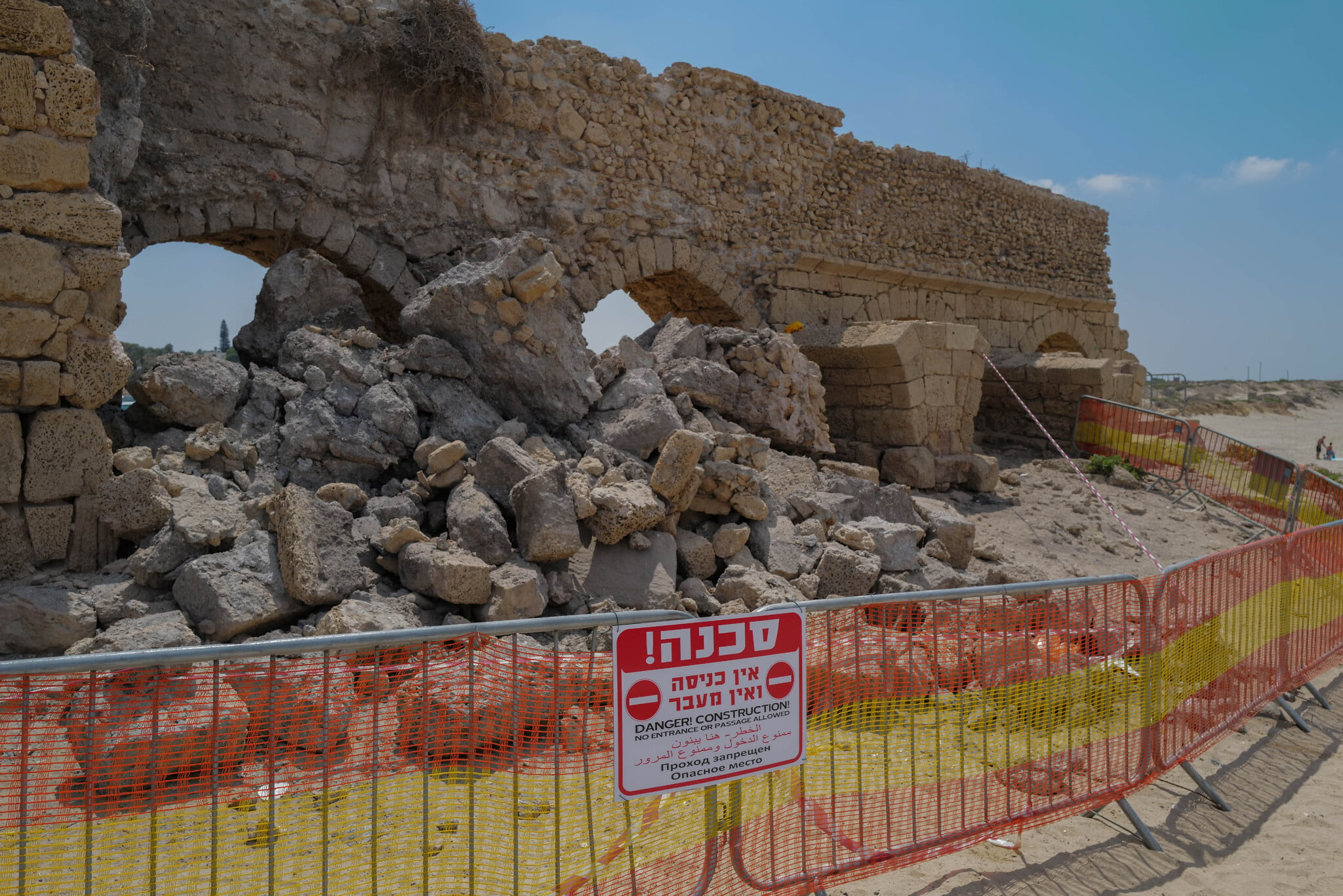
The Caesarea Development Company, a branch of the Edmond de Rothschild Foundation, will invest an additional NIS 24 million to develop the site and enhance the visitor experience, including landscaping, trail construction, and other facilities.
The Edmond de Rothschild Foundation (Israel) was founded by Baron Edmond de Rothschild (1926-1997). He bore the same name as his grandfather Edmond James de Rothschild (1845–1934), who in the 19th century purchased vast tracts of land in the Land of Israel to encourage Jewish settlement.
In the 1950s, the family transferred the land it owned in Caesarea (approximately 30 square kilometers) to the foundation, which has maintained a strong connection to the city.
“This project represents another fundamental element in the Edmond de Rothschild Foundation’s long-term investment in heritage, in the health of our modern society, and in bettering the public space in Israel, as expressed in our daily work for more than 140 years to strengthen Israeli society,” the foundation’s vice chairman Michael Kliger said in a statement.






The Times of Israel Community.