

Tzruya ‘Suki’ Lahav, writer, poet and briefly Springsteen’s violinist, dies at 74
In her early 20s, before her long career as a Hebrew lyricist and author, Lahav played and sang with the E Street Band: ‘I went from kibbutz harvest music to rocking with Bruce’

 Add ToI as a Preferred Source on Google
David Horovitz is the founding editor of The Times of Israel. He is the author of "Still Life with Bombers" (2004) and "A Little Too Close to God" (2000), and co-author of "Shalom Friend: The Life and Legacy of Yitzhak Rabin" (1996). He previously edited The Jerusalem Post (2004-2011) and The Jerusalem Report (1998-2004).
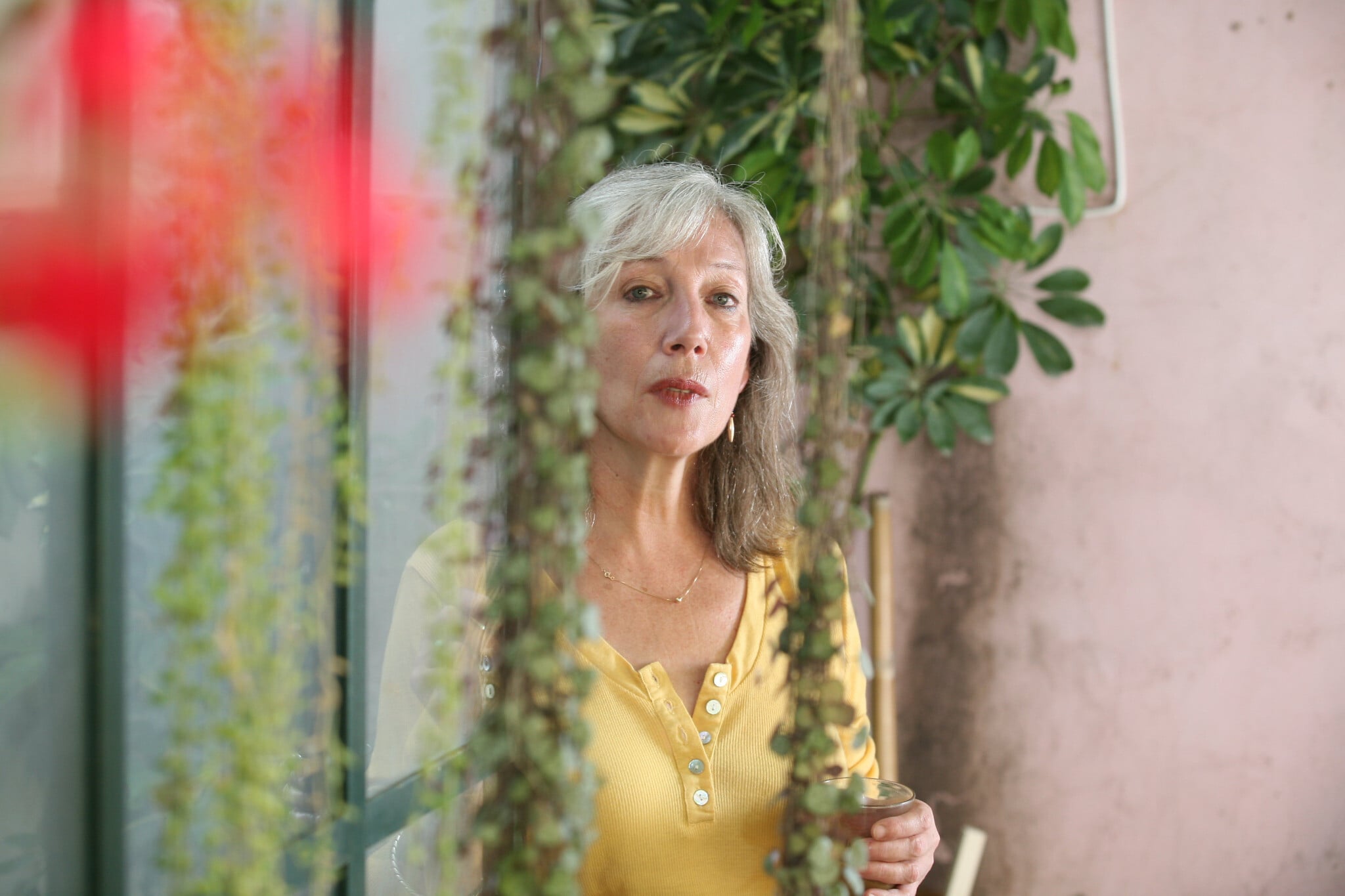
Tzruya “Suki” Lahav, the kibbutz-born songwriter, poet, and author who briefly played the violin in Bruce Springsteen’s E Street Band half a century ago, has died at 74 after a “short, tough battle” with an illness, her family said.
“My beloved, beautiful mother has been gathered to infinity,” Lahav’s son Yonatan wrote on Thursday. “She wrote songs that touched people’s hearts. She was a special woman — wise and pure-hearted — and loved life. She was the best mother I could wish for.”
Springsteen on Friday posted that “Here on E Street, we’re heartbroken” by her death.
Lahav, who won the ACUM (Society of Authors, Composers and Music Publishers in Israel) lifetime achievement award in 2011, wrote material for the classic 1975 album “End of the Orange Season” by the Shalom Hanoch-Ariel Zilber band Tamouz, and lyrics for songs performed by leading Israeli artists, including Rita (her 1990 Eurovision song contest entry), Yehudit Ravitz, Rami Kleinstein and Yehuda Poliker.
Born on Kibbutz Ayelet HaShahar in 1951, Lahav was known outside Israel, however, as Springsteen’s violinist from late 1974 to early 1975 — playing 38 gigs with the E Street Band, adding poignancy on stage to ballads like the sparse “Lost in the Flood” from Springsteen’s debut album, the sprawling “Incident on 57th Street” from his second, and the take-a-chance-on-me saga that became “Thunder Road” from his then-unreleased breakthrough third album, “Born to Run.”
She is credited for her playing on the gangland drama “Jungeland” on the “Born to Run” album liner notes.
“Yes, I went from kibbutz harvest music to rocking with Bruce,” Lahav reflected with characteristic understated amusement in a 2007 interview with this writer.
“Here on E Street, we’re heartbroken over the passing of Suki Lahav,” Springsteen wrote Friday. “Her angelic voice shone on 4th of July, Asbury Park (Sandy) and her beautiful violin brought great drama to the Jungleland intro. She also blessed our stage with her beauty and grace in our early touring days.”
“She was a wonderful friend,” he added, “may she rest with the angels.”
The Bruce Springsteen Center for American Music posted that Lahav “contributed to the early sound of Bruce Springsteen’s breakthrough era.”
“Lahav went on to become a major figure in Israeli music and literature, leaving behind a lasting legacy as both a songwriter and poet,” it noted.
Lahav’s improbable connection to Springsteen, she recalled in our interview, stemmed from the fact that her first husband, Louis, was the sound engineer at a New York studio, 914 Sound Studios in Blauvelt, favored by Springsteen’s early ’70s manager Mike Appel.
At work on his second album there, Springsteen had hired a church children’s choir for a song called “4th of July, Asbury Park (Sandy),” but they didn’t show. “And I was around. And I had this high, pure, clear voice. So that was my first time,” said Lahav – singing, uncredited, on the track that appears on the album “The Wild, the Innocent & the E Street Shuffle.”
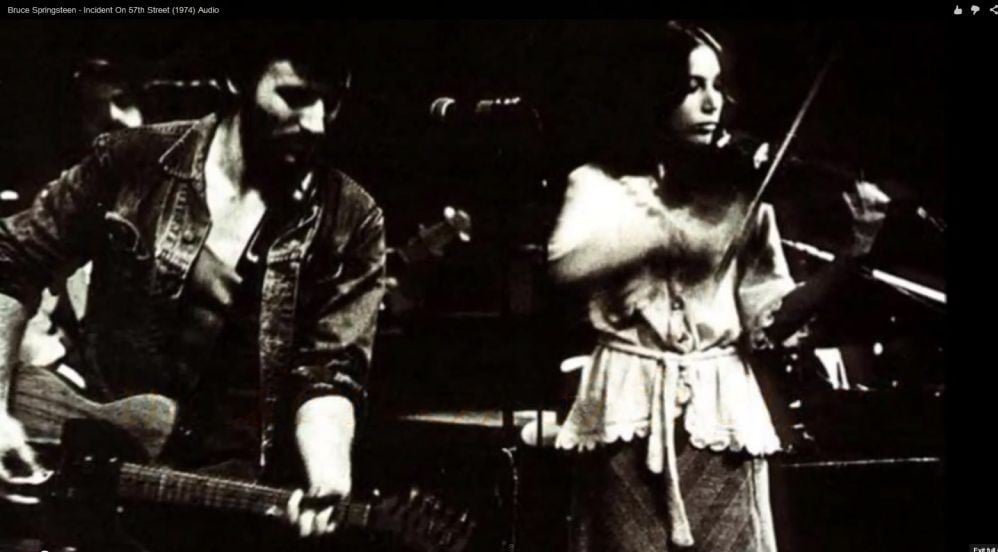
Then Springsteen decided he wanted a violinist on stage with him, she remembered, to complement the guitars, the sax and the keyboards. “Louis sent me along to audition. There were others. Surprisingly, he took me.” She added disarmingly, “I didn’t think I was very good… You have to practice for hours a day. I was never a big practicer. But maybe, maybe I did have my own thing…”
In the interview, Lahav recalled hiding behind the band’s towering saxophone player, Clarence Clemons, when coming on stage to the roars of the vast crowds as Springsteen began to break through, and described one gig when, to her alarm, the stage started revolving: “You know, the violin is this delicate instrument. I’m playing and all of a sudden, ‘Whoa, the floor’s moving!’”
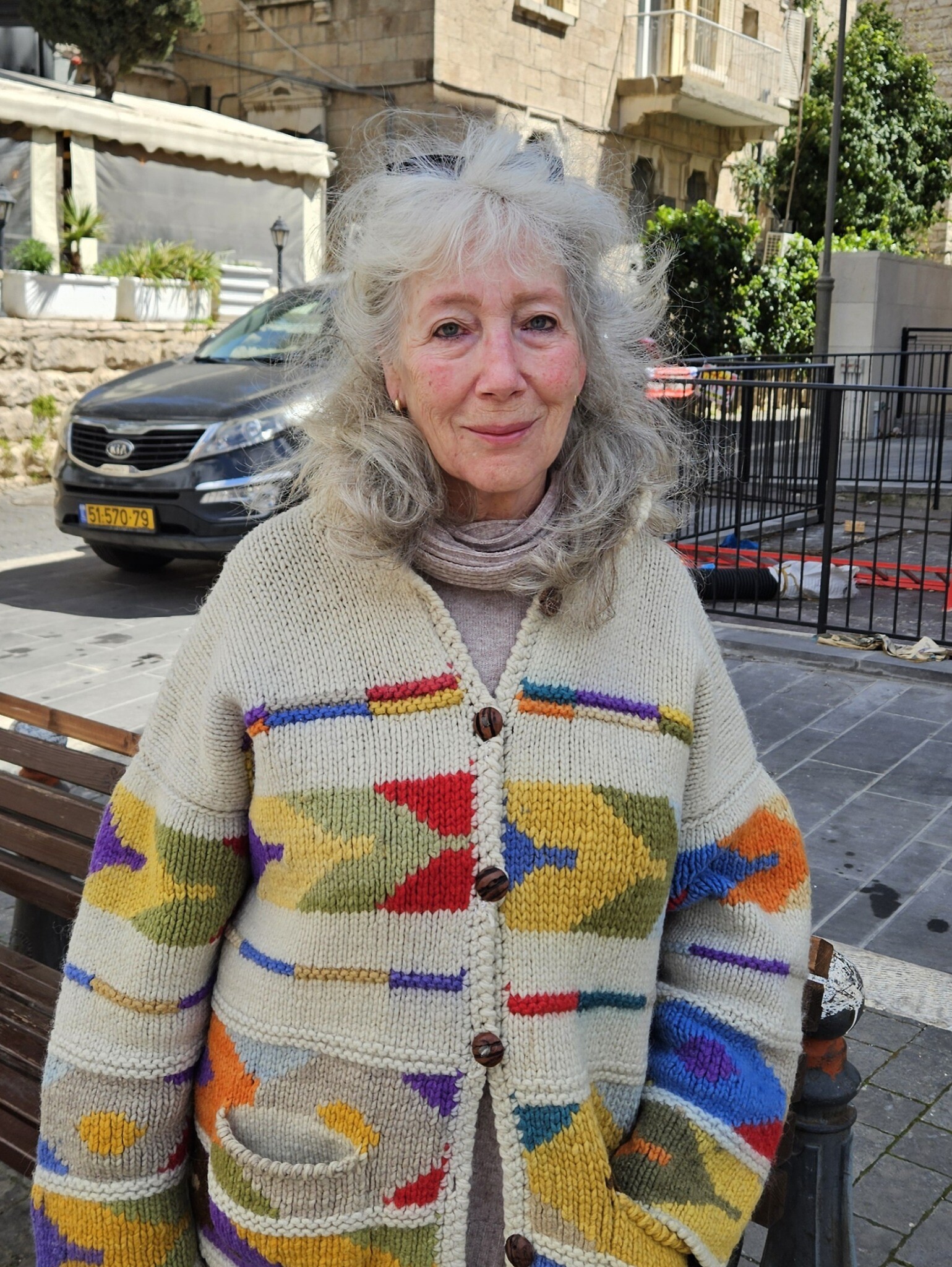
“The music was incredible,’ she said of Springsteen’s material. “The lyrics were so rich; some of the most beautiful lyrics didn’t ever make it onto record.”
“Everybody knew that he was going to be this big artist. But we were all poor. Bruce was poor. We were all just completely into this thing” – the music. “You saw him. So you understand how good he was.”
Lahav’s time with Springsteen ended as “Born to Run” was being recorded. Springsteen and Mike Appel fell out, new manager Jon Landau took over, and “we were really Mike’s people,” she said. She returned to Israel and started the next part of her life.
Lahav described Springsteen in the interview as “a lovely man.” While she said she hadn’t seen him since 1976, she “of course” still listened to those early albums.
“It’s not the main thing in my life, ” she said, “but it’s a part of me that will never fade.”








The Times of Israel Community.