

Will US Jews’ Western Wall blues fall on deaf Israeli ears?
Rage over the freezing of the deal for the pluralistic prayer space has the country’s attention, though many question whether Reform power in the US can make a dent in Israeli decision-making
 Add ToI as a Preferred Source on Google
Joshua Davidovich is The Times of Israel's Deputy Editor
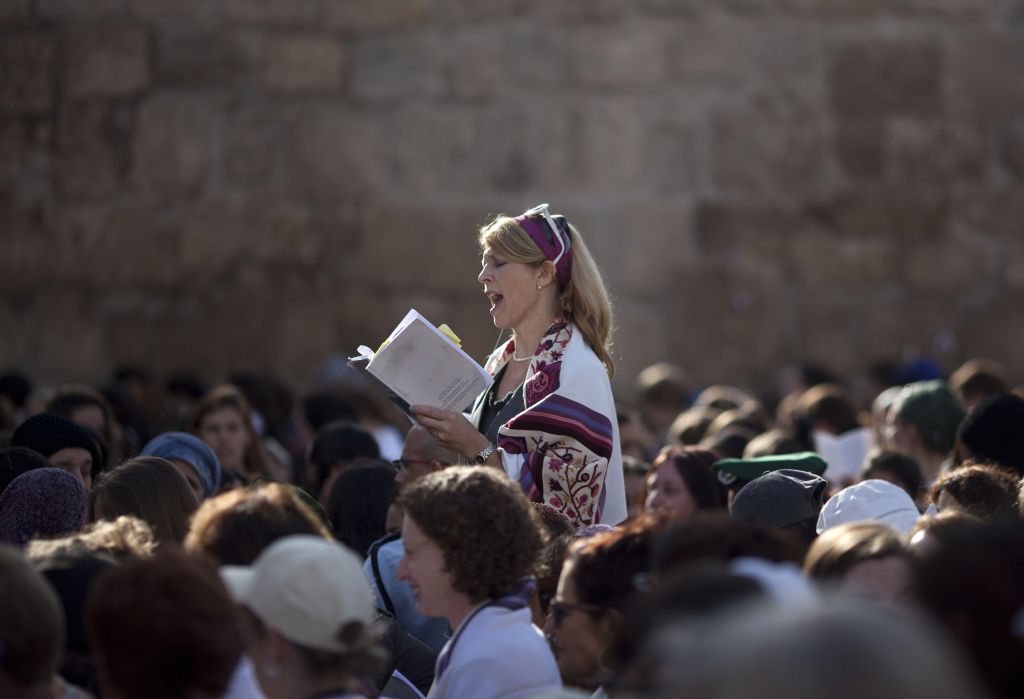
Newton was wrong. Not every reaction is equal to its action. A day after the cabinet decision to freeze a Western Wall pluralistic prayer compromise failed to fully grip the press, Diaspora Jewry’s reaction to the move, which included canceling meetings with Prime Minister Benjamin Netanyahu and sending out some very harshly worded statements, pushes the story up the news agenda, where it competes only with Hadassah’s cancer ward crisis (and a non sequitur lead from Israel Hayom on a Negev smuggling route) as the kerfuffle of the day.
That being said, broadsheet Haaretz is the only paper to lead off with the story, with a modest top front-page headline telling readers of “sharp responses in the US” to the decision, and quoting from the angry missives of the Jewish Agency, Reform Movement leader Rick Jacobs and some others.
Unlike its online English edition, the paper offers little in the way of commentary, save for an editorial cartoon showing Netanyahu as a handmaid being walked by the Western wall by ultra-Orthodox lawmakers, a la the hit Hulu show.
Punditry is where leading tabloids Yedioth Ahronoth and Israel Hayom step up their game, though. Yedioth calls the response a “price tag,” reusing its favorite topical catchphrase, even if it’s not so topical and doesn’t quite make sense here.
“Netanyahu’s attempts to lower the flames didn’t work out yesterday and despite meetings with US Jewish leaders, Jewish communities in the US — and especially in the Reform Movement — are already talking about a deep split with Israel and threatening to go to the High Court,” the paper reports
Why would Netanyahu care what US Jews — Reform Jews– have to say? The paper tries to explain that with a smattering of random numbers — some more relevant (like the fact that 35% of US Jews identify as Reform) and some less (there are 8 Jewish senators).
Missing from the numbers is how many US Jews identify as Orthodox, which may have explained that unlike Israel, where most religious Jews are Orthodox and the Reform movement is only a blip, in the US the opposite is true, with only a small percentage identifying as Orthodox.
That’s not to say that in Israel all, or even most, Orthodox support scrapping the Western Wall plan and Rabbi Ilay Ofran of Kibbutz Kvutzat Yavneh pens a column in which he doesn’t weigh in on the Western Wall and conversion controversies directly, but at least attempts to clear up some misconceptions about Reform Jews, saying the last few days have been another notch “in the divorce papers between Israel and Diaspora Jewry.”
The need for someone to dispel misconceptions about Reform Jews becomes clear once one opens Israel Hayom, which quotes extensively from Haredi figures smack-talking Reform Jews.
“What do the Reform claim? That the Western Wall is theirs? What there is theirs? What do they need the Western Wall for?… Go, make a Western Wall wherever you want and pray there. You don’t even believe in what you are doing,” the paper quotes Shas spiritual leader Rabbi Shlomo Cohen saying.
Columnist Nadav Shragai in Israel Hayom is one of the few voices defending the sinking of the deal, saying Netanyahu made the right choice and it was US Jews trying to push for too much that killed the plan in the end, spreading some of his own misconceptions about Reform US Jews along the way.
“Choosing between breaking with Reform Jews who do not live in Israel, do not immigrate here and do not vote in the Knesset and breaking with some million Jews who live here, vote in the Knesset and steadfastly keep to the traditions of our forefathers for generations, Netanyahu chose correctly, and not just for political reasons,” he writes. “Most in the national religious camp are not bothered by mixed prayer in the area set up for it. This is the southern part of the Western Wall, which had been set aside just for archaeology. The insistence of US Jews on raising their flag over the site and becoming part of those formally recognized as representatives in the administration of the Western Wall is what in the end killed the agreement. An informal deal could have helped them many times over. If they were able to prove they had power in Israel too, and were not just a speck, then the formal recognition would follow.”
Power in numbers can be a false dichotomy, though. Sometimes you just need a better story, like a tiny pediatric oncology wing in Jerusalem’s Hadassah Ein Kerem hospital, where a crisis over doctors has managed to grip the nation despite affecting only a small number of people.
The story continues to lead Yedioth, which takes up almost its whole front page with a letter from a patient to High Court judges petitioned by the patients’ parents to let the doctors open an alternative wing at a separate hospital.
“Dear judges, I turn to you despondent with a simple request: let me live!! Give me my quiet life back,” the paper quotes in full from the letter by Roee Ben-David, 14.6 years old. “I have enough tough battles with my sickness, and now I need to deal with fights over money, politics and ego? That’s not for me or any of my brothers, kids suffering from cancer. We have enough wars to deal with.”
Haaretz’s lead editorial takes the opposite view of the doctors and their patients and says the court should dismiss the case and force them to abide by the Health Ministry directive to get back to work at Hadassah.
“It would behoove the court to force the two sides into mediation that would lead to bringing the doctors back to Hadassah while giving strong guarantees that their professional demands will be met, so that the treatment of children who need their doctors can resume,” the editorial reads.




The Times of Israel Community.