

After Peres, president Sheetwho?
Imagining Sharansky, Rivlin or Ben-Eliezer at the Nelson Mandela memorial ceremony

 Add ToI as a Preferred Source on Google
David Horovitz is the founding editor of The Times of Israel. He is the author of "Still Life with Bombers" (2004) and "A Little Too Close to God" (2000), and co-author of "Shalom Friend: The Life and Legacy of Yitzhak Rabin" (1996). He previously edited The Jerusalem Post (2004-2011) and The Jerusalem Report (1998-2004).
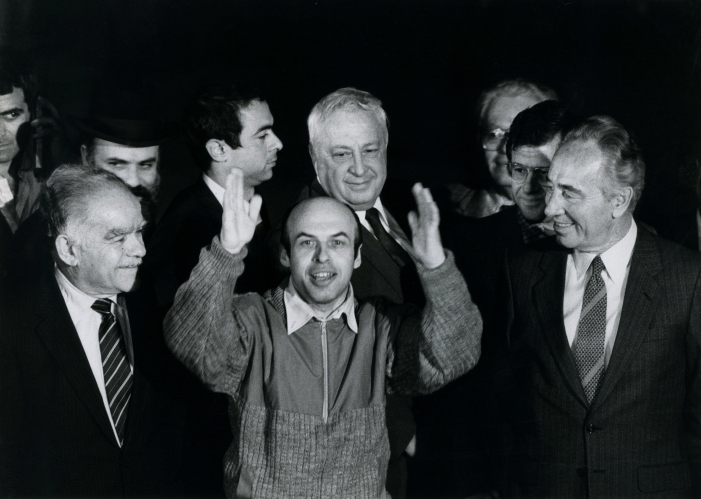
The dismay in Israel that Shimon Peres would not be traveling to last week’s memorial ceremony for Nelson Mandela served as an uncomfortable reminder that the president, a face of Israel beloved by so much of the international community, will be ending his single, seven-year term of office next summer.
Many Israelis, and supporters of Israel, were critical of Prime Minister Benjamin Netanyahu’s decision not to travel to the event — arguing that it was a missed opportunity to demonstrably position Israel in the massed ranks of prominent Mandela mourners, and thus to imply Israel’s identification with the human rights imperatives and the capacity for forgiveness for which Mandela will be remembered. If the money had been found to send the prime minister to Margaret Thatcher’s funeral, they argued, then surely citing financial hardships in the case of Mandela’s was a misstep.
But it was Peres, the nonagenarian fellow Nobel Peace Prize winner, who was the natural choice to go — and would have gone, had his doctors not insisted he stay home to get over the flu; Peres, the avuncular, ostensibly consensual, above-the-fray Israeli elder statesman.
Within Israel, in truth, Peres is not a consensual figure at all. For every Israeli whose heart soars when he publicly declares that he trusts President Obama to solve the Iranian nuclear crisis, that Hassan Rouhani is not his enemy, and that Mahmoud Abbas is a peace partner, there is another Israeli (or two) who shakes his or her head in despair at such foolishness. But even many of those who consider him unconscionably naive are prepared to forgive and indulge him. He’s 90, after all, the oldest of elder statesmen, and such a boon to Israel’s image abroad. So who might possibly follow him?
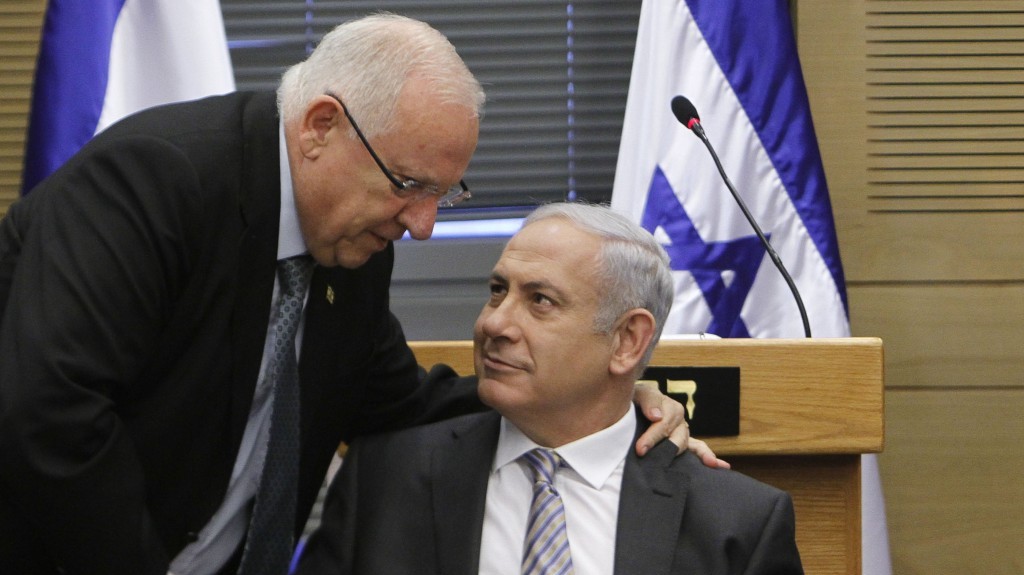
Parliament’s most enthusiastic and long-time would-be successor is former Knesset speaker Reuven (Ruby) Rivlin — the failed contender last time, and a good bet until his falling out last year with Netanyahu. Rivlin is also a strong public opponent of the two-state solution on whose basis the State of Israel was revived by UN vote, and might therefore not be the most effective choice of international goodwill emissary.
A fellow Likud potential contender is the ever-stymied Silvan Shalom; critics of the notion shudder at the thought of his, let’s politely say irrepressible, wife Judy Shalom-Nir-Mozes as Israel’s first lady.
Meir Sheetrit, once Israel’s youngest mayor and now a much-traveled ex-Likud, ex-Kadima, and now-Hatnua MK, is another would-be president whose candidacy is similarly uninspiring. All around the world, you can already hear potential hosts exclaiming, “President Sheetwho?”
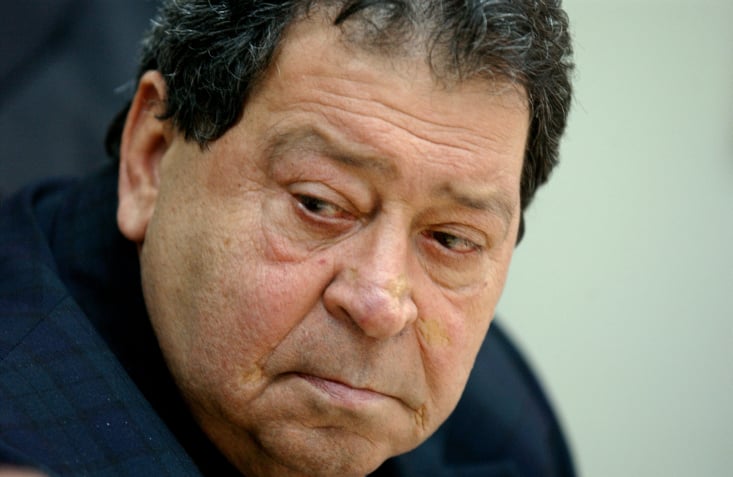
Choosing 77-year-old Binyamin “Fuad” Ben-Eliezer, Labor’s Iraqi-born former leader, the oldest member of the current Knesset, would maintain the tradition of sending elderly, avuncular, ex-Labor ministers to the President’s Residence. Ben-Eliezer speaks good English, has bounced back from life-threatening illness, appears to have a handle on international affairs, and is widely liked. But widely enough liked for a center-right Knesset to make him president in a secret ballot? That’s another question.
Lower down the list of just-possibles, Dalia Itzik, the former Knesset speaker has who filled in for Peres on occasion, lost her seat in the last elections, and so has no political power base from which to mount a campaign, however tantalizing the prospect of a female president. And former foreign minister David Levy has made it clear he doesn’t want the job, which is probably for the best.
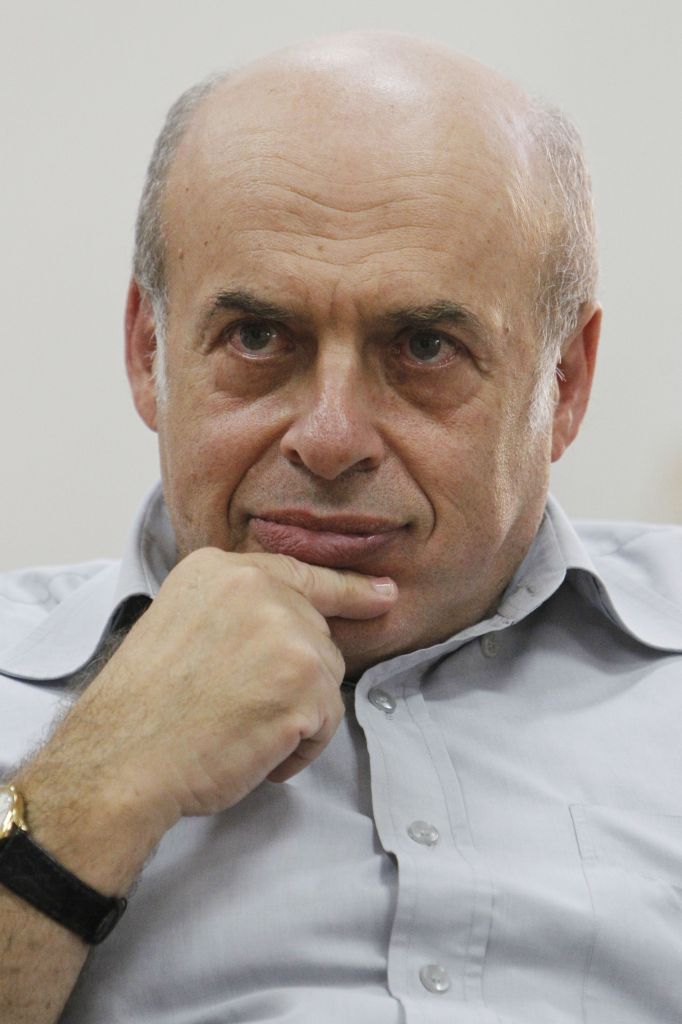
Which leaves Natan Sharansky, embodiment of the Jews’ struggle to leave the Soviet Union. Sharansky, a former minister now fighting a losing battle to render the Jewish Agency relevant, would probably be Netanyahu’s choice for the post (though the prime minister may opt to stay out of this particular battle). A man of personal integrity; an original thinker; a human rights activist who, while wary of the Muslim Brotherhood, almost uniquely among Israeli leaders embraced the potential of the Arab spring to liberate this region from dark dictatorships, and a fervent lifelong Zionist to his extreme personal cost (years of hard labor and solitary confinement in Soviet gulags), Sharansky stands head and shoulders (figuratively) above all other candidates. One disadvantage is that his English, though his vocabulary is fine, remains hard to understand, but that’s a deficiency he could surely rectify. How would president Sharansky have fit in at the Nelson Mandela ceremonies? Perfectly.
But ex-MK and minister Sharansky has no particular support among the 120 MKs who will be making the decision. They’re far more likely to choose one of their own — which means Rivlin and Ben-Eliezer are probably the front-runners, for a presidency which would be less outward-focused than Peres made it.
Typically, there’s no current agreement on when Peres’s term actually ends. Is it July 15 — the end of the seven years according to the Gregorian calendar, or July 29 — seven years by the Hebrew clock?
The Knesset is currently busy trying to figure this out. Its 120 members are going to have a rather more difficult time, however, figuring out who to install in Peres’s place.
Perhaps the incumbent would like to have the law changed and take a second term? He’d only be a stripling of 97 at the end of it.
The word from the President’s Residence: No.








The Times of Israel Community.