

Europe, Russia propose rival UN resolutions on Syria
Key differences include the necessity of a cease-fire prior to the deployment of a larger observer force and the activities the force would be authorized to monitor
 Add ToI as a Preferred Source on Google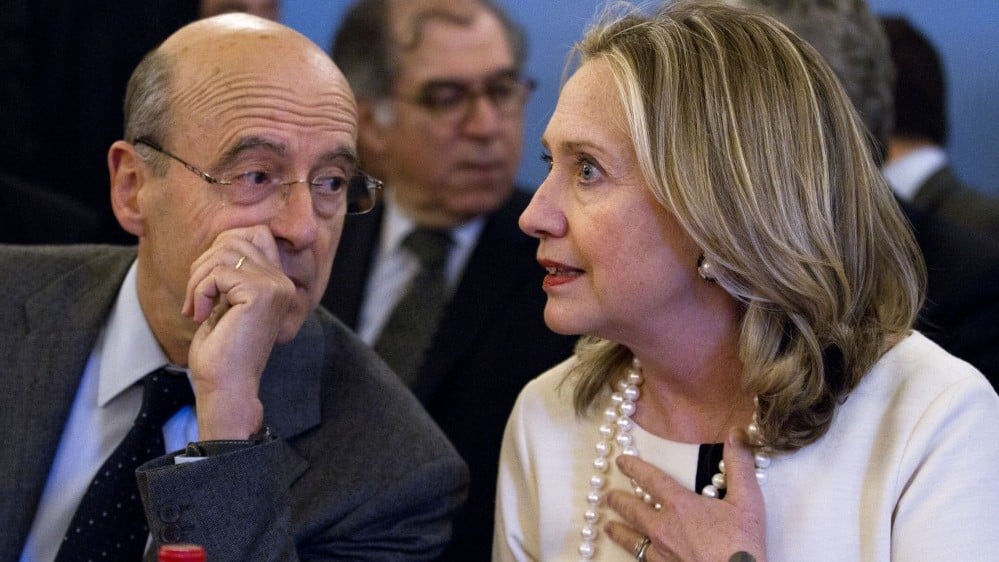
UNITED NATIONS (AP) — European nations and Russia proposed rival UN resolutions Friday, both calling for expanding the number of UN cease-fire monitors in Syria from 30 to 300 but disagreeing on possible sanctions and on how quickly the larger observer force should get on the ground.
The key difference in the texts — circulated to the Security Council and obtained by The Associated Press — is whether there should be a sustained cease-fire before the expanded force is deployed.
The European draft would authorize a force of 300 observers but condition its deployment to notification from Secretary-General Ban Ki-moon that Syria has implemented its pledge to withdraw all troops and heavy weapons from cities and towns “to his satisfaction.” Ban accused Syrian President Bashar Assad on Thursday of failing to honor a peace plan that took effect a week ago.
The draft resolution stresses that it is critically important to create “a sustained cessation of violence” and establish “a conducive environment” for the large mission to deploy.
The draft proposed by Russia, Syria’s closest ally, would immediately establish the 300-strong force without any conditions, though it does underline the importance that international envoy Kofi Annan’s attaches to Syria’s withdrawal of troops and weapons.
The previously divided Security Council united last Saturday for the first time since the Syrian conflict began 13 months ago to adopt a resolution authorizing the deployment of an advance team of up to 30 UN observers.
Annan’s diplomacy succeeded in getting Russia to back the monitoring mission, but Syria’s ally continues to resist more forceful measures.
Another difference in the texts is whether Syria should face possible sanctions if it fails to send its troops and heavy weapons back to barracks.
The European draft expresses the council’s intention, in the event of Syrian non-compliance, to adopt non-military sanctions under Article 41 of the UN Charter which would likely include economic measures such as asset freezes and travel bans. The Russian draft makes no mention of such measures.
The European draft, circulated by France, would authorize the expanded UN Supervision Mission in Syria, to be known as UNSMIS.
UNSMIS would not only monitor a cease-fire and withdrawal of Syrian troops and heavy weapons but also “monitor and support” full implementation of Annan’s six-point peace plan.
The Russian draft says the expanded force will monitor a cease-fire “and relevant aspects of the envoy’s six-point proposal.”
Russia held a meeting of experts from the 15 council nations at its mission Friday morning to discuss its text, and Security Council ambassadors scheduled consultations late Friday afternoon. Diplomats said if they reach agreement in a final draft there could be a vote on a resolution as early as Saturday.
Seven of the advance observers are already on the ground, another two will arrive Monday, and the UN hopes to have all 30 in Syria next week, Annan’s spokesman Ahmad Fawzi told The Associated Press in Geneva.
Members of the advance team are being borrowed from UN missions in the region so they can deploy quickly, he said.
The preliminary agreement between Syria and the United Nations on the deployment of UN observers says they will have freedom to go anywhere in the country by foot or by car, take pictures, and use technical equipment to monitor compliance with the cease-fire engineered by Annan.
The issue of using helicopters and aircraft will likely dominate discussions in the coming days, Fawzi said.
The Russian draft resolution makes no mention of helicopters but the European version underlines the need for the Syrian government “to agree rapidly” with the UN on “the independent use of air assets” by the expanded force.
In France, French Foreign Minister Alain Juppe called on the international community to live up to its responsibilities and warned that if Annan’s peace plan “doesn’t function, we have to envisage other methods.”
Juppe said on France’s BFM television that his country would support a US-backed proposal for a UN arms embargo and other tough measures against Syria.
The peace plan is “the last chance before civil war,” he said.
Juppe hosted US Secretary of State Hillary Rodham Clinton and other diplomats in Paris on Thursday to try to work out options for Syria.
The observers, who report to Annan daily, will have freedom to install temporary observation posts in cities and towns, to monitor military convoys approaching population centers, to investigate any potential violation, and to access detention centers and medical centers in coordination with the International Committee of the Red Cross and Syrian authorities, the agreement says.
Meanwhile, diplomats meeting Friday in Geneva to discuss the humanitarian situation agreed to a draft plan to provide aid to civilians affected by the fighting.
The plan budgets $180 million to provide food, medicine and other supplies to about 1 million people inside Syria. It comes on top of the aid that is delivered to refugees who have fled abroad.
John Ging, who heads the coordination and response division of the UN’s Office for the Coordination of Humanitarian Affairs, said the plan still needs Syria’s approval, particularly the question of how many aid workers will be allowed into the country.
The Obama administration announced at the Geneva meeting that it would provide an additional $8 million in humanitarian aid to Syrians suffering as a result of Assad’s crackdown.
State Department spokeswoman Victoria Nuland said in Washington that the new funds bring total US humanitarian assistance for Syrians to $33 million. All the money is being directed to UN agencies or UN-accredited humanitarian organizations, she said.
Copyright 2012 The Associated Press.







The Times of Israel Community.