

Hamas rejected Egyptian proposal to hold fire
Israel was favorable toward Cairo’s bid last week for a 40-hour truce, to be followed by negotiations for long-term agreement

 Add ToI as a Preferred Source on Google
Avi Issacharoff, The Times of Israel's Middle East analyst, fills the same role for Walla, the leading portal in Israel. He is also a guest commentator on many different radio shows and current affairs programs on television. Until 2012, he was a reporter and commentator on Arab affairs for the Haaretz newspaper. He also lectures on modern Palestinian history at Tel Aviv University, and is currently writing a script for an action-drama series for the Israeli satellite Television "YES." Born in Jerusalem, he graduated cum laude from Ben Gurion University with a B.A. in Middle Eastern studies and then earned his M.A. from Tel Aviv University on the same subject, also cum laude. A fluent Arabic speaker, Avi was the Middle East Affairs correspondent for Israeli Public Radio covering the Israeli-Palestinian conflict, the war in Iraq and the Arab countries between the years 2003-2006. Avi directed and edited short documentary films on Israeli television programs dealing with the Middle East. In 2002 he won the "best reporter" award for the "Israel Radio” for his coverage of the second intifada. In 2004, together with Amos Harel, he wrote "The Seventh War - How we won and why we lost the war with the Palestinians." A year later the book won an award from the Institute for Strategic Studies for containing the best research on security affairs in Israel. In 2008, Issacharoff and Harel published their second book, entitled "34 Days - The Story of the Second Lebanon War," which won the same prize.
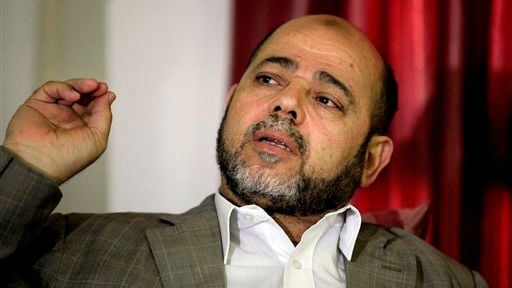
As part of Egypt’s efforts to halt the fighting between Hamas and Israel, Cairo proposed to the Palestinian organization’s leadership and to the Israeli government that they mutually stop the fire for 40 hours, after which a broader ceasefire agreement would be discussed — but Hamas rejected the offer, The Times of Israel learned from Israeli and Hamas sources.
The offer was presented to the deputy head of the Hamas political bureau, Moussa Abu Marzouk, by Egyptian intelligence officers last week. Abu Marzouk rejected it after a brief consultation with the terror group’s military wing, the Izz al-Din al-Qassam brigades, the sources said.
Israeli officials said they were open to the possibility of stopping the fighting for an agreed-upon period before negotiating the terms of a longer-term truce.
Egypt does not intend to publicly blame Hamas for Cairo’s failure in its efforts to reach a ceasefire, the sources said, but believes the Islamist organization will bear the responsibility for its refusal. The sources said the Egyptian proposal did not include an outline for a long-term truce, but did include various ideas that different officials – European, Egyptian, and others – were discussing with the goal of securing a ceasefire deal.
On Saturday, Hamas spokesman Sami Abu Zuhri said his organization had not been presented with any ceasefire offers: “They didn’t present any plan or outline for a ceasefire,“ he said. According to Abu Zuhri, a temporary truce cannot be discussed so long as the “aggression continues.”
Egyptian President Abdel-Fattah el-Sissi met Saturday with Tony Blair, a representative of the Middle East Quartet who also serves as the Egyptian leader’s economic adviser. The Egyptian foreign ministry spokesman, Badr Abed al-Ati, said Blair’s visit aimed to restore the 2012 ceasefire agreement that followed the Operation Pillar of Defense.
Egypt’s wishes to lead the Arab world in calling for Hamas and Israel to return to the 2012 agreement. Israel has said it is willing to accept the terms of that agreement, but Hamas has refused.
Egypt has made it clear to Hamas it is willing to open the Rafah border crossing under close monitoring conditions, including the presence of PA forces not only at the border crossing but also alongside the Gaza-Sinai border, to prevent smuggling attempts.






The Times of Israel Community.