

Arafat-style, Abbas is playing with fire
In applying to join 15 international organizations, the PA president is trying to pressure Israel and the US. The gambit may backfire

 Add ToI as a Preferred Source on Google
Avi Issacharoff, The Times of Israel's Middle East analyst, fills the same role for Walla, the leading portal in Israel. He is also a guest commentator on many different radio shows and current affairs programs on television. Until 2012, he was a reporter and commentator on Arab affairs for the Haaretz newspaper. He also lectures on modern Palestinian history at Tel Aviv University, and is currently writing a script for an action-drama series for the Israeli satellite Television "YES." Born in Jerusalem, he graduated cum laude from Ben Gurion University with a B.A. in Middle Eastern studies and then earned his M.A. from Tel Aviv University on the same subject, also cum laude. A fluent Arabic speaker, Avi was the Middle East Affairs correspondent for Israeli Public Radio covering the Israeli-Palestinian conflict, the war in Iraq and the Arab countries between the years 2003-2006. Avi directed and edited short documentary films on Israeli television programs dealing with the Middle East. In 2002 he won the "best reporter" award for the "Israel Radio” for his coverage of the second intifada. In 2004, together with Amos Harel, he wrote "The Seventh War - How we won and why we lost the war with the Palestinians." A year later the book won an award from the Institute for Strategic Studies for containing the best research on security affairs in Israel. In 2008, Issacharoff and Harel published their second book, entitled "34 Days - The Story of the Second Lebanon War," which won the same prize.
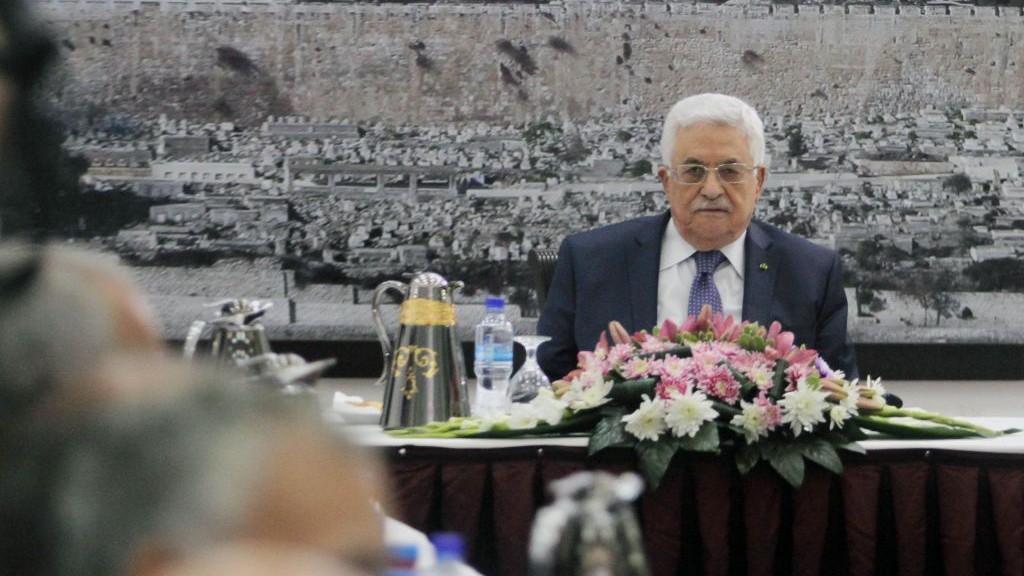
“It was expected that the fourth phase [of prisoner releases] would be executed on the 29th of March, and it is deeply regrettable that so far the decision has not been taken to release them. The leadership committed to not approach international organizations during the nine months [of negotiations] for the sake of the release of those prisoners… I presented to the leadership the matters relevant to the prisoners and we decided that if the prisoners will not be released then we will approach 63 international organizations and request to join them. On this matter we unanimously voted and therefore signed a document for joining 15 international agreements.”
That was how Palestinian Authority President Mahmoud Abbas chose to explain his signature on papers to join 15 international charters on Tuesday evening.
Confused? You’re not alone.
The signing ceremony was one of those superfluous performances, full of pomp, by the PA.
In a live broadcast on official television, surrounded by all the members of the Palestinian leadership, Abbas chose to bring to a vote the matter of applying to international bodies — as though there were any chance that even one of the members of the leadership would vote against the push; as though it wasn’t an overly scripted and staged performance, a set up in which the result could be easily predicted.
At times like this, Abbas is all too reminiscent of Yasser Arafat.
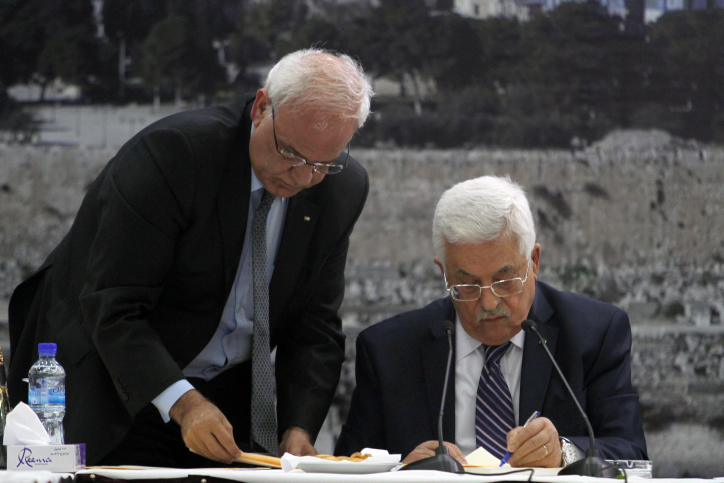
The man who helped Abbas with the ceremony was the head of the Palestinian negotiation team, Saeb Erekat, who had been threatening Israel for months with this international push.
But look deeper, and you’ll see Abbas announced that he was immediately signing up for 15 international organizations, but not the big-ticket United Nations organizations. Look deeper still, and you’ll note that the applications were not actually filed.
The president of the Palestinian Authority may have put his name to the applications, but he hadn’t submitted them officially as of Tuesday night. And Abbas stressed in his speech that he intends to continue negotiations with Israel and the United States until the April 29 deadline.
The gap between the defiant signature ceremony and the announcement of continued negotiations didn’t confuse the Palestinian media, however. Abbas’s media has already declared the peace talks a failure and it stressed the appeal made by Abbas to the Palestinian public, to go out and begin peaceful resistance.
And herein lies a difficult and immediate problem for Abbas. What appears to be an attempt to pressure Israel and the US could easily inflame the Palestinian street, and could push Abbas and the Palestinian leadership once again up a tree from which it would be hard to climb down.
Maintaining the negotiations at this stage is not only in the interest of Israel, but also in the interest of the PA, which knows that erupting anger on the Palestinian street could be directed at Ramallah and Abbas first, even before Israel.
On Tuesday evening a “spontaneous” rally was held in support of Abbas and his “historic” decision. It’s hard to say if the decision really is historic. It is even harder to say where such demonstrations may lead.




The Times of Israel Community.