

After assassination, some elation but fears of an escalation
Behind the garish coverage of the killing of Hamas’s Mazen Faqha lie the questions of who did it and how Hamas may respond
 Add ToI as a Preferred Source on Google
Joshua Davidovich is The Times of Israel's Deputy Editor
There are times when tabloids find reasons to go campy: Silly stories about psychopaths, corruption and official misdeeds can sometimes bring out the punniest and most garish aspects of the papers, as they use the opportunity to let loose and add some color to the stories.
Assassinations don’t normally fall into that category — Osama bin Laden notwithstanding — as they have to do with the death of a living, breathing human being. But the killing of Hamas’s Mazen Faqha — a baddie to be sure — is apparently enough for Israel’s two main tabloids to throw to the wind the kind of measured treatment usually reserved for coverage of life-and-death issues.
Yedioth Ahronoth, for instance, has a picture of Faqha on the front page, his face framed by a sniper’s sight, which also makes for one letter in the word “husal” (assassinated), and adorned with four bullet holes, representing the four shots that killed the terrorist.
Israel Hayom is a little less chintzy with its smaller sniper’s sight, but still plays up the dramatic skullduggery with the headline “Four shots at point blank — with a silencer,” which doesn’t actually offer much in the way of information if you were to glance at the paper expecting news.
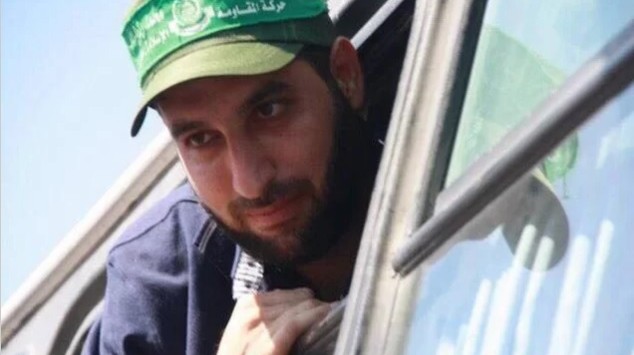
On the other end of the spectrum, Haaretz moves beyond the assassination to the blame game with the headline “Hamas: Israel assassinated a senior official in the militant wing,” somehow not using even a single sniper’s sight or bullet hole to gussy up the headline.
The headline does cut to one of two questions at the center of the coverage of the assassination: Who did it, and how will Hamas respond? While Hamas was quick to blame Israel, the Jewish state has kept mum and Yedioth offers a slew of other possibilities, including Salafi groups, the Palestinian Authority, a personal beef, and Hamas itself.
“That’s not a typo,” the paper writes. “Hamas isn’t above taking action to get rid of senior officials who deviate from orders coming from above and take on too much independence.”
Much more space, though, is devoted to the second question, particularly given the recent election of uber-hawk Yahya Sinwar as head of Hamas in Gaza.
Haaretz’s Jacky Khoury writes — much like Avi Issacharoff for The Times of Israel — that the fact that Hamas did not respond with rocket fire shows that even if it may respond at some point, it does not want to let this slip to all-out war.
“Hamas understands that, under the circumstances, opening up a front against Israel can only cause damage — not only in terms of destruction of infrastructure and buildings, but also politically. Hamas is at the height of a reorganization, with both internal elections and the establishment of a new system of control in the Gaza Strip. The organization is also in the midst of talks with Egypt and preparing the political platform that it intends to present in the coming weeks,” he writes.
But in Israel Hayom, Yoav Limor surmises that Sinwar will have a hard time holding back from responding, and it will be up to Israel to make sure the response fails.
“Hamas will look for a way to respond between the tension of wanting to hit back but being worried about an escalation. It’s possible they will try to hit a target that they see as high value — like a senior IDF officer,” he writes. “It’s necessary, then, that at least until everything is clarified, the IDF will limit its exposure as much as possible. Stay away from the fence, act wisely, don’t take unnecessary risks. This is how it has acted on the borders with Syria and Lebanon after assassinations that were attributed to it.”
Jewish consternation center
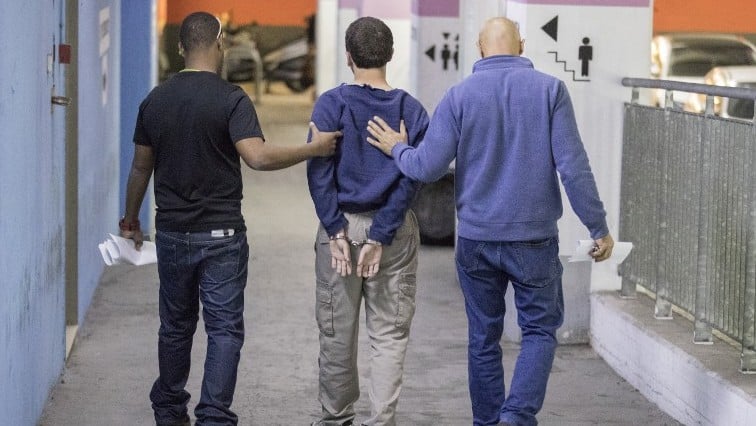
Papers also continue to look at the bizarre case of the Israeli teen fingered as being behind the JCC bomb threats, delving deeper into how he was caught and the damage he is accused of causing.
Yedioth reports that the teen, who still cannot be named in Israeli media — though his name is all over papers in the US — is suspected of making over 1,000 threatening phone calls. The paper’s Ronen Bergman reports that he was collared with the help of the FBI, which worked extremely closely with Israeli police.
“The cooperation between the police and the FBI was so close that the US cyber attache accompanied the preparations for the raid last week with the Israeli cyber division and waited there until the suspect was arrested and brought to the station. She was not allowed to be present during the actual questioning, and so she watched from a separate room, saw what was happening, suggested questions and requested clarifications. In conversation with American officials the possibility came up that he may be extradited to the US, where most of the crimes took place,” he reports.
Haaretz, though, notes that the story was not exactly one of agencies working in sync, but rather the FBI swooping in to save the day after two years of little movement on the case.
“Sources attributed the turnabout to pressure from US President Donald Trump. A few weeks ago, after Trump announced that the FBI would do everything in its power to catch the perpetrator, the agency sent 12 investigators from its cybercrime unit to Israel to assist the Israeli investigation,” the paper reports.
Israel Hayom reports that one unexpected upshot of the anti-Semitic attacker actually being an Israeli Jew is fears that now there will be a surge in actual anti-Semitism over the incident.
The paper quotes a Connecticut rabbi saying that his office had received emails Thursday claiming all reports of anti-Semitism were “fake news.”
Haaretz’s lead editorial also tackles the issue, but unlike Israel Hayom, which saw Trump as exonerated by the identity of the culprit, the paper still points to the president as a key factor in a very real rise of anti-Semitism, and raises concerns that efforts to fight it will be blunted.
“The fake threats by an Israeli from Ashkelon are liable to undermine this battle, which is of unparalleled importance, by sending the message that the danger of anti-Semitism has been inflated due to political needs and self-interested motives,” the paper writes. “But anti-Semitism does exist in the US, as well as in other countries. Though it’s vital to ground accusations in evidence and avoid relying on unreliable sources, the Jewish people and the State of Israel must continue waging this important battle.”




The Times of Israel Community.