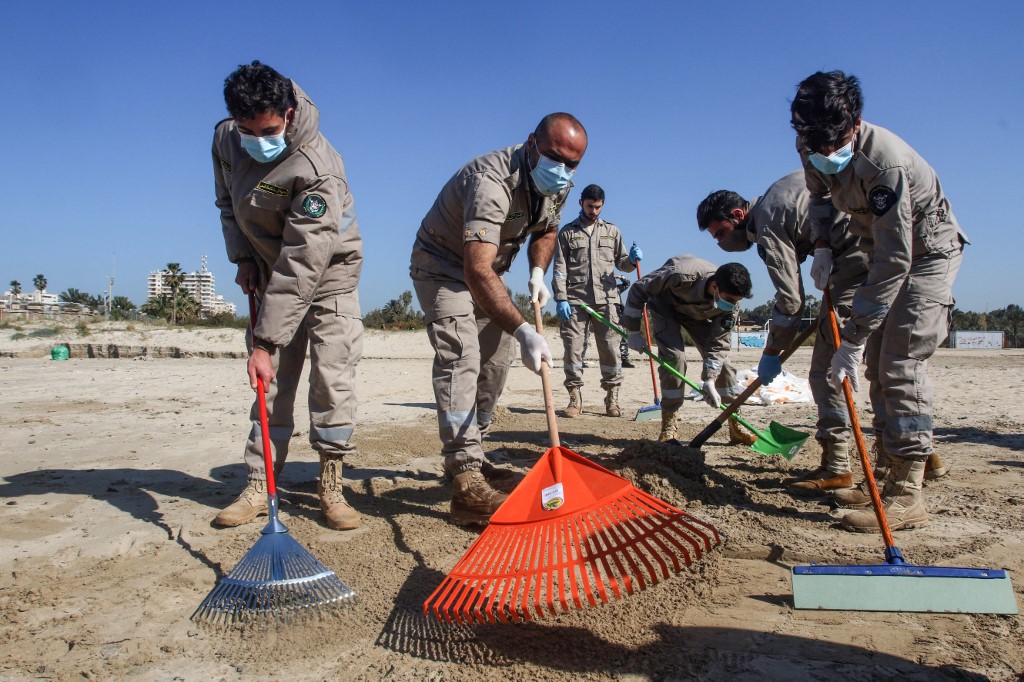
Volunteers from youth associations clean a contaminated beach in the southern Lebanese city of Tyre on February 27, 2021, following last week's offshore oil spill that drenched the northern Israeli coastline and reached parts of the neighboring Lebanese beaches. (Mahmoud ZAYYAT / AFP)
TYRE, Lebanon — Lebanese on Saturday raked balls of tar away from a turtle beach in the south of the country, as a massive slick washed ashore after hitting neighboring Israel.
A storm more than a week ago threw tons of the sticky, black substance onto the beaches of the Jewish state, apparently after leaking from a ship.
Within days the spill had spread to southern Lebanon, where clumps of tar contaminated beaches stretching from the border town of Naqura to the southern city of Tyre.
The swath of coastline, which includes some of the country’s best-preserved beaches, is a nesting site for turtles which usually appear later in the year.
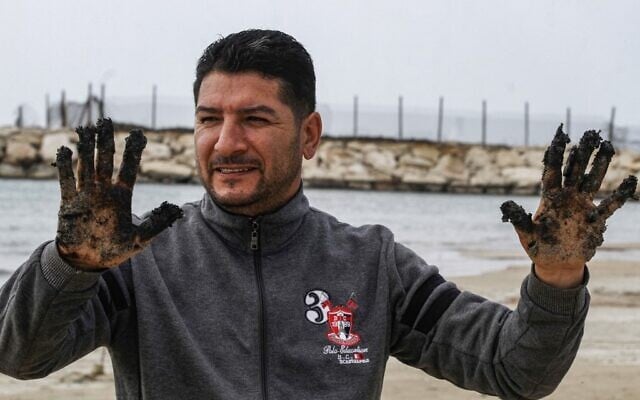
Hussein Hamza, a Lebanese environmental activist, shows off his hands covered with tar-soaked sands at the Tyre Nature Reserve, considered a destination for sea turtles to lay eggs, in Lebanon’s southern coastal city of Tyre on February 22, 2021 (Mahmoud ZAYYAT / AFP)
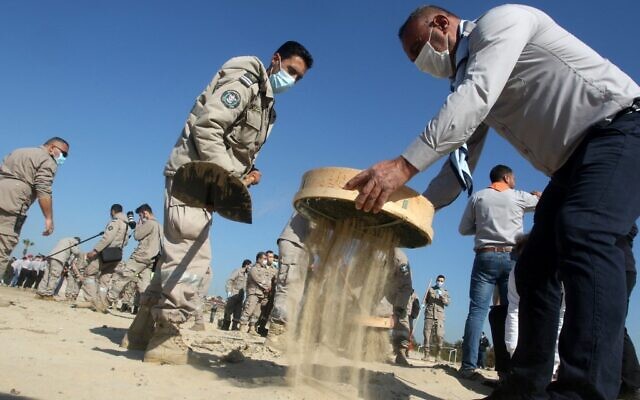
On Saturday morning, mask-clad volunteers and members of the civil defense sifted blobs of tar out of sand on the beach of the Tyre Coast Nature Reserve.
Get The Times of Israel's Daily Editionby email and never miss our top stories
“The Tyre reserve has been hit by about two tons of tar, 90 percent of which is now hidden in the sand,” said Mouin Hamze, the head of the National Council for Scientific Research.
The clean-up of the reserve could last up to two more weeks, he told AFP.
The protected zone covers 3.8 square kilometers (almost 1.5 square miles) of beach as well as adjacent sea waters, according to its website.
Advertisement
Volunteers from youth associations clean a contaminated beach in the southern Lebanese city of Tyre on February 27, 2021, following last week’s offshore oil spill that drenched the northern Israeli coastline and reached parts of the neighboring Lebanese beaches. (Mahmoud ZAYYAT / AFP)
As well as endangered loggerhead and green sea turtles, the beach provides shelter for the Arabian spiny mouse.
Hamze had said previously that the pollution could continue washing up on Lebanese shores for up to three months.
A survey of the area using drones is not yet complete, but he said the damage was extensive in the south while tar had even landed on the beach further north in the capital Beirut.
Help us report truthfully on social media
As a multimedia journalist, my job is to take the quality, fact-based journalism produced by The Times of Israel newsroom and make it accessible across every platform — from Instagram posts to podcasts to short-form videos.
This is how many, especially young people, consume news these days. But misinformation is rampant on social media. Our team at ToI produces accurate, responsible short-form reporting on Israel and the Jewish world.
If you believe in the importance of factual social media journalism, please consider joining our reader support group, The Times of Israel Community. Your financial support is essential to sustain responsible multimedia reporting.
We’re really pleased that you’ve read X Times of Israel articles in the past month.
That’s why we started the Times of Israel - to provide discerning readers like you with must-read coverage of Israel and the Jewish world.
So now we have a request. Unlike other news outlets, we haven’t put up a paywall. But as the journalism we do is costly, we invite readers for whom The Times of Israel has become important to help support our work by joining The Times of Israel Community.
For as little as $6 a month you can help support our quality journalism while enjoying The Times of Israel AD-FREE, as well as accessing exclusive content available only to Times of Israel Community members.
Thank you, David Horovitz, Founding Editor of The Times of Israel


 Add ToI as a Preferred Source on Google