

Amid anti-Semitism uproar, Ilhan Omar says 2-state solution ‘fair and balanced’
In op-ed, freshman lawmaker from Minnesota avoids controversial remarks about Jewish dual loyalty, says US criticism of governments violating human rights must be universal
 Add ToI as a Preferred Source on Google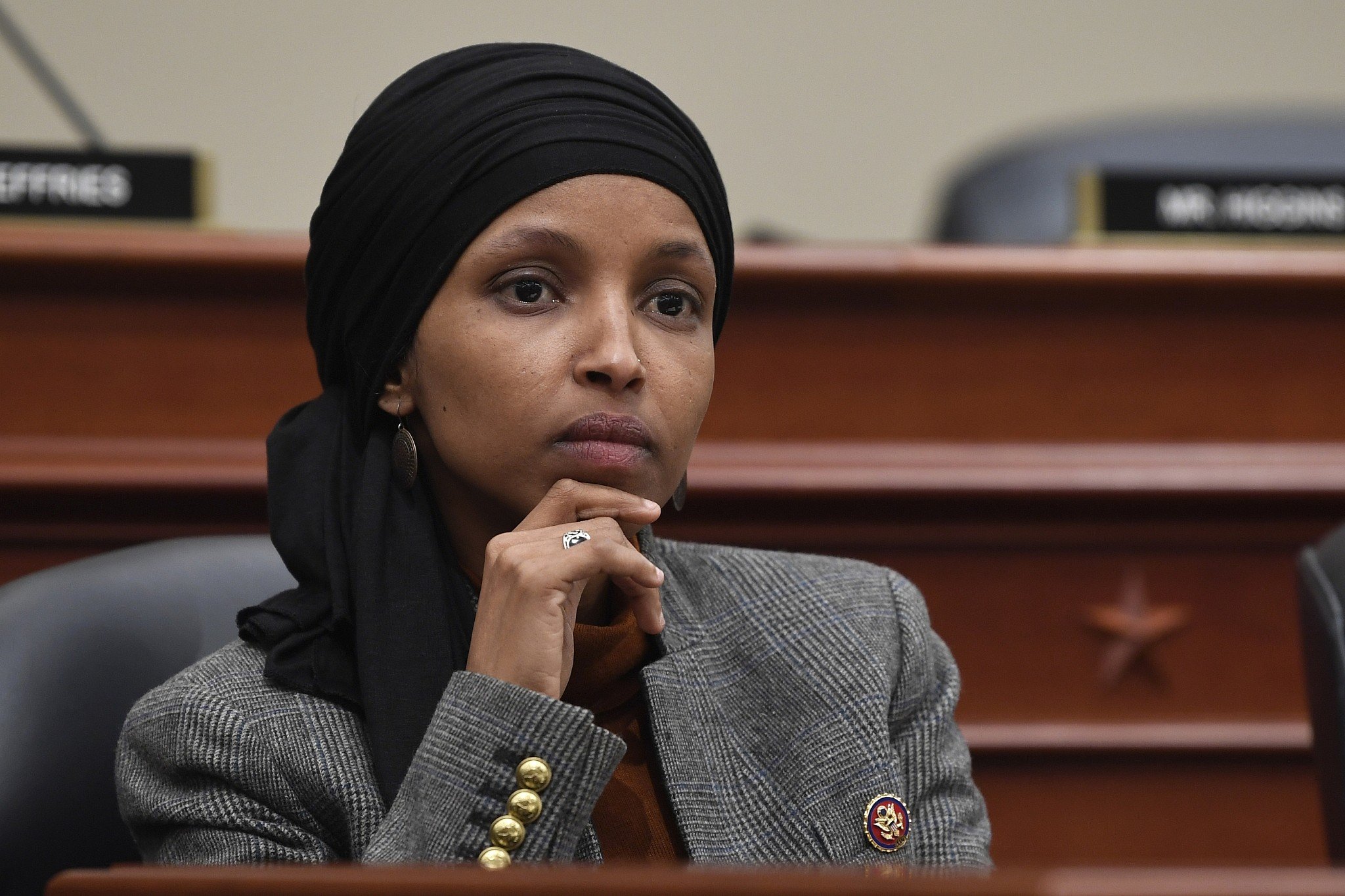
Freshman Minnesota Congresswoman Ilhan Omar outlined her foreign policy positions in a weekend op-ed in the wake of her recent criticism of Israel that drew accusations of anti-Semitism and sparked turmoil within the Democratic party.
In the Sunday Washington Post piece, the Somali-American lawmaker outlined her support for what she called an “inclusive” US foreign policy, one that centers on “human rights, justice and peace as the pillars of America’s engagement in the world.”
This approach, she said, is one that “takes into account the long-term effects of US engagement in war and that is sincere about our values regardless of short-term political convenience.”
Omar said that criticizing human rights abuses in Iran was “not legitimate” if other countries — including Mideast allies Israel, Egypt and Saudi Arabia — were not held to the same standard.
She went on to say that Israel was the historical homeland of both Jews and Palestinians, and said reaching a two-state solution was the only “fair and balanced” way forward for both sides.
“The founding of Israel 70 years ago was built on the Jewish people’s connection to their historical homeland, as well as the urgency of establishing a nation in the wake of the horror of the Holocaust and the centuries of anti-Semitic oppression leading up to it,” Omar wrote.
“We must acknowledge that this is also the historical homeland of Palestinians. And without a state, the Palestinian people live in a state of permanent refugeehood and displacement,” she said. “This, too, is a refugee crisis, and they, too, deserve freedom and dignity.”
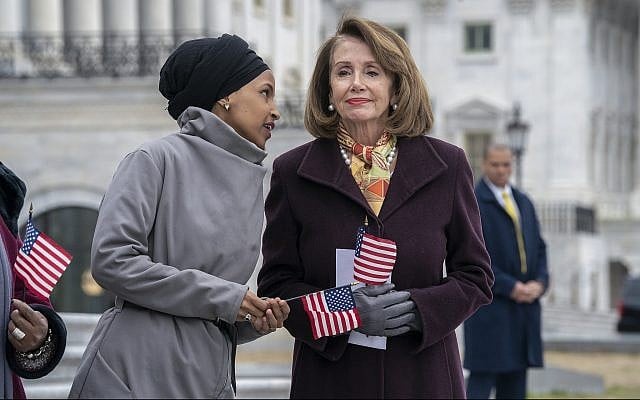
Omar called for a “fair and balanced” solution to the conflict that would ensure “the shared desire for security and freedom of both peoples.”
“I support a two-state solution, with internationally recognized borders, which allows for both Israelis and Palestinians to have their own sanctuaries and self-determination,” she said.
Omar did not specifically refer to the political firestorm she sparked earlier this month by suggesting pro-Israel Americans have dual allegiances.
“Working toward peace in the region also means holding everyone involved accountable for actions that undermine the path to peace — because without justice, there can never be a lasting peace,” Omar said. “When I criticize certain Israeli government actions in Gaza or settlements in the West Bank, it is because I believe these actions not only threaten the possibility of peace in the region — they also threaten the United States’ own national security interests.”
The Somali-born Omar sparked turmoil within the Democratic caucus this month with repeated criticisms of Israel and suggestions that Israel’s supporters wanted lawmakers to pledge “allegiance” to a foreign country.
Omar was criticized by some as anti-Semitic, and her remarks was said to have revived a trope of dual Jewish loyalties.

Democrats wrestled with whether or how to punish the lawmaker, arguing over whether Omar, one of two Muslim women in Congress, should be singled out, what other types of bias should be decried and whether the party would tolerate dissenting views on Israel.
The divided party eventually drafted a resolution that condemned a wide range of bigotry including anti-Semitism anti-Muslim discrimination as “hateful expressions of intolerance” contradictory to US values.
US President Donald Trump has been among Omar’s the loudest critics, including last month when he called on her to resign from the House or at least resign her post on the Foreign Affairs Committee over her comments.
The Jewish vote in the US has long leaned solidly left, but in the wake of the Omar controversy, Republicans have sought to take advantage of the turmoil in the Democratic party. A fringe “Jexodus” movement has emerged with the aim of luring Jewish voters to the Republican party ahead of the 2020 elections.
Jexodus got a boost from Trump last week, who endorsed the group while claiming that Democrats had become an “anti-Israel” and “anti-Jewish” party.
Later, Trump went even further in an appearance before Republican National Committee donors, charging that Democrats “hate” Jewish people, according to a person who heard the remarks but spoke on the condition of anonymity to describe the president’s comments at a private event.
The rhetoric comes amid a rise in anti-Semitic incidents across the United States. The Anti-Defamation League reported a 58 percent increase in such incidents between 2016 and 2017. In October, a gunman killed 11 worshipers at a Pittsburgh synagogue, the deadliest attack ever on Jews in America.
The Associated Press contributed to this report.








The Times of Israel Community.