

Amid early election talk, Palestinians express few hopes for change
Officials in PA, PLO and Hamas say chances Israel will change its attitude slim no matter who is in charge
 Add ToI as a Preferred Source on Google
Adam Rasgon is a former Palestinian affairs reporter at The Times of Israel
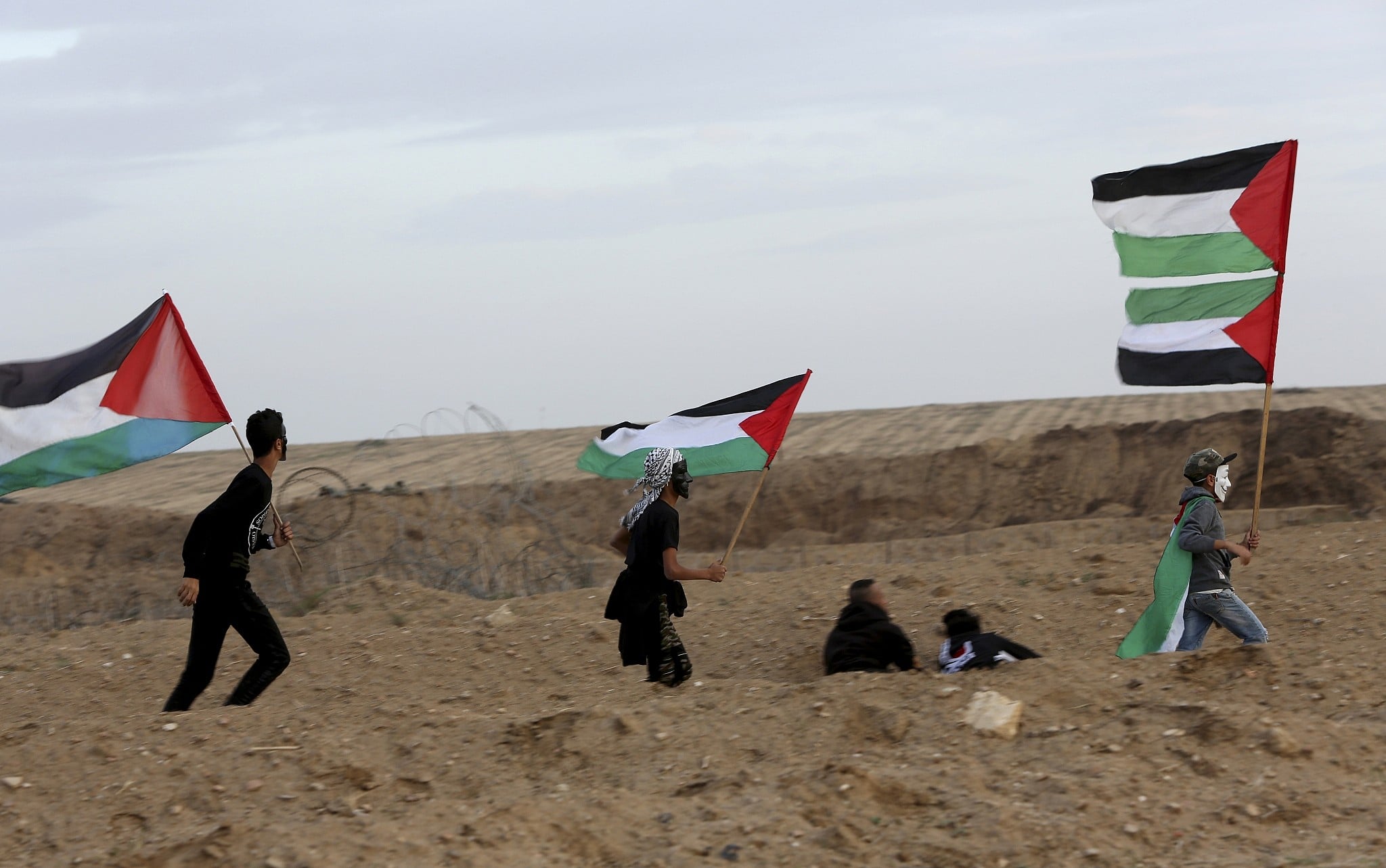
After nine years of Benjamin Netanyahu and mostly moribund peace efforts, Palestinian officials in the West Bank and Gaza said they were pessimistic about new Israeli elections bringing change, as talk of early elections swirled in the past few days.
Officials from the Palestinian Authority, the Palestine Liberation Organization and Hamas were united in placing few hopes that elections would bring any change for the better in the Jewish state’s orientation regarding the Israeli-Palestinian conflict.
“In elections in Israel, [parties] always compete over who can be the most hostile and hateful of the Palestinian people,” PA Foreign Minister Riyad al-Malki told a press conference on Sunday. “The next election campaign in Israel could be a vicious campaign for which the Palestinian people could pay with their blood.”
On Monday, Education Minister Naftali Bennett reneged on an ultimatum to pull his Jewish Home party out of the government if he was not made defense minister, temporarily shelving the possibility of imminent elections.
Prime Minister Benjamin Netanyahu had advocated against holding elections in the coming months, saying he wanted to keep his governing coalition in place to grapple with the security challenges facing Israel.
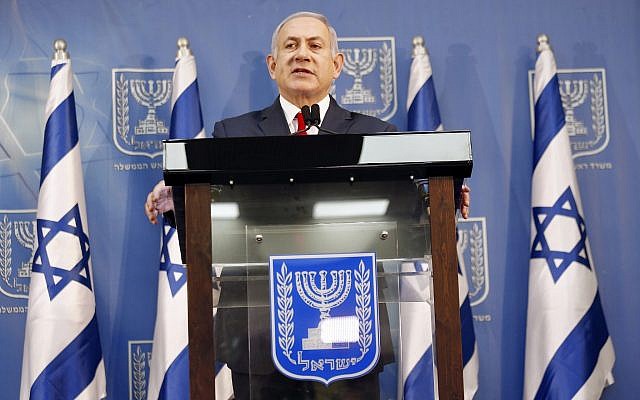
No matter what, elections must take place by November 2019, though many think the current governing coalition, with only 61 seats, will not last that long.
Wasel Abu Yousef, a PLO Executive Committee member, said the Palestinians have little reason to believe elections would make a positive difference for them, with what many consider to be the most right-wing government in the country’s history possibly being replaced by one even more nationalistic.
“Israel has been moving to the right and the far right. The polls show Israel is not looking to make peace based on the two-state solution,” Abu Yousef said in a phone call. “I do not believe there is much we can hope to get out of new Israeli elections.”
Both Israeli and Palestinian support for the two-state solution has declined over the past two decades, according to the Palestinian Center for Policy and Survey Research (PCPSR) and the Tami Steinmetz Center for Peace Research at Tel Aviv University.
Forty-three percent of both Israeli Jews and Palestinians back a two-state solution, which would include the establishment of a Palestinian state alongside Israel, a survey conducted in August by PCPSR and the Tami Steinmetz Center found.
However, Muhammed Oudeh, a member of the PLO Committee for Interaction with Israeli Society, expressed some optimism about the possibility of a changing of the guard, especially if former IDF chief Benny Gantz enters the fray.

“Polls are saying that Netanyahu will hold onto approximately 30 seats and the center parties are going to lose seats, but these polls pertain to the current moment,” Muhammed Oudeh, a member of the PLO Committee for Interaction with Israeli Society. “We still do not know who will lead which party. For example, if the Labor Party brings in certain personalities like Benny Gantz, it will likely win more seats. For that reason, I say any move to hold elections is a good thing.”
A senior official from the Hamas terror group contended, though, that elections “would not make a difference” for the Palestinians.
“Both the Israeli right and left do not care about the Palestinian issue and Palestinian rights. From the Nakba until today, every Israeli government has undermined the Palestinian issue,” the official, who asked to remain unnamed, said in a phone call. “Therefore, we know elections in Israel would not make a difference for us.”
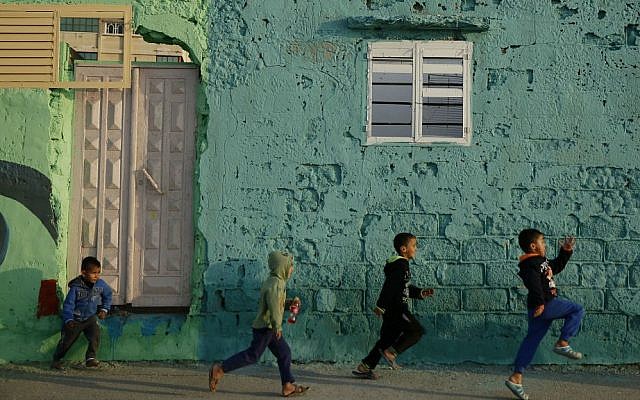
Hamas has controlled the Gaza Strip since ousting the Fatah-dominated PA in 2007 from the territory, and openly seeks to destroy Israel. The coalition crisis was sparked after former defense minister Avigdor Liberman’s resigned from the government last week over differences stemming from a flareup of violence between Israel and Hamas in Gaza, during which Hamas and other Gaza terror groups launched some 500 rockets at Israel.
Hamas leaders feted the resignation as a victory.








The Times of Israel Community.