

An Iranian family divided by revolution reunites
After lost decades and parental death, second-generation American and Israeli relatives finally meet
 Add ToI as a Preferred Source on Google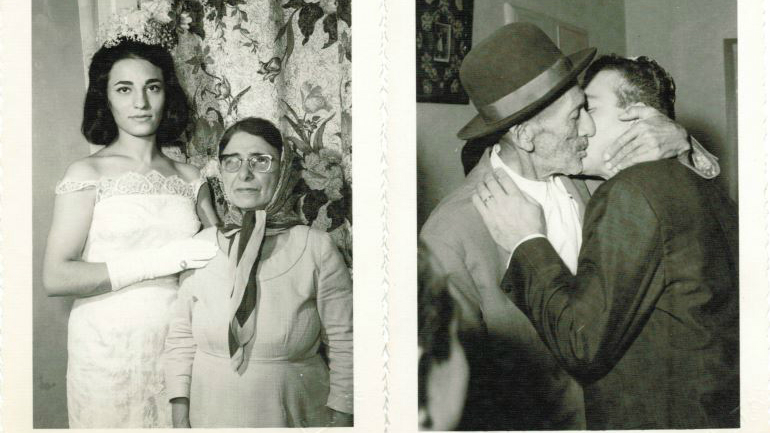
BALTIMORE (JTA) – The ringing telephone that awakened David Rashti early one morning brought with it a jolt the Los Angeles-area resident couldn’t have anticipated.
The caller was someone Rashti had never met or even heard of: Rachel Levy, a resident of Safed, Israel. She spoke Hebrew, he spoke English and they were unable to understand one other – until Levy utilized her weak knowledge of Farsi.
When Rashti, 47, heard “Iran” – not the country but the name of his long-lost aunt, Levy’s mother – he realized the significance of the phone call.
Rashti and Levy are first cousins – Rashti’s late father, Atta, and Iran were two of six siblings. But the branches had long been separated, dating to Iran’s decision circa 1949 to remain in Israel while the other five, who had also moved from the former Persia to Israel, returned to their homeland. Many years later they relocated again, to the United States. In the interim, connections were relaunched and lost.
The Rashti family comes from Rasht, a city near the Caspian Sea about midway between the capital of Tehran and the now-independent country of Azerbaijan. Several of the siblings — three brothers and three sisters — worked there in the family’s fabric businesses before they moved to Israel and lived in a maabara, or tent camp, in Jerusalem’s Musrara neighborhood with their parents, Eliyahu and Miriam.
Even after all but Iran returned to their native land within a year, they stayed connected for some three decades, until the Islamic Revolution in 1978 that deposed the shah and brought Ayatollah Khomeini to power.
Little by little, the family members clandestinely left Iran, forsaking homes and businesses and withdrawing whatever money they could. Levy heard that some of her aunts and uncles paid smugglers to convey themselves and their families by donkey over Iran’s western border to Turkey.
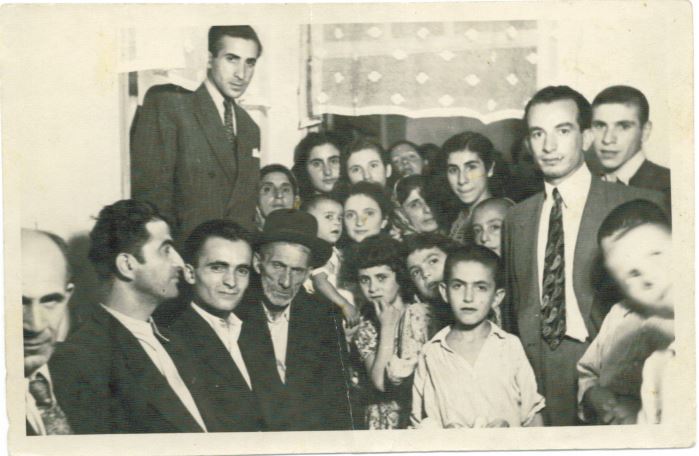
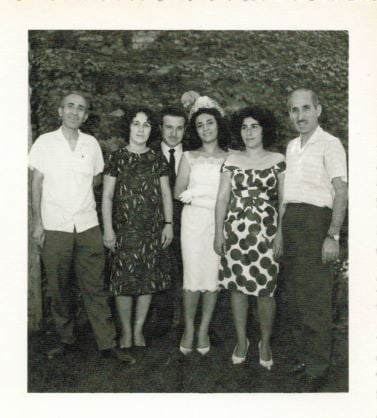
Upon eventually reaching America, the eldest, Suleiman, settled in New York. So did his brother Haviv and sister Mahin Ebrani. Another sister, Shamsi Yashar, went to Boston. Rashti’s father, Atta, headed to Los Angeles.
The past six decades-plus have seen only occasional in-person contacts. Suleiman visited Israel to see Iran and her family; he has since passed away. Levy also recalls sitting with her parents in their yard in the Beit Yisrael section of Jerusalem when a bearded man walked back and forth on the sidewalk before them.
Iran asked for whom he was looking.
“Do you recognize me?” the man asked.
She did not.
“I am Atta,” he told his sister.
Levy vividly recalls the scene.
‘We looked on, amazed. It was like Joseph [in the Bible] revealing himself to his brothers’
“We looked on, amazed. It was like Joseph [in the Bible] revealing himself to his brothers,” she said.
Only two other visits among family members were held: Levy’s brother, Shimon Shimoni, traveled to America two decades ago and went to each of the three cities where his aunts, uncles and cousins lived, and Levy’s Aunt Mahin came to Israel and stayed with her. With time, the connections weakened.
About seven years ago, Iran asked her daughter to find her siblings and their children, whose contact information she apparently lost. Levy, 57, a religiously observant mother of 10 and grandmother of 18, does not own a computer and acknowledges that she is unaware of the Internet’s capabilities for finding people.
In August, she broadcast an appeal on the Israeli radio program “Hamador L’chipus Krovim” (Searching for Relatives Bureau). An Israeli listener located Rashti, who lives in the Los Angeles suburb of Encino. To reach him, Levy first had to upgrade her telephone service plan, which had not allowed for international calls.
“Aunt Iran – the missing sister!” Rashti exclaimed upon realizing who the caller was.
Levy immediately invited Rashti, a developer of medical products, for a visit to Safed to see her and her 87-year-old mother living with her.
Rashti said the timing of the reconnection isn’t coincidental, as he has become more observant in the two years since his father’s death, attending morning prayers and classes at the nearby Torat Hayim Valley Synagogue.
Just a week before Levy’s call, Rashti explained, he had suggested to his rabbi that their synagogue sukkah host an outreach event for unaffiliated Jewish youth.
The phone call from Levy shortly after, Rashti said, “was such an added boost – that I was doing something right.”




The Times of Israel Community.