

Bank of Israel shaves growth forecast, keeps interest rate steady as war bites
Central Bank sees economy slowing to 2.3% in 2023 from previous forecast of 3%, assuming that the war will be contained in the south on the Gaza border in the fourth quarter
 Add ToI as a Preferred Source on Google
Sharon Wrobel is a tech reporter for The Times of Israel
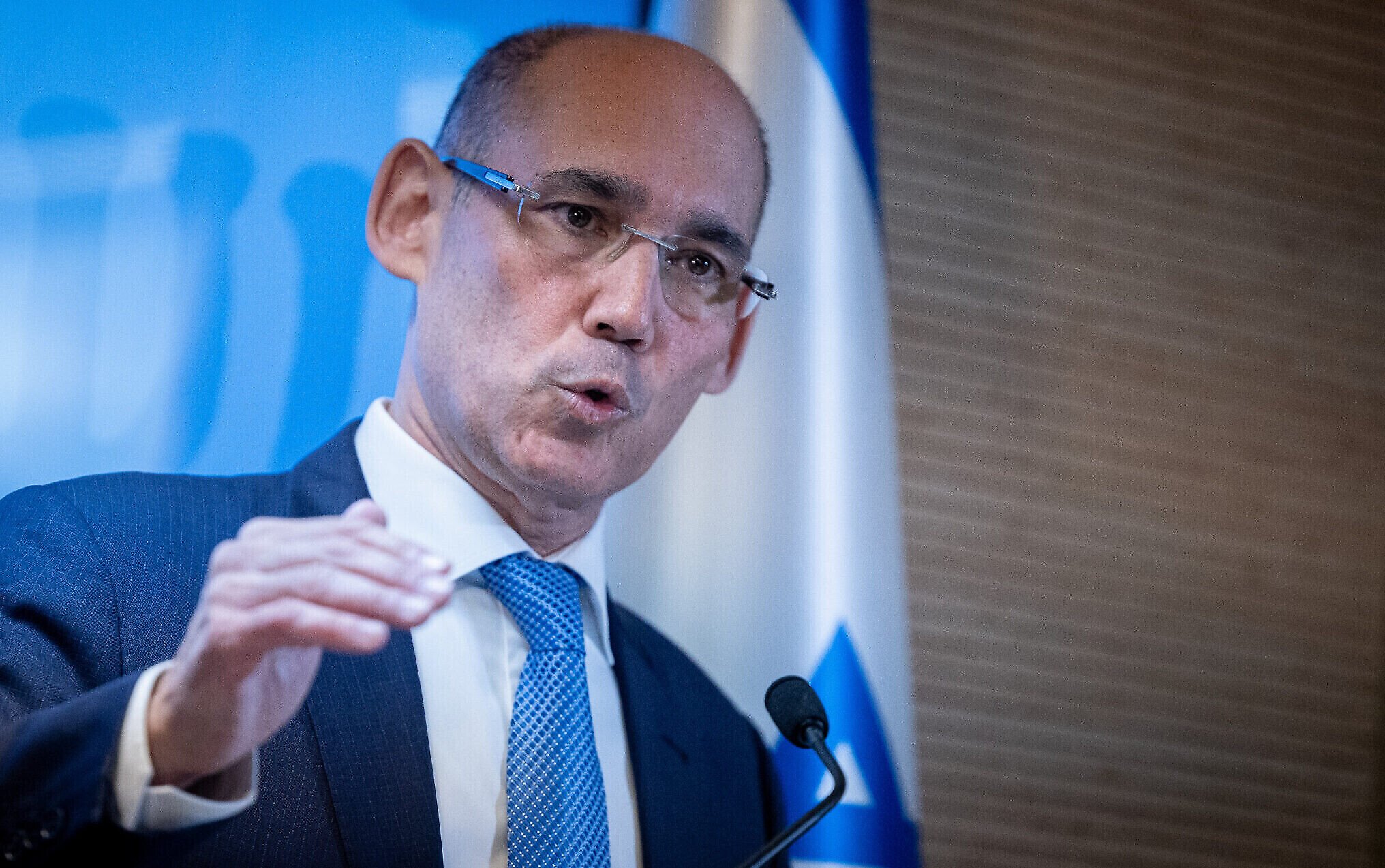
The Bank of Israel on Monday left interest rates steady and trimmed its economic forecasts for this year and the following one, as the ongoing war with the Hamas terror group takes a toll on growth and the shekel continues to weaken.
The central bank’s research department said that it now expects the economy to grow by 2.3 percent in 2023 and by 2.8% in 2024, as private consumption falls and the ability to work is constrained. That is down from its previous forecasts of 3% growth for both this year and next. The projections are based on the assumption that the war will be “concentrated on the southern front during the fourth quarter of the year,” the central bank said.
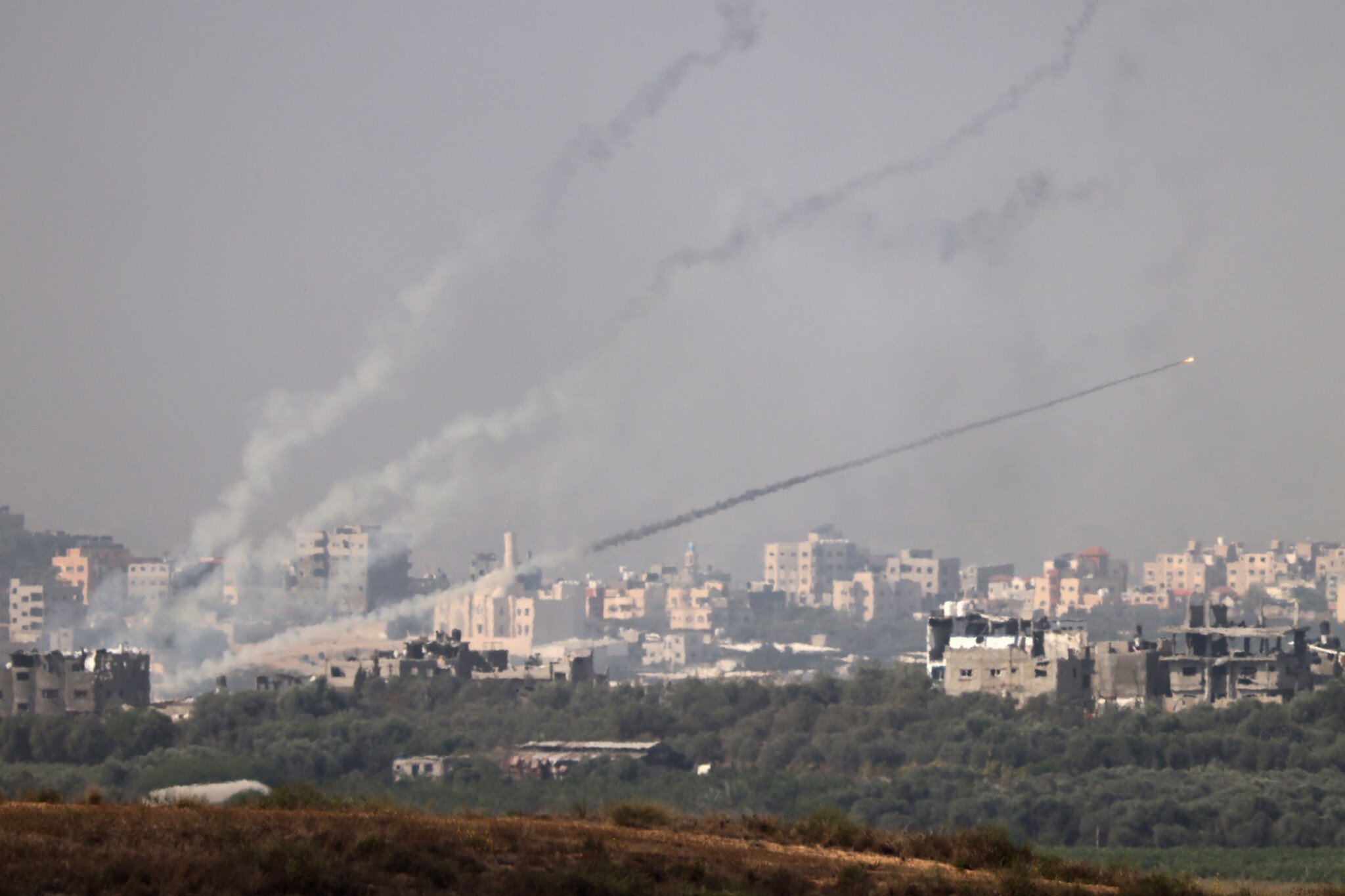
The updated economic forecasts were presented as the central bank held the benchmark rate at 4.75 percent in line with the projections by the majority of economists. The monetary policy decision to keep borrowing costs unchanged for a third time since July amid expectations for a slowdown in economic growth comes as Israel is more than two weeks into the Hamas onslaught, in which some 2,500 terrorists streamed into Israel by land, sea, and air, murdered some 1,400 people, mostly civilians, and injured thousands more.
The terror group and other factions took some 220 hostages of all ages into Gaza.
“The war has various economic ramifications, both on real activity and on the financial markets,” Bank of Israel Governor Amir Yaron said at a press conference in Jerusalem. “I want to emphasize that Israel’s economy is robust and stable.”
“The Israeli economy knew how to recover from previous difficult periods and return rapidly to prosperity, and I have no doubt that it will do so this time as well,” Yaron added.
The Bank of Israel said that for now it is focusing on stabilizing the markets and reducing uncertainty. With the outbreak of the war, the central bank acted swiftly to protect the shekel from collapse. It introduced a plan to sell up to $30 billion in foreign exchange to mitigate sharp volatility in the shekel and to ensure necessary liquidity during the uncertain and challenging period of war.
Since the October 7 massacre by the Hamas, the shekel has weakened about 5% against the dollar and is down more than 15% since the start of the year, stoking inflation. The currency is trading around NIS 4.06 against the greenback, and is close to its weakest level since 2009.
“We do not have a target exchange rate, but we do want to verify that there aren’t abnormal fluctuations and to ensure full and proper functioning of the markets in general, and the foreign exchange market in particular,” said Yaron. “Israel’s risk premium has gone up (…) our interventions in the financial markets, together with the other monetary policy tools, work to stabilize the markets and maintain their continued orderly operation by reducing uncertainty for the economy and the public at this time.”
Steady interest rate hikes over the past year lifted borrowing costs from a record low of 0.1% in April 2022 as the Bank of Israel sought to bring down inflation that was hovering above 5%. The fast rate increases to 4.75% over the past year have pushed up costs for mortgage and loan holders of households and businesses even before the outbreak of the war.
To ease the financial burden, the Bank of Israel last week set out a plan to freeze mortgage and loan payments for a period of three months in particular for households and businesses located near the Gaza Strip, and first-degree relatives of those killed or abducted during the onslaught by the Hamas.
“It markedly and rapidly eases cash flows of these populations, increases the financial certainty for them, and will help them get through this complex period,” Yaron said.
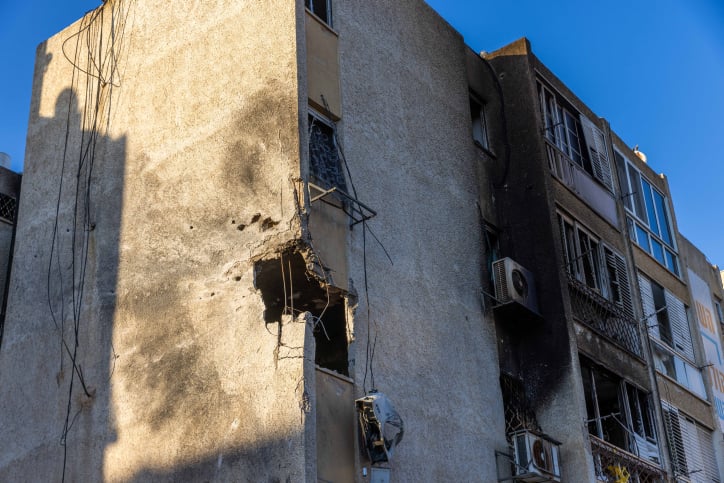
The ongoing war has left many businesses closed and some schools shut. A number of businesses in the retail sector have already issued warnings about reduced operations during the ongoing war and are taking steps to contain economic damages. Retail chains from the Fox fashion group, Golf, and Ace are furloughing some of their employees, as many of their stores remain closed and shoppers stay away.
With the expectation that the current war with the Hamas will be broader and longer than previous conflicts and the economy will slow down, financial markets have started to price in the possibility that the Bank of Israel will start to lower borrowing costs in the coming months.
While Yaron did not indicate what the next likely direction will be, the forecast by the central bank’s research department is for interest rates to come down to 4% or 4.25% by the third quarter of 2024 to stimulate the economy. That is as the inflation rate is expected to decelerate to 2.9% over the coming year and fall into the government’s price target range of 1% to 3%. The rate slowed to 3.8% in September from 4.1% in the previous month.
The Bank of Israel’s research department assessed that the costs of the war will lead to an increase in the government deficit to about 2.3% of GDP in 2023 from 1% forecasted previously and to about 3.5% in 2024.
Yaron emphasized the importance of continuing to provide fiscal cover that will enable the security forces to conduct the war in accordance with the goals set for it, while ensuring that there is financial aid for residents of the southern border areas and the families of the victims and missing, as well as for those called up to military reserves, and those who are staffing the emergency and rescue systems.
Another goal recommended by Yaron is for the government to moderate the war’s macroeconomic effect on the economy.
“This, among other things, is via business continuity grants and assistance with cash flows and loans guaranteed by the government that will support the ability of businesses, primarily small and medium sized businesses whose scope of activity has been adversely impacted, to meet their fixed expenses and salary expenses and to get through the current period,” he said.
At the same time, Yaron urged the government to continue to maintain fiscal responsibility, which he said is an “important message to financial markets, which will support keeping the costs low for raising the financing necessary at this sensitive time.”
“It is important to remember that at this time there is of course a lot of uncertainty regarding the development of the war and its length,” he cautioned. “This is also one of the reasons why we need to maintain degrees of freedom to adjust our economic policy.”








The Times of Israel Community.