

Before Jackie Robinson, there was Hank Greenberg
As a blockbuster film opens in the US Friday about the man who broke baseball’s color barrier, the sport’s first Jewish superstar is not forgotten
 Add ToI as a Preferred Source on Google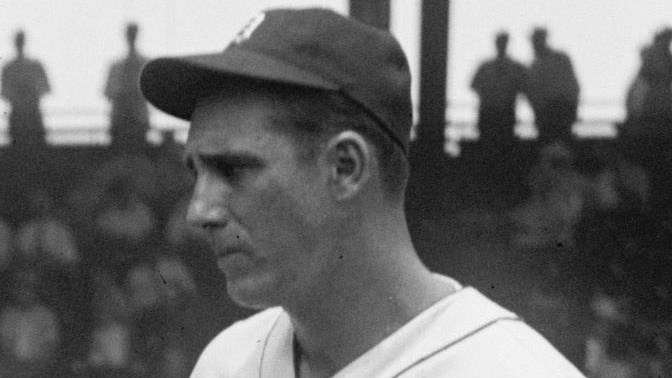
Jewish Americans use two yardsticks to measure the start of spring: Passover and baseball’s Opening Day (not necessarily in that order). Indeed, the latter has achieved the status of a quasi-holiday not only in the Jewish imagination, but for all Americans. On the first day of the Major League Baseball season, fewer children are in classrooms and corporate boardrooms are emptier. Even the White House takes a break from the business of governing.
This year, filmmaker Brian Helgeland taps into this time of year when baseball is on the brain with the release of his Jackie Robinson biopic, “42,” premiering in theaters across the US on Friday, April 12. Helgeland’s film tells the story of the first African American to play in the major leagues in the modern era.
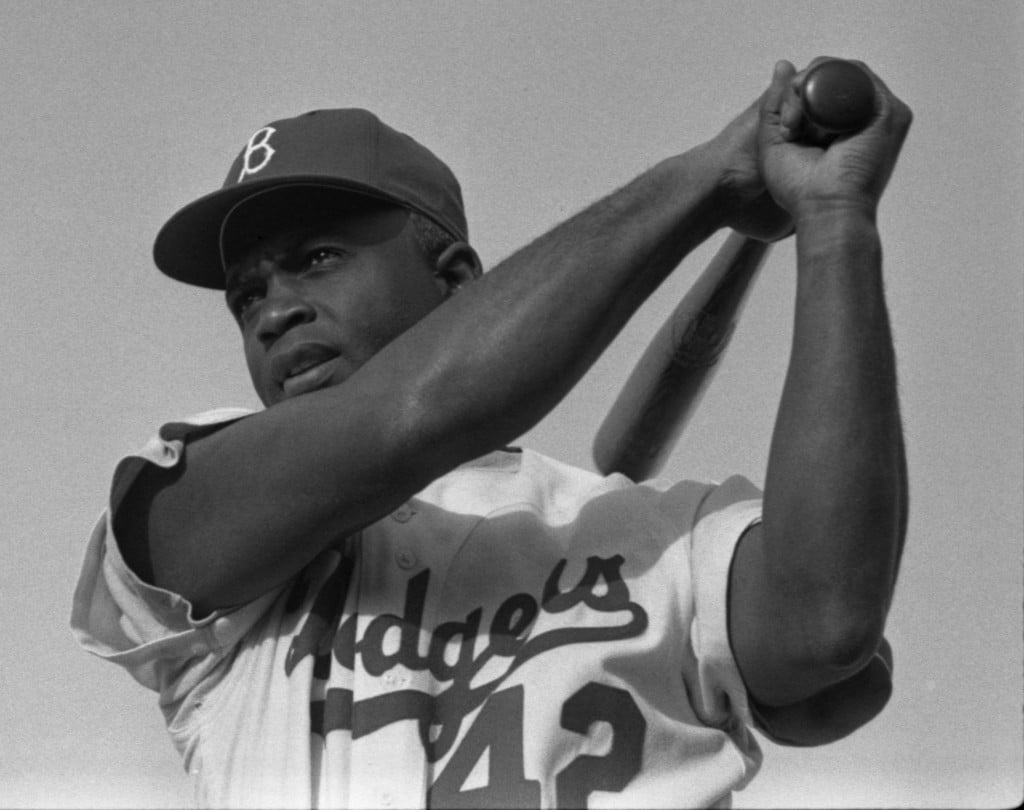
When the Brooklyn Dodgers played Robinson at first base on April 15, 1947, six decades of racial segregation that relegated black ballplayers to the Negro leagues came to a tumultuous end.
US First Lady Michelle Obama said she and her husband were “visibly, physically moved by the experience of the movie” following a recent private screening at the White House.
‘Class tells. It sticks out all over Mr. Greenberg’
– Jackie Robinson
“You can’t imagine the baseball league not being integrated. There are no more ‘Whites Only’ signs posted anywhere in this country,” she said. “Although it still happens, it is far less acceptable for someone to yell out a racial slur while you’re walking down the street. That kind of prejudice is simply just not something that can happen in the light of day today.”
But more than a decade before Jackie Robinson broke the color barrier in baseball, there was Hank Greenberg, a powerful six-foot, four-inch Jewish slugger for the Detroit Tigers who transformed the way gentiles perceived Jews and the way American Jews saw themselves.
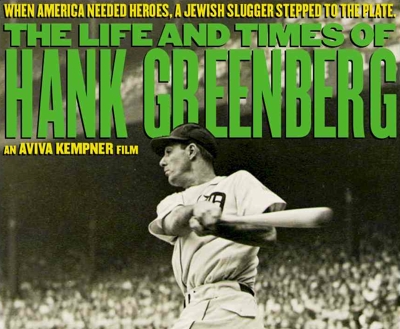
Robinson himself received encouragement from Greenberg during a critical period of his rookie year in 1947, when racial taunts and harassment threatened to derail his career. Of Hank Greenberg, Jackie Robinson once said, “Class tells. It sticks out all over Mr. Greenberg.”
Greenberg’s story was the subject of a critically-acclaimed documentary by Aviva Kempner in 2000, titled The Life and Times of Hank Greenberg. Now, a dozen years after its premiere, Kempner has released a special edition DVD which includes never-before-seen footage and interviews with, among others, Supreme Court Justice Ruth Bader Ginsberg, Ted Williams, Walter Matthau, Alan Dershowitz and US Senator Carl Levin (D-Mich.).
“It took me a dozen years to make the documentary,” said Kempner, a Detroit native. “So I called it my ‘bat mitzvah film.’ This special edition took another three years, so I call it ‘my sweet sixteen film.”

Kempner’s timing is auspicious as a new, authoritative biography of Hank Greenberg just hit the shelves. John Rosengren’s Hank Greenberg: The Hero of Heroes (NAL Hardcover; March 5, 2013) is a carefully researched work that tells the story of the obstacles Greenberg overcame as a ballplayer, of his bravery as a soldier during World War II and as a hero to Jewish Americans struggling to find their place in the New World.
Kevin Blackistone, an African American sportswriter and ESPN personality, called Greenberg “a pioneer for people of color who often gets overlooked.”
To understand the ignorance and bigotry of Greenberg’s time, consider the story of Jo-Jo White, a teammate about whom Greenberg once said, “We used to fight the Civil War every night.” During one of their first meetings, White walked slowly around Greenberg, staring at him. The Jewish slugger asked what he was looking at. White said he was just looking, as he’d never seen a Jew before.
“The way he said it,” noted Greenberg, “he might as well have said, ‘I’ve never seen a giraffe before.’ I let him keep looking for a while, and then I said, ‘See anything interesting?’ Looking for horns and finding none, White said, ‘You’re just like everyone else.'”
Greenberg was born in New York in 1911 and grew up in the Bronx, the son of Jewish Romanians who only spoke Yiddish. As one of the first Jewish superstars in American sports, Greenberg attracted national attention in 1934 when he refused to play for the Tigers on Yom Kippur in the midst of a tight pennant race.
A first baseman, Greenberg was one of the premier power hitters of his generation. In 1938, he hit 58 home runs, the most in one season by any player between 1927, when Babe Ruth set a record of 60, and 1961 when Roger Maris surpassed it. He was a five-time All-Star, was twice named the American League’s Most Valuable Player and was elected to the Hall of Fame in 1956.
At 6-feet, 4-inches, Greenberg shattered all the stereotypes about weak Jewish athletes
Many believe Greenberg’s statistics would have placed him in the elite pantheon of players like Babe Ruth, Hank Aaron and Ty Cobb if his career weren’t interrupted by his military service. As a captain in the US Army Air Forces, Greenberg served 47 months in uniform, the longest of any major league player. In all, he only played nine full seasons. Had he not served in the military, Greenberg would likely have surpassed 500 home runs and 2,000 RBIs. As it was, he hit 331 home runs and 1,276 RBI in a 1,394-game career. Greenberg also had a lifetime batting average of .313.
Rosengren believes Greenberg’s legacy goes beyond baseball.
“What’s a nice gentile boy like me doing writing a book about Hank Greenberg?” he asked. “Well, his is a story that transcends sports. He was a remarkable figure during a time of intense ethnic identification in America.”
Rosengran said baseball at that time was America.
“At 6-feet, 4-inches, Greenberg shattered all the stereotypes about weak Jewish athletes,” he said. “For that, he was a hero to Jewish Americans. And for his 47 months in the military, he became a hero to all Americans.”
More info:









The Times of Israel Community.