

China blast residents evacuated over chemical fears
Local media says highly poisonous sodium cyanide is found at port of Tianjin; official death toll climbs to 85
 Add ToI as a Preferred Source on Google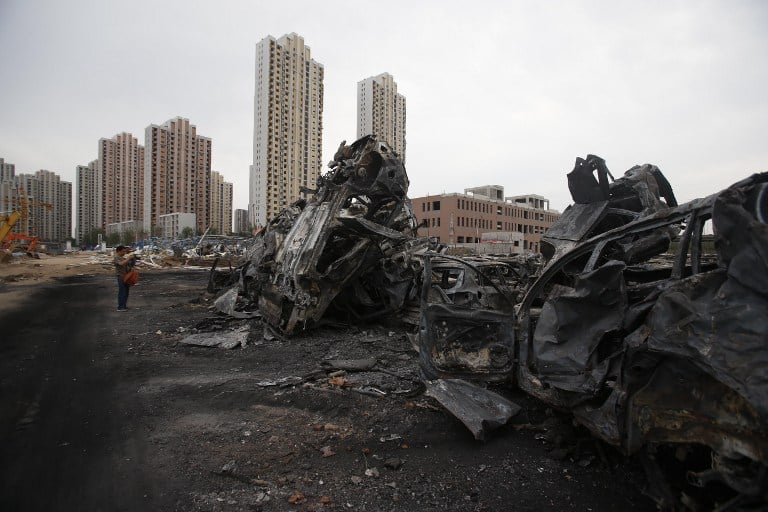
TIANJIN, China — Residents around the site of giant explosions in the Chinese port of Tianjin were evacuated over fears of toxic contamination, the official Xinhua news agency said Saturday, as the death toll rose to 85.
Armed police were carrying out the evacuation after highly poisonous sodium cyanide was found at the site, the Beijing News said, as the blaze intensified dramatically, with several blasts reportedly heard.
“Out of consideration for toxic substances spreading, the masses nearby have been asked to evacuate,” Xinhua said.
Officials said earlier that specialists from sodium cyanide producers were being sent in to the hazardous goods storage facility where giant explosions days earlier sent a huge fireball soaring into the sky and left a vast radius of destruction.
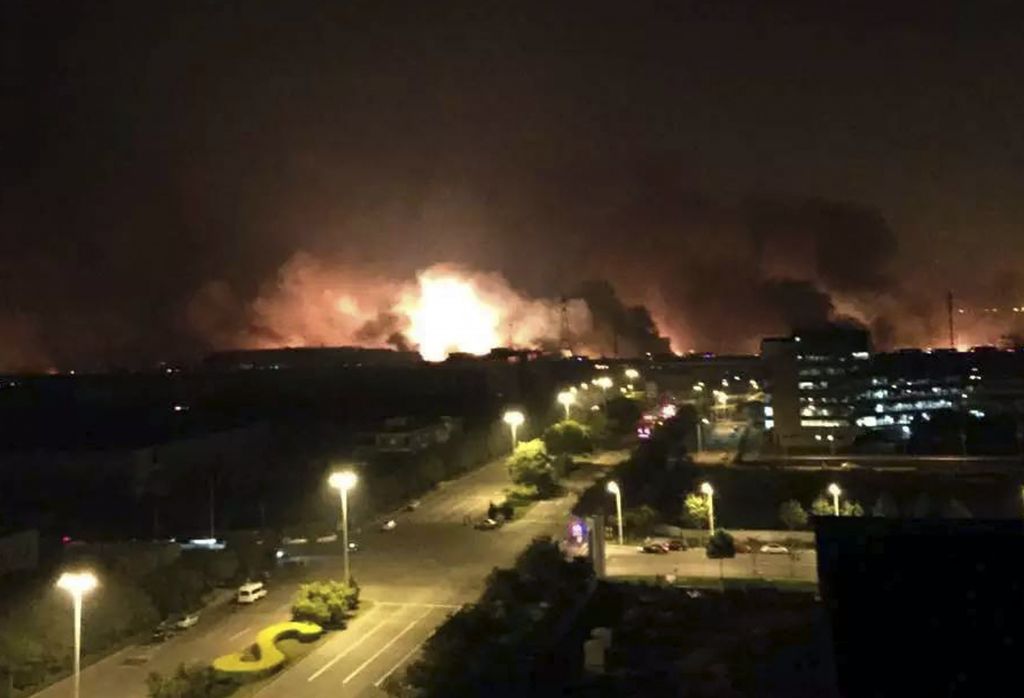
Authorities have struggled to control the resulting days-long blaze and identify the substances present at the scene, sparking fears among locals.
Furious residents and victims’ relatives railed against officials outside a news conference for keeping them in the dark as criticism over a lack of transparency mounted.
There were 21 firefighters among the dead, authorities said, and 721 people had been hospitalised, 25 of whom were in critical condition.
Officials said they were unable to identify precisely what chemicals were at the site at the time.
At the news conference, Tianjin work safety official Gao Huaiyou listed a host of possible substances, adding that recent large exports that passed through the site had included sodium bisulfide, magnesium, sodium, potassium nitrate, ammonium nitrate, and sodium cyanide, among others.
“We believe there should still be a lot stored at the terminal areas,” he said.
Personnel from sodium cyanide producers had been called in “because they are experts on the chemical’s nature and the ways to deal with it”, he added.
A sewage pipe where the chemical had reportedly been detected had been sealed off, he said.
Residents’ skepticism
More than 200 nuclear and biochemical experts from the Chinese military were deployed to Tianjin — which has a population of 15 million — on Thursday.
Authorities have repeatedly said air quality generally met requirements, although levels of some pollutants exceeded regulations.
Despite official reassurances, residents have expressed scepticism and some police have been seen in the city wearing full-face gas masks.
Residents and relatives of the dead and missing were prevented from entering the briefing and could be heard shouting outside.
“Nobody has told us anything, we’re in the dark, there is no news at all,” screamed one middle-aged woman, as she was dragged away by security personnel.
China has a dismal industrial safety record and authorities have only released limited information about the accident, a criticism often leveled at Chinese officials in the aftermath of disasters.
It has also raised questions over whether firefighters responding to an initial blaze at the warehouse could have contributed to the detonations by spraying water over substances that react explosively to it.
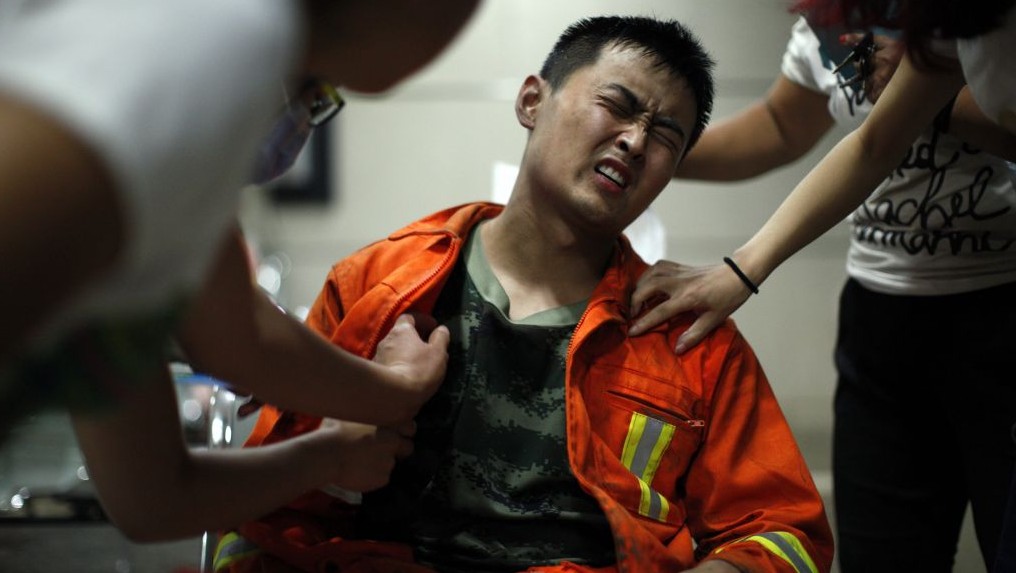
One senior official insisted firefighters had followed the proper procedures, but noted that they were unaware of the precise chemicals present when they arrived.
“It is not clear whether a chemical reaction occurred,” said Lei Jinde, the head of the firefighting department at Tianjin’s public security bureau.
“We knew there was calcium carbide, but we don’t know whether the calcium carbide exploded and caught fire,” he said in an interview published by Xinhua.
“It is not that the firefighters were fools… No, it is not that.”
Lei said that the facility was listed as holding ammonium nitrate and potassium nitrate, as well as calcium carbide.








The Times of Israel Community.