

Coalition reportedly reaches compromise on Amona outpost
Residents to be moved to temporary housing, compensated; government to work to prevent future outpost evacuations, but legislation will likely be shelved or revised
 Add ToI as a Preferred Source on Google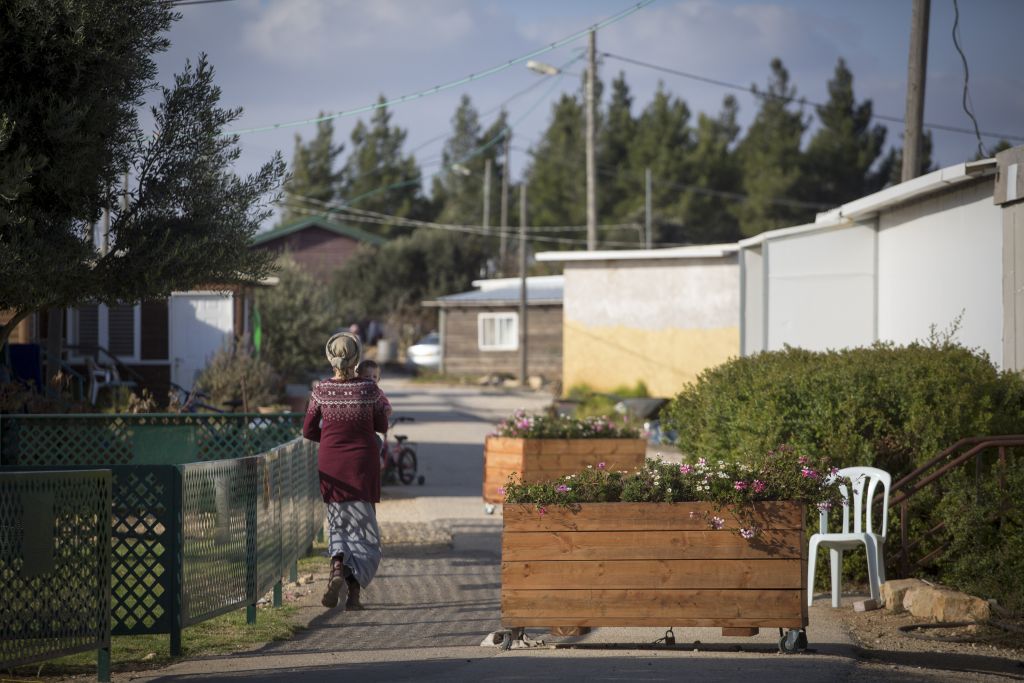
Prime Minister Benjamin Netanyahu and Education Minister Naftali Bennett have reportedly reached a compromise on the so-called Regulation Bill and the West Bank outpost of Amona, which is set to be razed under a court order by December 25.
According to Channel 2, the leaders of all the coalition parties on Sunday agreed they will not dissolve the government over the impending evacuation of the outpost, where some 40 Israeli families live. The party leaders have pledged to advance a solution to avert any future demolitions of outposts, according to Hebrew-language reports.
At the same time, party leaders have also reportedly said they will not bring the so-called Regulation Bill to a Knesset vote in its current formulation, which includes a clause that would retroactively legalize outposts such as Amona, and which has been deemed unconstitutional by Israel’s attorney general. The coalition’s Kulanu party has refused to support the measure.
It remained unclear whether the Regulation Bill — which would prevent settlements built on private land from being demolished if they were built with state assistance — will be presented to the Knesset without the controversial article 7, or whether the government will draw up new legislation altogether to prevent future outpost evacuations.
According to the reports, the government will approve a solution proposed by Attorney General Avichai Mandelblit whereby the evacuees of Amona would be housed temporarily on three plots of land administered by Israel’s Custodian for Absentees’ Property.
The move would mean evacuees would have a place to stay near the original settlement, which the courts and other government bodies have repeatedly ruled was built illegally on private Palestinian land, while their new homes are completed in another settlement in the northern West Bank.
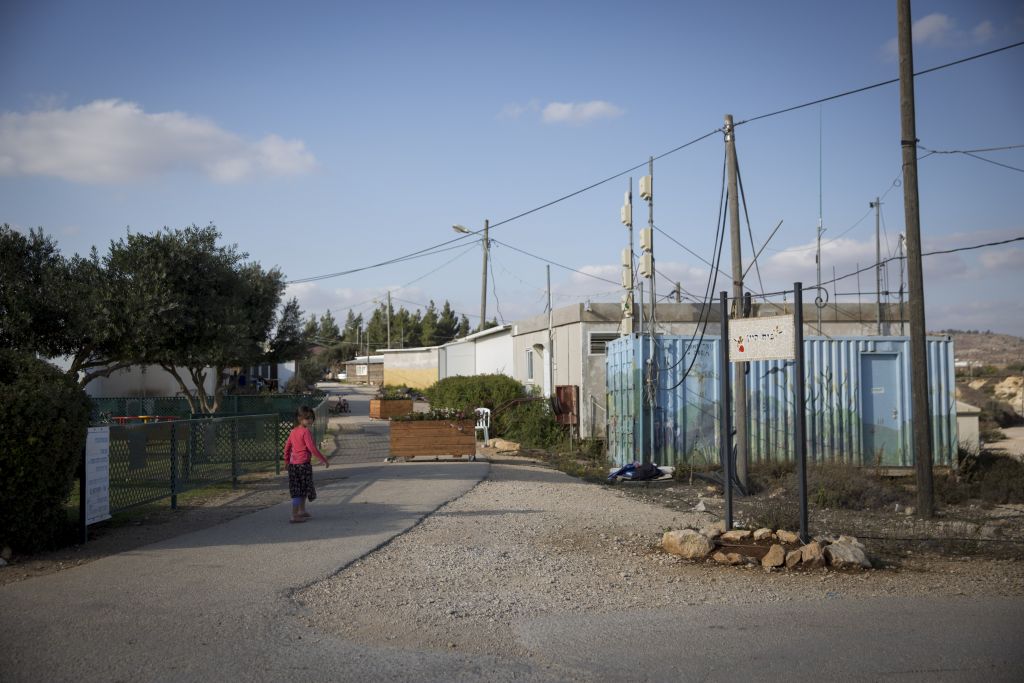
The agreement will also give some compensation to the residents of Amona, according to Channel 2.
In addition, the state will petition the High Court of Justice for a 30-day deferral of the deadline for the evacuation in order to properly prepare alternative housing.
The outline of the agreement between the coalition parties has been submitted to Mandelblit for his approval.
A spokesperson for the Jewish Home party said that if the compromise is passed it will represent a historic achievement. But if Mandelblit torpedoes the plan, it will lead to a coalition crisis, the spokesperson said.
However, Amona residents and campaigners were quick to reject what they perceived as Bennett’s capitulation. “The public is not stupid,” a spokesperson for the residents told the Srugim news site. “We cannot give in to dictates of the extreme left, to destroy a flourishing community, to expel 200 children from their homes, and to still call it a package to benefit the settlements.
“True leadership is tested at the moment of truth. For the hundreds of thousands of those faithful to the land of Israel, Amona is the test and the symbol of the struggle,” they said.
The group advocating against the destruction of Amona threatened protests to prevent the settlement from being evacuated.
“The destruction of Amona will not pass quietly. Those responsible will not be free of guilt. We will be here in the tens of thousands to protect our homes and to protest the ineffectiveness of the politicians,” the Amona group said.

Amona residents have also dismissed the offer of temporary relocation, writing in a letter to the prime minster that it would involve a huge waste of state funds and still force them to leave their homes.
“It is simply absurd that the State of Israel is willing to spend 50 million shekels to move Amona’s residents to a nearby hill, where they will only be allowed to remain for eight months, after which the government will spend more money on expelling them again,” they wrote.
Speaking on Israel Radio on Sunday morning, the head of the Campaign for Amona, Avichai Baron, said the deal was just a delaying tactic and that residents would oppose the move with the same force as they would the complete destruction of the settlement.
“We are talking about kicking us out, uprooting us.” he said. “We will stand with our bodies in a passive protest to this deal. We don’t plan to use violence, but yes we will prevent it with our bodies.”
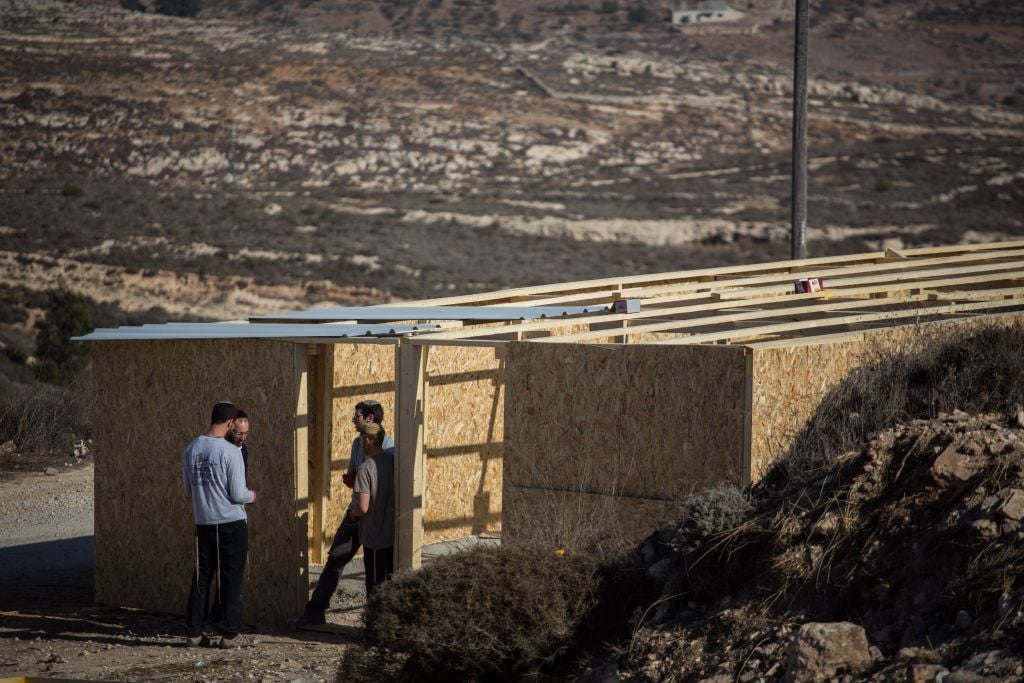
Israeli security forces are preparing for the possibility of violent clashes to accompany the outpost’s demolition.
Last Monday, some 120 rabbis, who identify with the national religious camp called for “all who are able” to come to Amona and “vigorously protest the destruction of the settlement, with passive resistance and without violence.”
That call came a day before dozens of Israeli youths burned tires and blocked a major West Bank highway in protest of the planned demolition.
In 2006, more than 220 people were injured in clashes with security forces during the destruction of numerous homes in the outpost.
To prevent a repeat scenario, Israeli forces — soldiers, border guards, and uniformed and undercover police officers — will likely try to keep as many people away as possible with the area set to be declared a “closed military zone,” in the days running up to the December 25 deadline.
Judah Ari Gross and Raoul Wootliff contributed to this report.









The Times of Israel Community.