

Court rules Netanyahu corruption trial will not be broadcast live
Jerusalem District Court rejects media request to allow public live video feed of opening hearings in three cases against prime minister scheduled for later this month
 Add ToI as a Preferred Source on Google
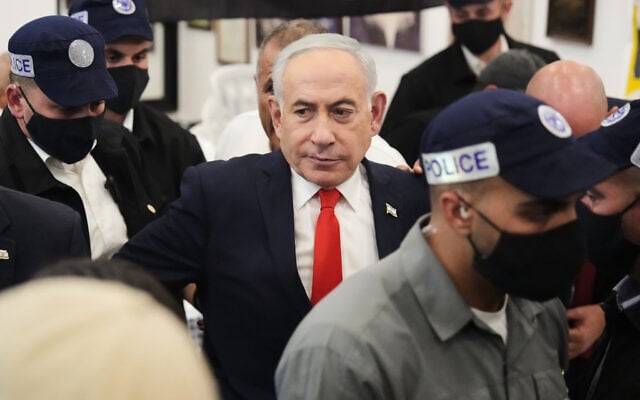
Rejecting a request by media outlets, the Jerusalem District Court on Sunday ruled that the opening hearings of Prime Minister Benjamin Netanyahu’s corruption cases will not be broadcast live.
The court also noted that the session, scheduled for May 24, will abide by Health Ministry orders for social distancing due to the coronavirus outbreak. In keeping with those guidelines, those present in the courtroom will be required to wear face masks and keep a distance of at least two meters from each other.
Only one attorney for the state will be permitted to attend, and one defense counsel for each of the defendants in the cases.
The prime minister faces seven counts of three criminal charges: fraud and breach of trust in Cases 1000 and 2000, and bribery, fraud and breach of trust in Case 4000.
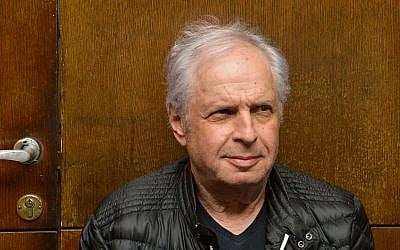
The other defendants in Case 4000 are Shaul Elovitch, the controlling shareholder in the Bezeq telecom giant, and his wife, Iris. In Case 2000, Yedioth Ahronoth newspaper publisher Arnon Mozes is also a defendant.
Netanyahu’s trial was pushed off by two months, two days before the scheduled March 17 opening hearing, after Justice Minister Amir Ohana declared a “state of emergency” in the court system in light of the coronavirus pandemic.
Under current laws, transmission of video or audio from a courtroom is prohibited unless permission is first given to do so. Only a handful of cases have ever been broadcast live. In a recent pilot, broadcast was allowed of a hearing about a Shin Bet security service program to track Israelis’ movements via their cellphones in order to identify those who may have been exposed to the coronavirus through contact with infected people.
In November last year, the prime minister had requested that his pre-indictment hearing be broadcast live.
“After three years of a deluge of biased, partial leaks, the time has come for the public to hear everything. Including my side, in a complete and full manner — without mediators, without censorship and without distortions,” Netanyahu said in a video uploaded to his social media channels at the time.
Last Thursday Netanyahu was tasked by President Reuven Rivlin with forming the next government, which is expected to be announced and sworn in later this week.
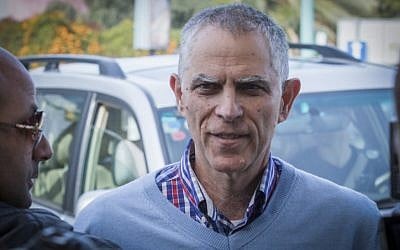
Already in power for over a decade, Netanyahu will now likely be prime minister for at least another 18 months, as he fights the corruption charges.
He forged a power-sharing coalition with rival-turned-partner Blue and White party leader Benny Gantz and other allies who have already agreed to join them.
On Wednesday, the High Court of Justice court again shot down a petition to disqualify the Likud leader, but hinted that future challenges may still be considered. It also declined to strike down legislative changes being made as part of the Netanyahu-Gantz power-sharing agreement, while admitting that there were “significant difficulties.”
In Case 4000, the most serious case faced by Netanyahu, he is accused of pushing regulatory decisions as communications minister and prime minister from 2015 to 2017 that benefited Elovitch. That case includes a proposed bribery charge for both Netanyahu and Elovitch.
In Case 1000, Netanyahu is alleged to have received tens of thousands of dollars’ worth of gifts from wealth benefactors.
In Case 2000, Netanyahu is accused of agreeing with Mozes to weaken a rival daily in return for more favorable coverage from the Yedioth newspaper.
Netanyahu in November became Israel’s first sitting prime minister with charges against him, when Attorney General Avichai Mandelblit announced he would indict him. The charges were only filed officially in January, when the prime minister dropped a bid for Knesset immunity.
Netanyahu denies the charges and claims he is the victim of an attempted “political coup” involving the opposition, media, police and state prosecutors.



The Times of Israel Community.