

Despite PLO dissent, new talks a likely boon for Abbas
More than an Israeli commitment to the 1967 lines, the PA president wants to see veteran Palestinian prisoners released

 Add ToI as a Preferred Source on Google
Avi Issacharoff, The Times of Israel's Middle East analyst, fills the same role for Walla, the leading portal in Israel. He is also a guest commentator on many different radio shows and current affairs programs on television. Until 2012, he was a reporter and commentator on Arab affairs for the Haaretz newspaper. He also lectures on modern Palestinian history at Tel Aviv University, and is currently writing a script for an action-drama series for the Israeli satellite Television "YES." Born in Jerusalem, he graduated cum laude from Ben Gurion University with a B.A. in Middle Eastern studies and then earned his M.A. from Tel Aviv University on the same subject, also cum laude. A fluent Arabic speaker, Avi was the Middle East Affairs correspondent for Israeli Public Radio covering the Israeli-Palestinian conflict, the war in Iraq and the Arab countries between the years 2003-2006. Avi directed and edited short documentary films on Israeli television programs dealing with the Middle East. In 2002 he won the "best reporter" award for the "Israel Radio” for his coverage of the second intifada. In 2004, together with Amos Harel, he wrote "The Seventh War - How we won and why we lost the war with the Palestinians." A year later the book won an award from the Institute for Strategic Studies for containing the best research on security affairs in Israel. In 2008, Issacharoff and Harel published their second book, entitled "34 Days - The Story of the Second Lebanon War," which won the same prize.
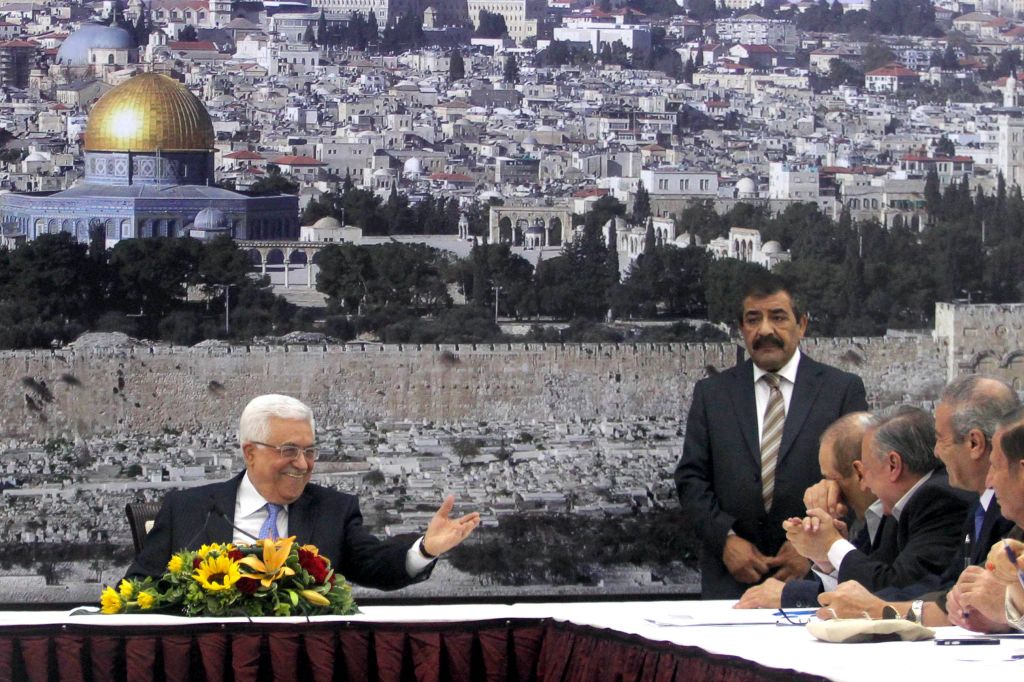
As expected, the Palestinian Authority’s apparent agreement to return to the negotiating table with Israel caused a wave of angry reactions. The Islamist organizations, most prominent among them Hamas, wasted no time condemning PA President Mahmoud Abbas.
One relatively surprising reaction, however, came from a man who had almost disappeared from the Palestinian political map — Mohammad Dahlan. The former Fatah strongman had taken upon himself a vow of silence in recent years when it came to anything that had to do with the PA and Abbas. Two years ago he was expelled from the territories after Abbas suspected him of organizing a coup. Since then he has been living in the United Arab Emirates, becoming one of the closest confidants of the royal family. His standing as a businessman also grew in recent years as he accumulated assets and cash.
And thus, Dahlan, marked as Abbas’s No. 1 enemy, understood that the announced new talks created a unique opportunity for him to embarrass the Palestinian leader — especially given the acute anger among the PLO and Fatah leadership toward Abbas over his ostensible capitulation to American and Israeli dictates. “This is political suicide,” Dahlan wrote in a statement posted on his behalf. “Abbas’s private agreement is borne of surrender to international pressure and misleads his Palestinian compatriots.”
One can explain Dahlan’s statement against the backdrop of the open personal enmity between the two. But he isn’t the only one expressing such critiques.
In the last 48 hours, many senior figures in the PLO, and even Fatah, have been coming out against Abbas’s surprising announcement that he would renew negotiations. This is, among other reasons, because of what is being interpreted as an attempt by Abbas to ignore the PLO leadership’s decision from last Thursday afternoon that ruled out the possibility of a return to talks absent an official American letter sent to both sides defining the 1967 borders as the framework for talks. This letter was apparently sent only to the Palestinian side, but not the Israeli… if, that is, it exists at all. The PLO leadership also demanded a commitments from the United States to an Israeli settlement freeze.

Senior Fatah officials told The Times of Israel that, midday on Thursday, Abbas succeeded in obtaining the support of the Fatah Central Committee for the renewal of dialogue. Almost all the meeting’s participants agreed with Abbas’s position; only two dissented: Tawfik Tirawi and Othman Abu Arbiye.
But afterwards there was a meeting of the PLO Executive Committee, which comprises representatives from the various Palestinian factions. Mere minutes before that meeting commenced, news of Prime Minister Benjamin Netanyahu’s announcement that Israel would not agree to talks on the basis of the pre-1967 lines reached the delegates. This contradicted the position that had been presented in the Fatah Central Committee’s meeting — that the United States would force Israel to agree to this demand. The ensuing indignation among the representatives resulted in the decision at the end of the meeting not support the US initiative.
On Sunday, in addition, the Popular Front for the Liberation of Palestine and the Palestinian People’s Party, two of the PLO member parties, released an announcement denouncing the return to the negotiating table, calling the decision “a mistake.”
Abbas, naturally, expected all the internal criticism. It seems that his assessment last Friday afternoon, when he agreed to John Kerry’s proposal to make do with a letter sent just to the Palestinian side (if that), was that he preferred to expose himself to a few domestic attacks than be blamed for the failure of the talks and see American aid suspended.
The Palestinian president also knew that Israel would agree to release dozens of veteran prisoners seen as symbols among the Palestinian public (according to Walla political reporter Amir Tibon, Israel agreed to release 80 prisoners incarcerated before the Oslo Accords, out of a list of 104. The others all hold Israeli citizenship). To Abbas, the equation in these circumstances is quite clear: Once Israel starts freeing the first veteran Palestinian prisoners, likely within two weeks (for the Eid al-Fitr holiday at the end of Ramadan), the criticisms from Dahlan and others will be drowned out by the cries of joy from the freed prisoners’ families.




The Times of Israel Community.