

Dire Straits of Tiran
Isaac Herzog and Inbal Or are in hot water, while a deal that sees islands transferred from Egypt to Saudi Arabia has some worried
 Add ToI as a Preferred Source on Google
Ilan Ben Zion is an AFP reporter and a former news editor at The Times of Israel.
Three different people headline the Israeli papers on Tuesday for varied reasons. One is Prime Minister Benjamin Netanyahu, who appears smiling during a visit to soldiers in the Golan Heights. The second is opposition leader Isaac Herzog, who’s in hot water because of suspected financial irregularities. The third is Inbal Or, a real-estate developer whose alleged conning of customers out of their life savings continues to draw the attention of the tabloids. And Egypt’s transfer of strategic islands to Riyadh has the papers talking.
Of the three, Herzog’s potential criminal investigation gets the most attention from all three major papers (but while front page real estate is devoted to it, the story gets buried farther down). Police tell Haaretz that initial probes into alleged financial improprieties by Herzog will require them to question him under caution. Even though the attorney general said the investigation into the Zionist Union leader was preliminary, the police’s corruption investigations unit has already questioned a number of suspects involved in the case under caution, including Herzog’s close associates.
The fact that the alleged financial misdeeds in Herzog’s 2013 Labor Party primaries campaign against Shelly Yachimovich involve a company dealing in bringing elder care assistants to Israel from abroad is what preoccupies Yedioth Ahronoth. Investigators are looking into the company’s alleged transfer of tens of thousands of shekels as an illegal donation to Herzog’s campaign. The paper says that police received information that several lawyers worked to hide the donation and make it appear legal.
The Zionist Union responded that the investigation was the initiative of politicians who were trying to harm the party in the general elections.
Prime Minister Benjamin Netanyahu’s admission during a visit to the northern border with Syria that Israel has struck Hezbollah arms shipments “dozens of times” on the opposite side of the frontier grabs the attention of Israel Hayom. The paper devotes its main coverage to Netanyahu’s visit to the Golan Heights and reports that “in a discussion with reserves soldiers on site Netanyahu revealed that Israel is operating in Syria in order to prevent Hezbollah from acquiring game-changing weapons.”
Does Israel Hayom really believe Netanyahu’s backhanded remark is newsworthy, or that nobody knew about nearly four years of Israeli airstrikes in Syria? Haaretz and Yedioth Ahronoth don’t even bother putting the comment on their front page, let alone devoting their top story to the issue. Yedioth Ahronoth devotes a blurb on Page 4 to his remark, and Haaretz gives it a couple of inches on Page 5.
The details of Inbal Or’s soap opera police investigation gets the requisite attention from Yedioth Ahronoth, whose reportage reads like a TV drama. Or was supposed to appear at the police station for questioning, but felt ill, so police came to her luxury suite at a high-end Herzliya hotel and called an ambulance. The paramedics left, and three hours later the police did as well, without interrogating her. For now, she’ll be questioned at a later date. Or also replaced her legal counsel, and her new attorney arrived at the West Hotel later in the day.
To add more drama to the story, the paper quotes unnamed friends and family of Or saying they’re worried for her welfare, saying, “The situation in which she’s in the news everyday for negative reasons is difficult for her.” They tell Yedioth Ahronoth that she was “seriously depressed” during Monday’s episode and has been smoking nonstop.
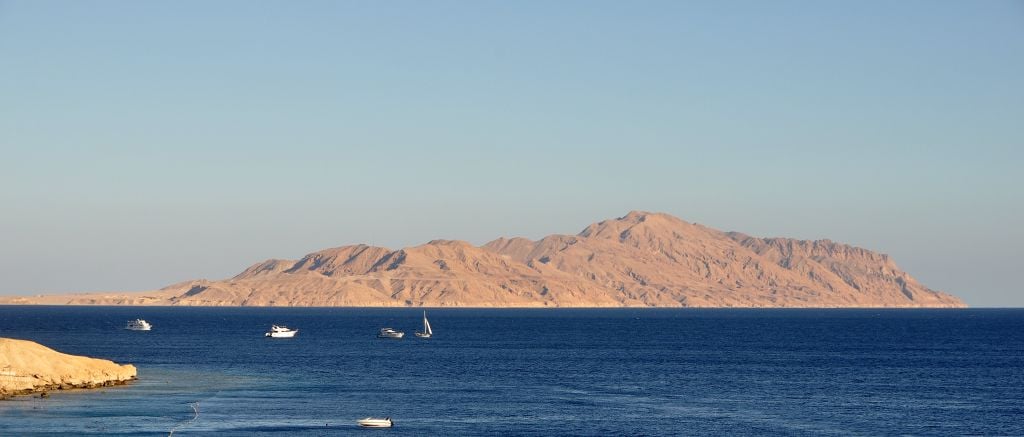
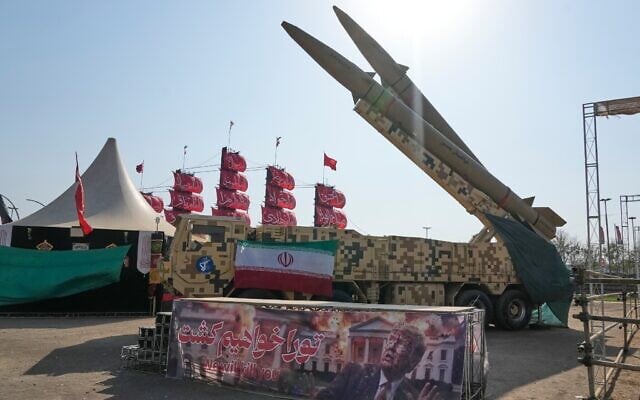
But between the potential threats posed by Iran’s expected acquisition of the first few S-300 antiaircraft missile batteries from Russia, and Egypt’s transfer of two strategic islands in the Straits of Tiran to Saudi Arabia, the press is split over which is of greater importance to Israeli readers. While Israel Hayom plays up Iran more, it devotes more ink to Egypt.
Haaretz reports that it was informed that Cairo gave Israel advance warning about the transfer of the islands to Saudi Arabia, and that the Saudis publicly said it won’t harm free passage in the straits and will respect Israel’s agreement with Egypt over the waterway. The paper makes a point of noting that the closure of the straits, through which a large portion of Israel’s maritime trade passes, by Egypt was one of the precursors to the 1967 Six Day War, and that the peace treaty with Egypt ensures complete freedom of passage through the waterway.
Yedioth Ahronoth reports that Saudi Foreign Minister Adel al-Jubeir emphasized that Riyadh has no interest in military conflict with Israel, but noted that “Saudi Arabia doesn’t conduct negotiations with Israel and won’t sign agreements with it until a solution is found with the Palestinians.”
“Officially, there is no clause in the agreement which forbids Egypt from transferring territories from its sovereignty to the sovereignty of another state, let alone when the islands are recognized as part of Saudi territory,” Haaretz’s Zvi Barel says. “But Saudi control raises some wrinkles of concern about the future of free passage that Saudi Arabia, unlike Egypt, isn’t obliged to.”
“The question now is not only whether Saudi will only allow the freedom of passage [in the Straits of Tiran], but whether it [will also respect] the clauses forbidding stationing military forces on the islands, particularly because control of them allows it control of the eastern arm of the Red Sea, which leads to the port of Aqaba,” he says.
Fear not, because Israel Hayom’s Boaz Bismuth can bring Iran into the Egypt-Saudi issue. He says that the agreement needs to be put into context because “Shiite Iran is becoming stronger thanks to the West (and special thanks to [US] President [Barack] Obama), a matter which pressures Sunni states, including Saudi Arabia and Egypt,” he says. “Riyadh, which lost faith in Washington, is forming new coalitions of its own. After an obvious wink to the Russians, the Saudis decided to build a new Sunni axis in which Egypt, Turkey and Saudi Arabia are allied.” He says the Saudis have no interest in hurting the peace accord between Israel and Egypt because of Iran’s presence as “the regional threat.” For that reason he asserts there won’t be a change in the status quo in the Straits of Tiran.
The US is also encouraging Israel to embrace the deal, because they consider it a strengthening of moderate regimes in the region, which is ostensibly beneficial for the Jewish state, Yedioth Ahronoth reports.







The Times of Israel Community.