

Far-right leader Wilders, the ‘Dutch Trump,’ set to upset elections
Polls predict anti-immigrant parliamentarian will head one of largest parties after Wednesday’s vote
 Add ToI as a Preferred Source on Google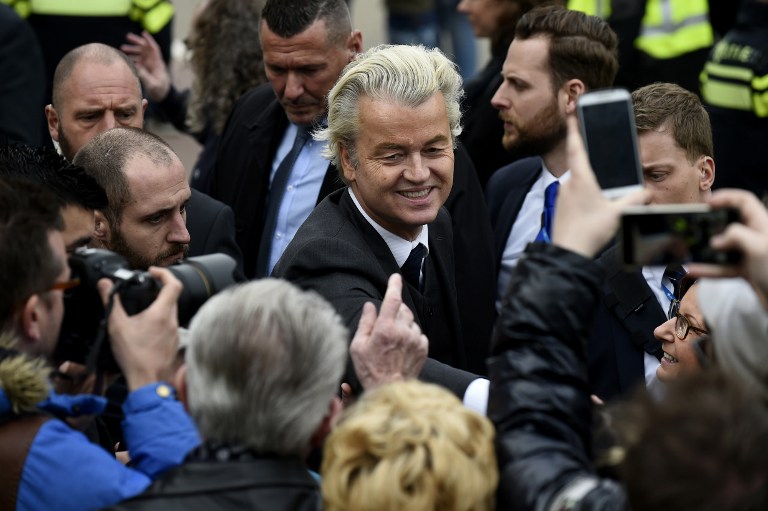
THE HAGUE, Netherlands (AFP) — They call him “the Dutch Trump,” with his dyed blonde bouffant hair, love of Twitter and incendiary anti-immigrant rhetoric.
But despite a superficial resemblance there are sharp differences, and for many Dutch MP Geert Wilders is still partly an enigma even though he has long been a thorn in the side of the political establishment in The Netherlands.
Now he may just pull off a major upset if, as polls predict, his Freedom Party (PVV) emerges from Wednesday’s elections as one of the largest in the parliament.
It could prove the best showing so far for the party he founded in 2006 after he split with the right-wing Liberal VVD — the ruling partner in the outgoing coalition.
And even if the other parties snub him as they have vowed to do, leaving him unable to form a coalition, Wilders would still be a forceful voice in opposition.
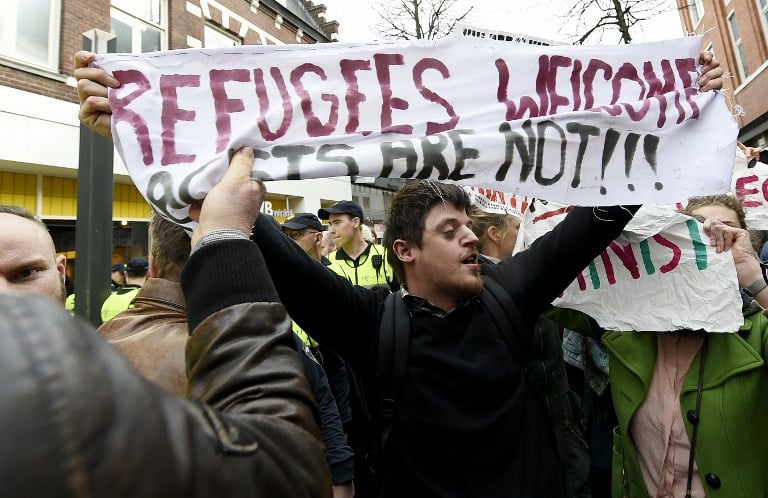
Wilders has repeatedly said he believes he is on a mission to halt “the Islamization” of the West.
“I’m not saying that all Muslims are bad people or are terrorists, that would be ridiculous,” Wilders told AFP last year.
“But I believe in any country where Islam is more dominant… you see a total lack of freedom, democracy, rule of law, civil society.”
Fascination for politics
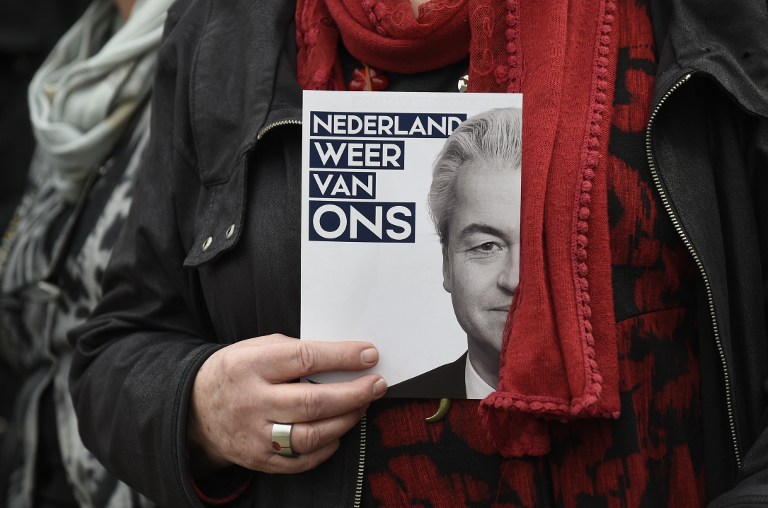
In the PVV’s one-page manifesto, it promises to close the country’s borders to Muslim immigrants, ban the Quran and close all mosques.
This uncompromising stance has won Wilders international notoriety, and death threats. He is on Al-Qaeda’s hit list, and has lived for over a decade under 24-hour protection, in a government safe house, fitted with a panic room.
Both reviled and supported, he is a divisive figure in The Netherlands, which long prided itself on its now-fading reputation of tolerance.
Born in 1963 in southern Venlo, close to the German border, Wilders grew up in a Catholic family with his brother and two sisters.
It was in the 1980s that he became interested in politics, his older brother Paul told Der Spiegel magazine recently.
“He was neither clearly on the left or the right at the time, nor was he xenophobic. But he was fascinated by the political game, the struggle for power and influence,” Paul Wilders said.
His dislike for Islam appears to have developed slowly. He spent time in Israel on a kibbutz, witnessing first-hand tensions with the Palestinians.
He was also shocked by the assassinations of far-right leader Pim Fortuyn in 2002 and the radical anti-Islam filmmaker Theo van Gogh in 2004.
When he heard the news of Van Gogh’s murder: “I remember my legs were shaking with shock and indignation,” he wrote in a 2012 book. “I can honestly say that I felt anger, not fear.”
Down the years, his tone has hardened. And he has vowed not to be silenced, despite being convicted of discrimination last year for remarks he made about Moroccan-Dutch citizens.
Indeed, the high-profile trial boosted his visibility only months after Brexit and just as Donald Trump won the US presidential race.
A savvy master of manipulating the media, Wilders has delighted in tweeting his thoughts direct to supporters.
He was a guest at the Republican Party convention that nominated Trump last year, and his campaign donations have overwhelmingly come from the right-wing American activist David Horowitz, whose foundation donated about 130,000 euros ($137,000) to Wilders in 2015 and 2016.
Although Wilders had been ahead in the polls, the gap has narrowed and he is now running second, predicted to win about 22 seats, behind Prime Minister Mark Rutte and his conservative Liberals (VVD).
Wilders entered politics in 1998 in the VVD, and although they were once quite close, there is now no love lost with Rutte.
In 2012, Wilders withdrew his support from Rutte’s coalition, bringing down the government. Rutte has vowed never to work with Wilders again.
https://twitter.com/markrutte/status/830697137415581696
“Zero percent. Geert. ZERO percent. That. Will not. Happen,” Rutte tweeted recently.
Some observers see Wilders as an isolated figure. He is married to a Hungarian woman, but they have no children. His party consists of just one person: him. And his security means he has little contact with the outside world.
“Geert’s world has become very small,” his brother told Spiegel. “It consists of the parliament, public events and his apartment. He can hardly go anywhere else.”





The Times of Israel Community.