

Float like a peace proposal, sting like a bumbling politician
The press parses talks in Paris and a ‘watered down statement,’ eyes a reopened door for Zionist Union to enter the coalition, and remembers Muhammad Ali with puns and praise
 Add ToI as a Preferred Source on Google
Joshua Davidovich is The Times of Israel's Deputy Editor
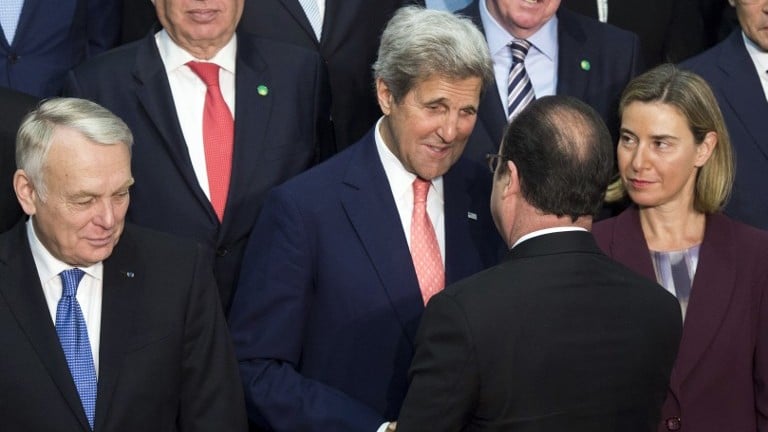
After months of threats, hemming, hawing, controversy, complaints, soundbites and more, the Paris peace conference finally kicked off Friday, with 26 nations calling for a regional peace confab and concrete trust-building measures.
The success of such an effort is still a massive question mark, but as guardians of the first draft of history, newspapers rightly place the story front and center. Well, two of three of Israel’s major Hebrew-language dailies do. Yedioth Ahronoth, the sole holdout, doesn’t mention the conference anywhere on its front page and buries the story on Page 6, instead leading off with a preview of some proposed law to give police less time to carry out investigations, and the death of boxing great Muhammad Ali.
The other two papers – Israel Hayom and Haaretz – place the Paris meet-and-greet front and center, though they play up two different angles.
Haaretz leads off with the summit’s call for the two sides to take steps toward rebuilding trust and a commitment to a two-state solution. Reporter Barak Ravid, in Paris, notes that the closing statement of the conference does not include a timeframe for negotiations and a deal, even though he reported just a few days ago that it would.
“The closing statement did not mention principles for addressing the core issues, including the 1967 borders as a basis for negotiations, and neither did it mention the French proposal for a set timeframe for future talks. Nevertheless, the French foreign minister said at the press conference that a schedule should be set for the negotiations and that many of the foreign ministers in attendance have stressed the importance of such a timeframe,” he reports.
Perhaps a bit hurt that his scoop didn’t turn out, Ravid also writes a commentary calling the statement “watered down,” and somehow is able to set the scene at the Prime Minister’s Office in Jerusalem, despite being all the way in Paris. Noting that the next statement likely won’t be so soft, Ravid reports on the “peon’s party” held by officials in Jerusalem, gleeful that they were able to dull the edges of the statement, and then takes that away from them as well
“In Jerusalem, the PM’s bureau and Foreign Ministry were quick to take credit for the softening of the final statement of the meeting. That is not necessarily justified. Those responsible for denuding the French step of content were United States Secretary of State John Kerry and his people and they didn’t do it out of love for Mordechai, but out of hatred of Haman,” he writes. “Kerry was not particularly influenced by the panicked phone calls from Netanyahu, but was primarily concerned about ensuring that the French initiative did not pass the point of no return and did not give rise to an uncontrollable initiative.”
Over in tabloid land, the conference is eyed much more warily. Yedioth calls it a “conference in neutral” and quotes a gaggle of senior Israel sources saying in unison that “the French soufflé didn’t manage to rise.”
Israel Hayom, seen by many as the unofficial mouthpiece of those punderful Israel officials, takes the headline for its news story on the summit (which it plays below a story on Jerusalem Day celebrations, creating a pretty spiffy allegory for the mindset of a large chunk of Israeli society ) from a Foreign Ministry statement, calling it a “missed opportunity.” The paper also goes on to report about Israeli fears that this effort will somehow undermine a separate effort to push forward the Arab Peace Initiative, currently being (kinda) backed by Israel.
That plan is wrapped up in efforts to bring Zionist Union into the coalition, after earlier efforts failed, but which now seems to be back on the table.
Yedioth sticks with the ingress/egress conveyance analogy made popular by both Prime Minister Benjamin and Netanyahu and Zionist Union leader Isaac Herzog in a verbal catfight they had in the Knesset last month, reporting that after “the maneuvers Netanyahu did to him” Herzog “is still leaving the door open.”
The paper’s Shimon Shiffer unsheathes his pen and stabs wildly, at Netanyahu for trying to use coalition talks to distract from personal legal troubles for him and his wife, at Haaretz for agreeing to publish a column from former Netanyahu bureau chief Natan Eshel about bringing Herzog in, which set the wheels in motion, at Eshel for being a panty-photographing creep, at Netanyahu again for pretending he would ever go for the Arab Peace Initiative, at the Arab Peace Initiative, for being something Israel would never go for, and at Herzog, for falling for Netanyahu’s gambits yet again.
“So the biggest tragedy here is seen in the correctness of Herzog going for nothing again and again – and going along with the charade of false tricks Netanyahu sells him. After the last failed talks, which ended with [Yisrael Beytenu head Avigdor] Liberman entering the government, Herzog promised the door for Zionist Union entering the government was closed. And now yesterday he already opened it again. It seems chez Herzog has revolving doors.”
Haaretz itself devotes its lead editorial to trying to convince Herzog to resist Netanyahu’s siren song.
“Zionist Union co-leaders Isaac Herzog and Tzipi Livni should remain outside the government while promising Netanyahu to support movement toward a two-state solution from the opposition. Their joining the coalition would only bulwark Netanyahu’s rule and dismantle the opposition to right-wing control, even if Bennett’s Habayit Hayehudi were to leave the coalition,” the paper writes. “Netanyahu must make a greater effort to persuade his listeners that his talk of a peace agreement is sincere, and is not simply another trick to shore up the coalition.”
Remembering The Greatest
The death of Mohammed Ali means eyes are not only on the political ring, but the boxing ring as well. Despite the fact that he lived half a world away and competed in a sport less than popular in Israel, Ali’s death makes all three front pages, and the papers have no shortage of words of praise and eulogy for The Greatest, bad boxing puns and all.
“America as a whole suffered a knockout when it heard that in a Phoenix hospital, with his family beside him, Ali died – and legend lives on,” Israel Hayom’s Boaz Bismuth writes, focusing, as others do, on the challenges and controversies Ali overcame in a different America. “Today it’s natural to see everyone sad, but in the years when Ali was a fixture of the sports, political and social stage – he didn’t only have fans.
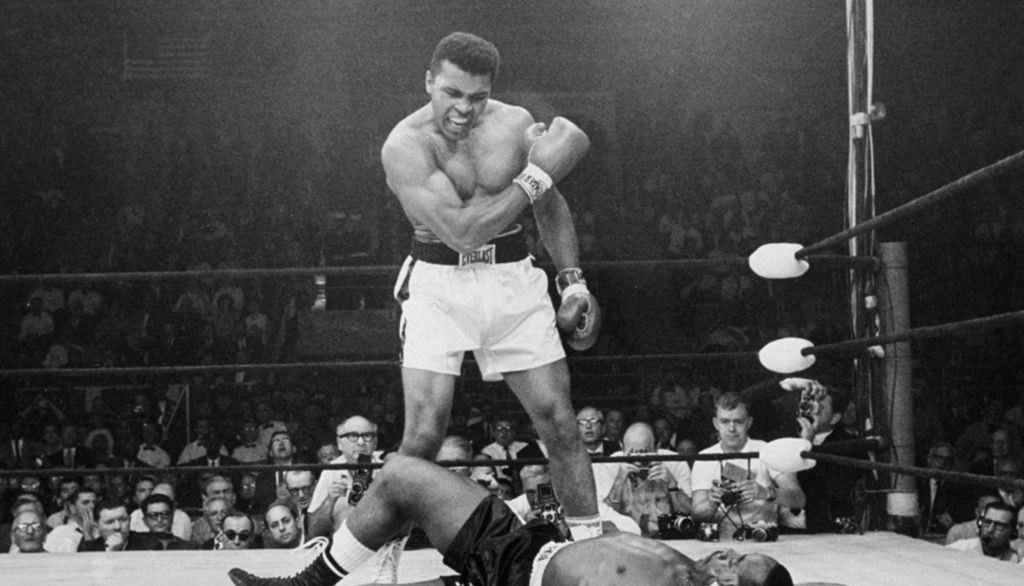
“Establishment America didn’t love the kid who threw away the Olympic medal he won in Rome. They also didn’t love the kid that refused to fight in Vietnam claiming that yellow people hadn’t done anything against the Black man. American didn’t know what to do with his big mouth, who gave up his boxing license, and big money, just because of his beliefs. These were years when racism was rampant, and alongside it as well anger and hatred toward Ali.”
In Haaretz, Chemi Shalev writes of his personal experiences watching Ali, noting that “it’s impossible to grasp the sensation Ali created without understanding the conservative world he came up in,” noting that he only became a hero to all Americans after a court cleared him of draft dodging in 1971.
“There will never be a replacement or even an inheritor for Muhammad Ali, the one and only,” he writes. “Not in the ring, not in his courage and his calls to overturn the old ways, and not in the deep impression he left on everyone of his generation.”







The Times of Israel Community.