

Forget the granny flat: Study of Israelite home shows elders ruled the Iron Age roost
Finds at Tel ‘Eton preserved by fire amid Assyrian conquest 2,700 years ago offer evidence that matriarch and patriarch got biggest and best room of multi-generational household
 Add ToI as a Preferred Source on Google
Rossella Tercatin is The Times of Israel's archaeology and religions reporter.
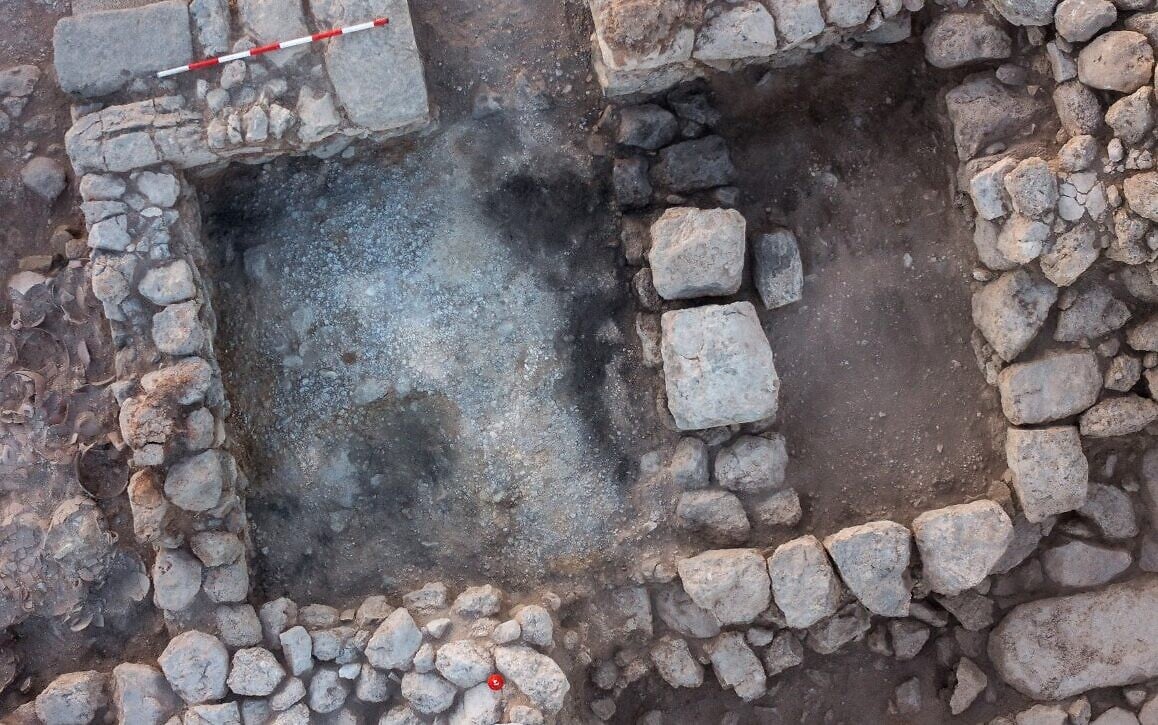
The elderly patriarch and matriarch of a prominent Israelite family living in an imposing building in the Judean lowlands nearly 3,000 years ago appear to have enjoyed their own spacious room in a strategic part of the large home, suggesting they continued to play a prominent role within the multi-generation household into their golden years, a new study has proposed.
The research by Bar-Ilan University Prof. Avraham Faust into Room B of Building 101 at Tel ‘Eton appears to shed new light on family dynamics, and particularly how the elderly were regarded, during the heyday of the Israelite kingdom, a subject about which little is known, including from the Bible and contemporary texts.
The structure, erected on the top of the mound at the site some 20 miles (32 kilometers) southeast of Ashkelon, was a typical Israelite “four-room house,” albeit significantly larger than most. The term refers to a building divided into four spaces, sometimes further subdivided into smaller rooms, a very common setup during the Iron Age (1200-586 BCE), when most of the biblical narratives are said to have taken place.
According to radiocarbon analysis, the Tel ‘Eton building was erected in the late 11th or early 10th centuries BCE, but the study on the elderly considered the last years of its existence in the 8th century BCE, before the Assyrians conquered Israel and destroyed the town. T.he blaze that engulfed the home ended up leaving many of the objects inside intact, allowing for their detailed study by Faust some 2,700 years later.
“We are lucky because the state of preservation is excellent,” Faust told The Times of Israel. “We have a vast amount of information about how the building functioned and how the people lived in it on the eve of the destruction, because the destruction sealed the finds and the fire preserved lots of things.”
The study, published in the prestigious Cambridge Archaeological Journal last month, theorizes that Room B was occupied by elderly family matriarch and/or patriarch based on several pieces of circumstantial evidence, including its location on the first floor of what would have been a two-story home.
Faust’s conclusions largely rest on his interpretation of the archaeological findings combined with an understanding of family dynamics based on biblical studies, anthropology and ethnography.
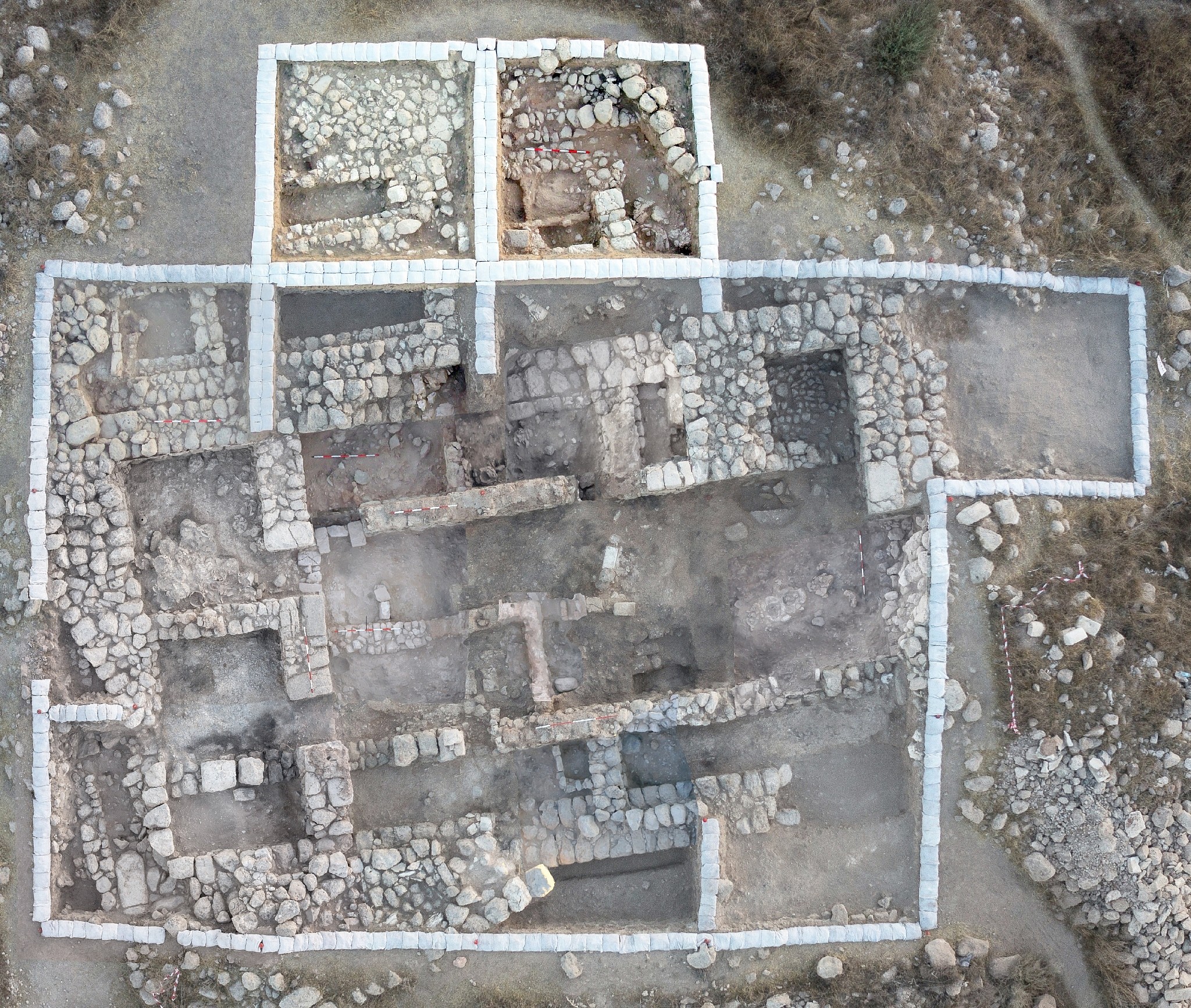
There are several reasons Faust believes several nuclear families lived in the 101 Building.
One is its size: about 225 square meters (2,400 square feet) on the ground floor alone, about the size of an average American house today, and much larger than other four-room houses, including at Tel ‘Eton. An upper floor likely stretched the size to a capacious 400 square meters (4,300 square feet).
In addition, the archaeologists found several loom weights, suggesting the presence of at least three and possibly four looms in the house.
“I think each loom was associated with a married woman,” Faust said. “Throughout the ancient Near East, in the classical world and even in the modern Middle East, looms were symbols of femininity.”
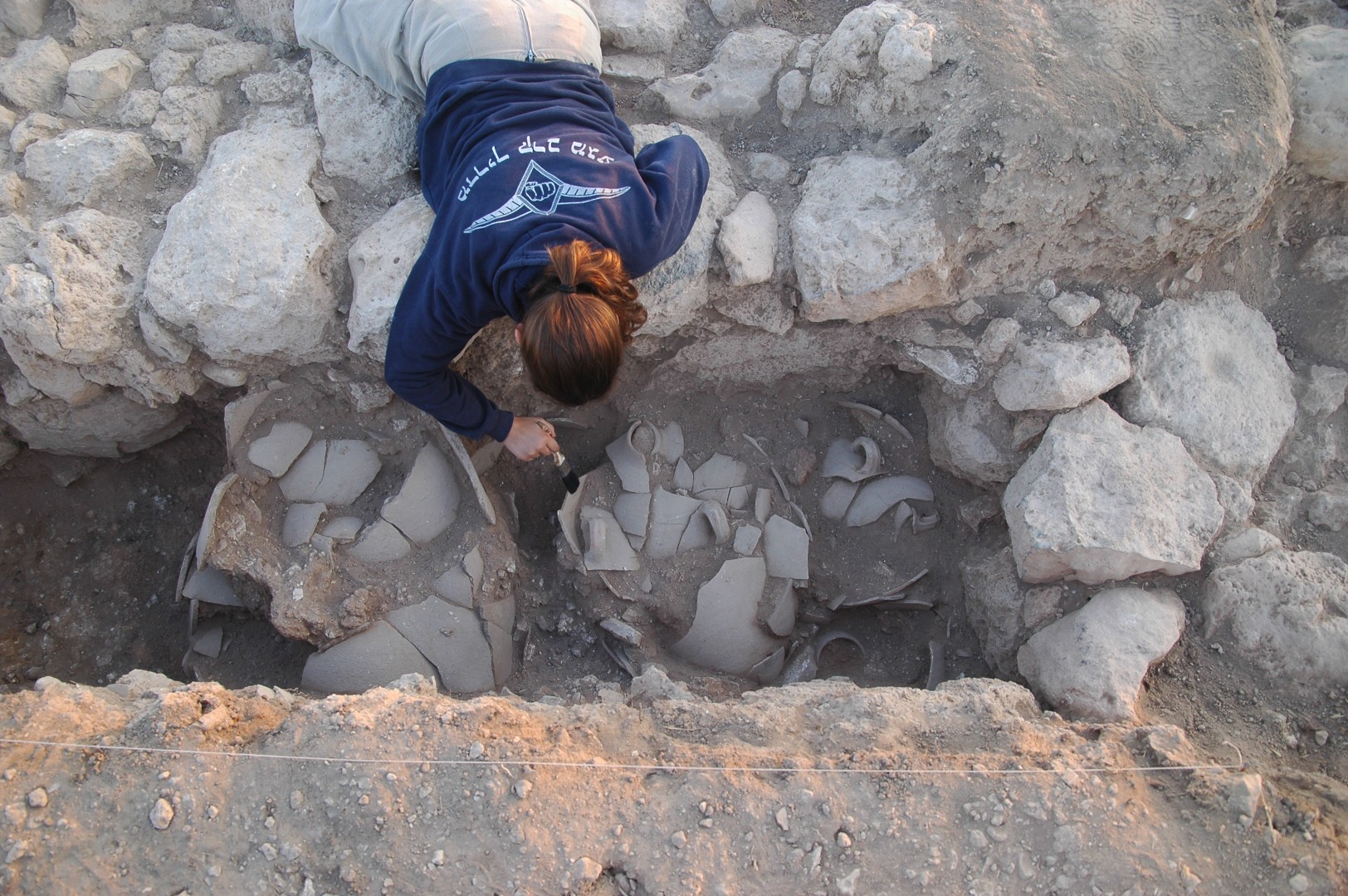
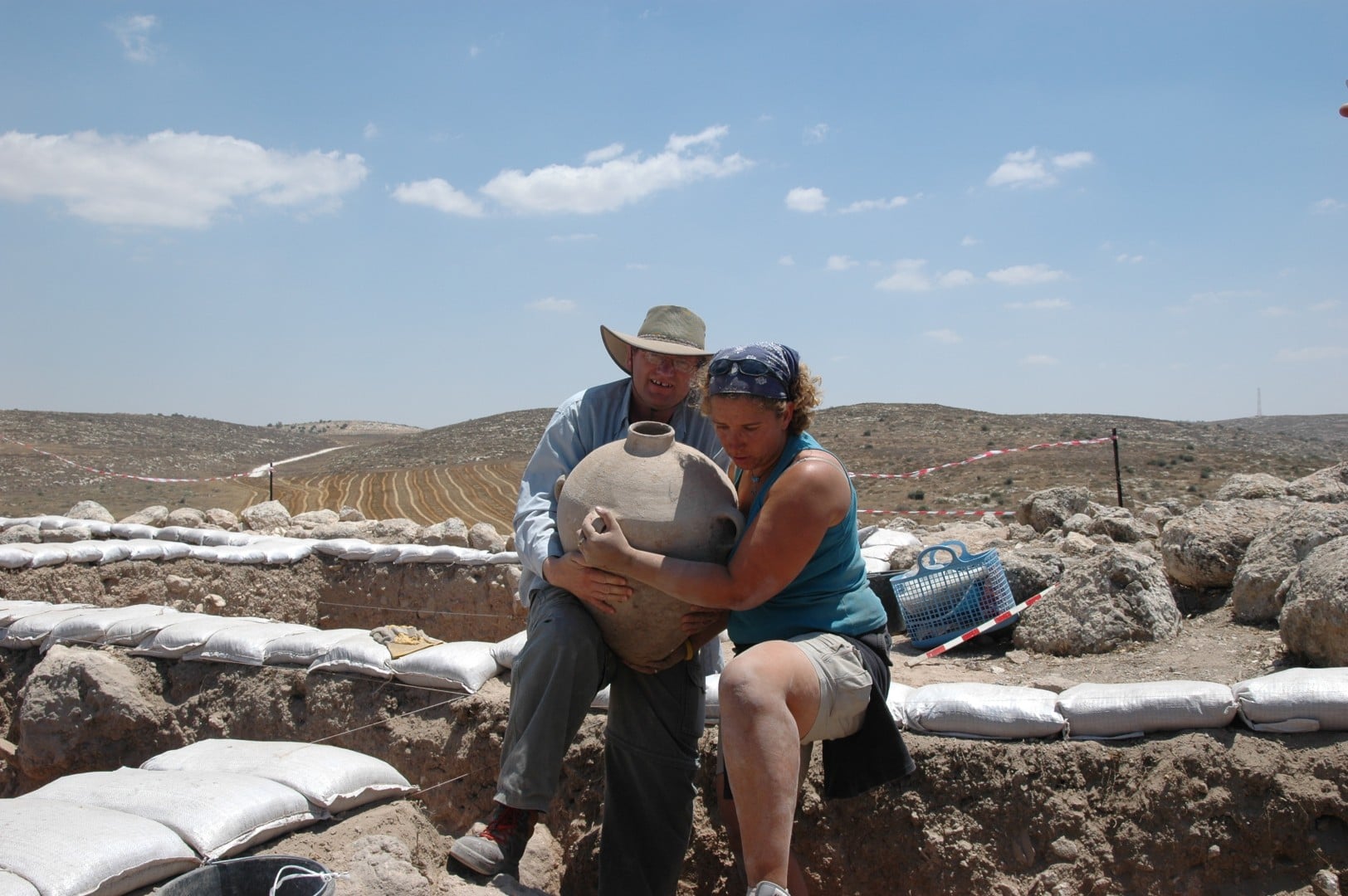
The building was excavated in its entirety over 10 seasons starting in 2006. During the dig, archaeologists found around 200 intact pottery vessels and hundreds more broken ones, along with numerous animal bones, seeds, and several other artifacts. The wealth of finds allowed the researchers to determine the function of each room, some of which has been published in earlier studies.
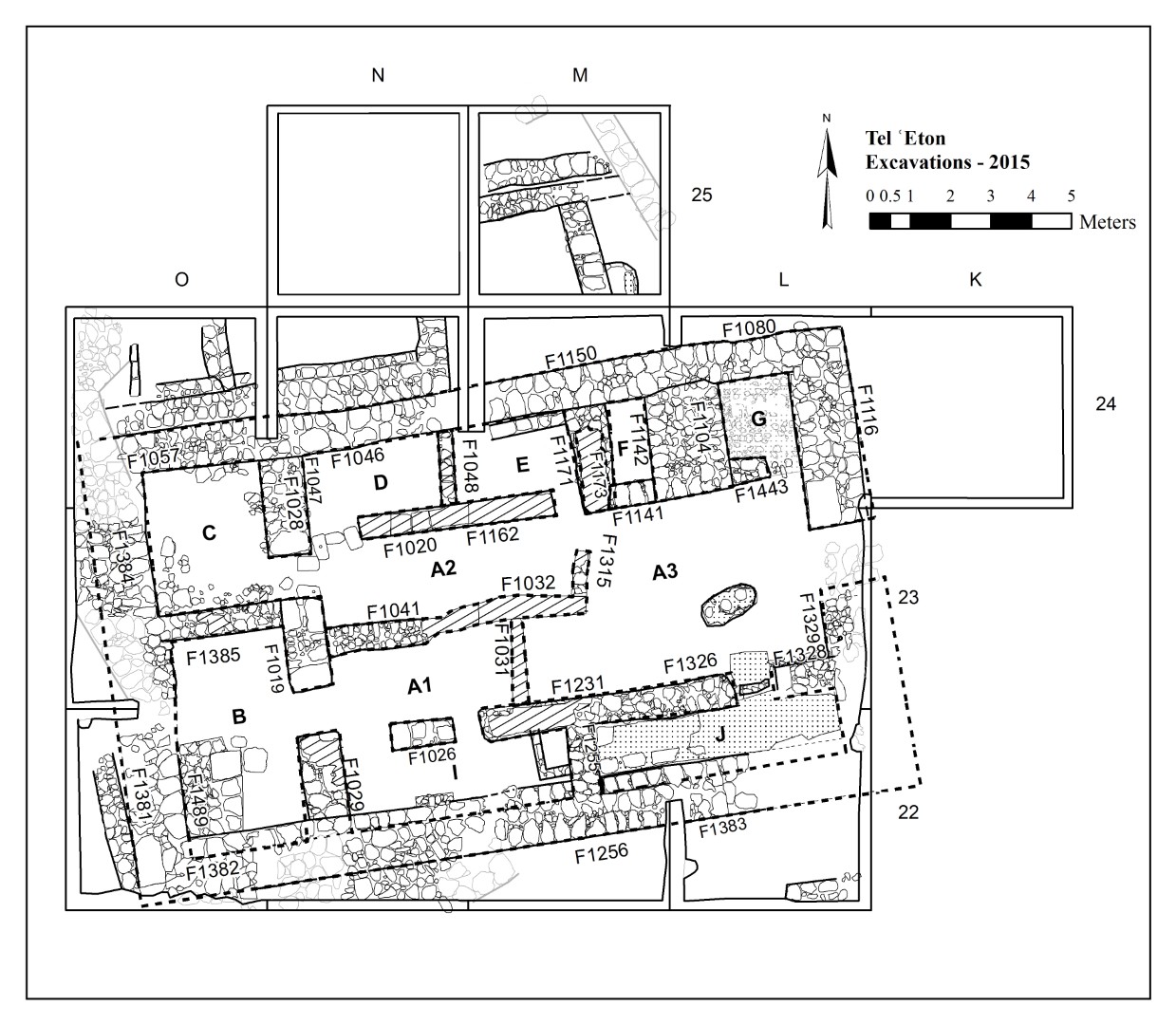
In the northern wing, all five rooms were used for storage, as evidenced by jars still containing olives, jars for liquids, and a vast amount of grain.
Archaeologists also found oil lamps next to the entrances of each room, suggesting they were lit when someone needed to enter during the night.
In the southern wing, rooms appear to have served different purposes. One room was probably the kitchen, and one might have served as a room for individuals in a ritually impure state — namely, women menstruating or after childbirth.
The room where Faust believes the grandparents lived was the one at the corner of the southern area, farthest from the courtyard entrance.
“It was the largest room and the only one that we would call a living room, meaning not used for storage or other purposes, on the ground floor,” he said.
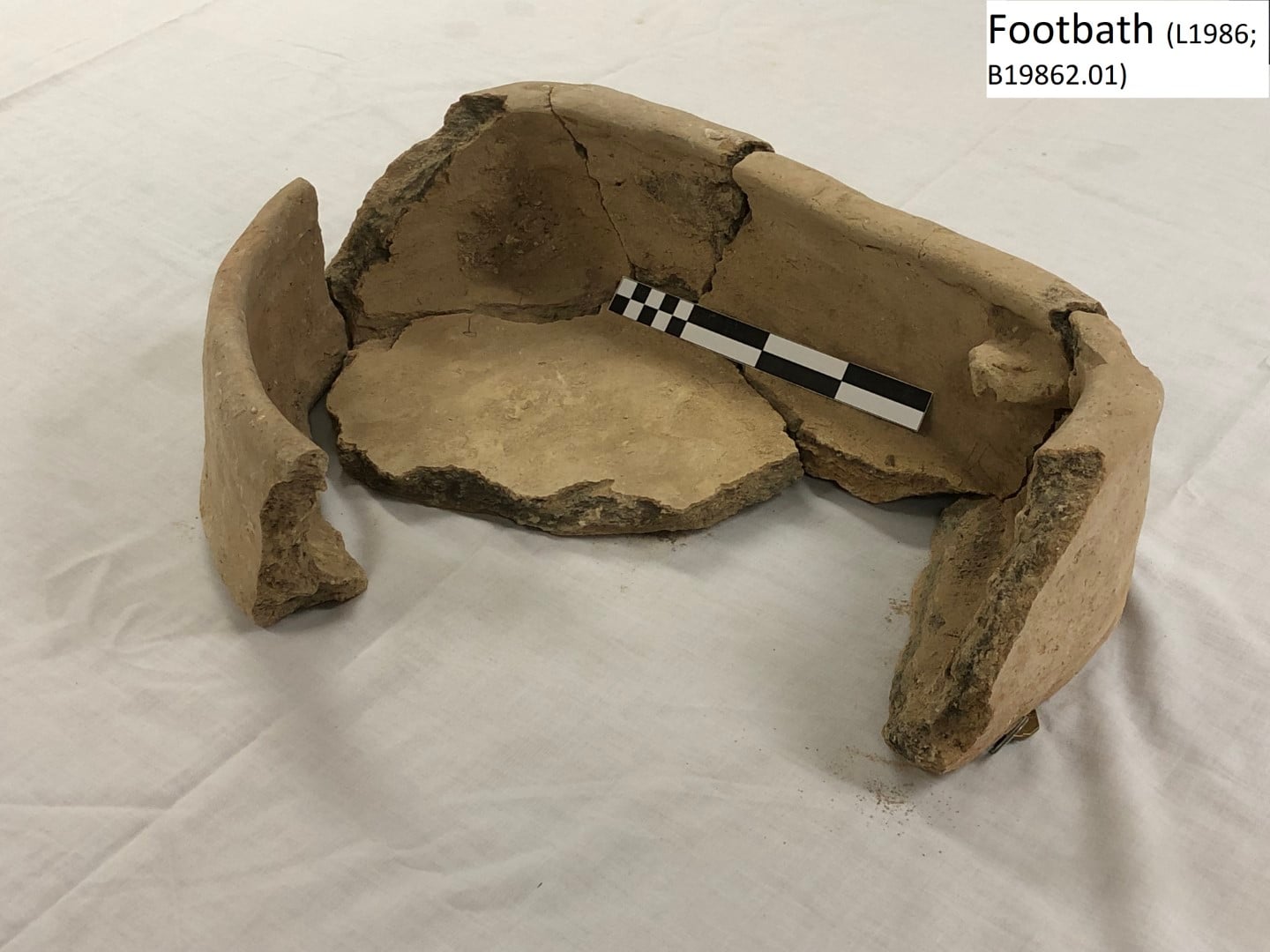
There, the archaeologists uncovered distinctive artifacts.
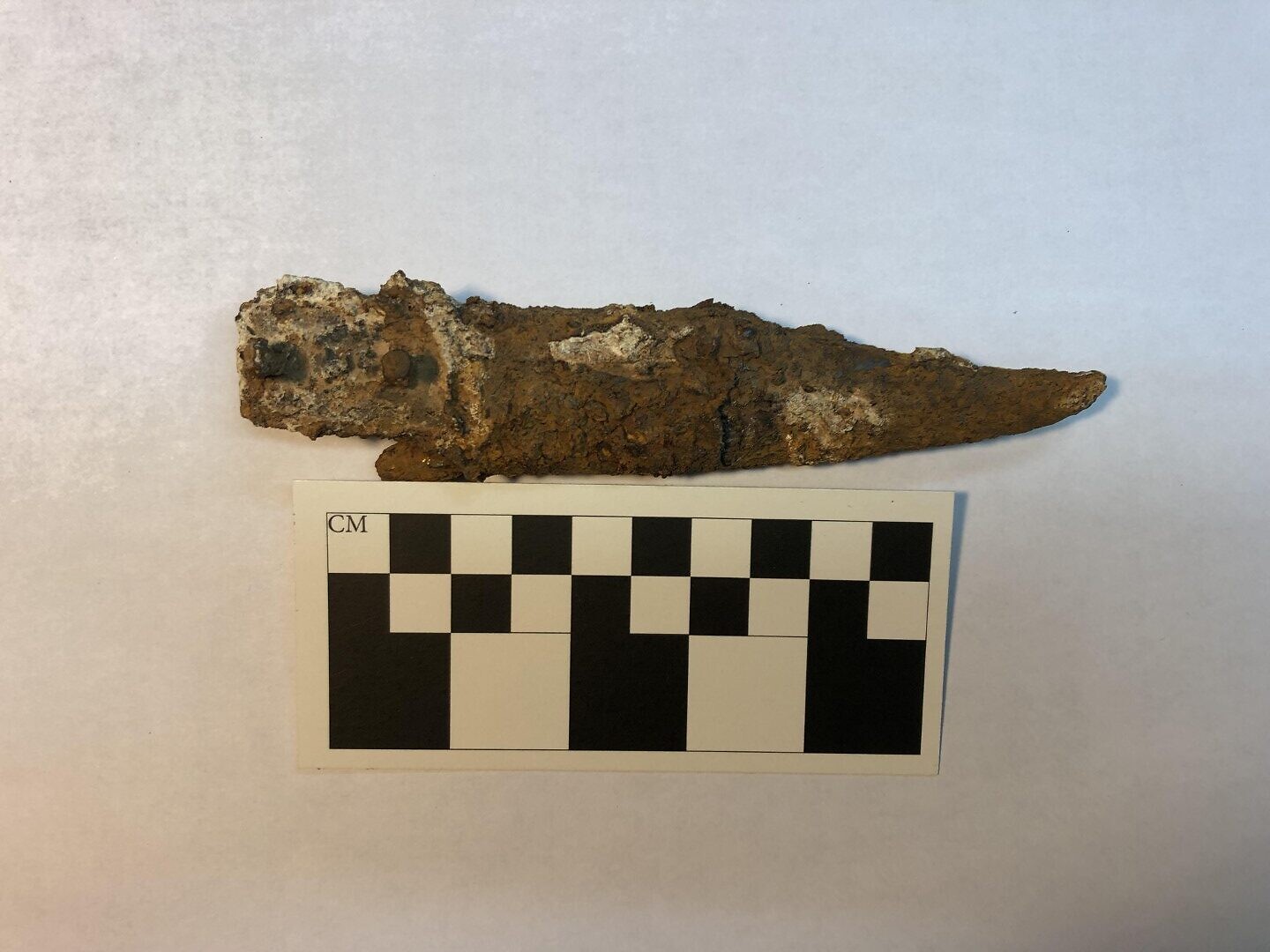
“We found the remains of a footbath, which is very unique, and is usually connected with people of a high status and with entertaining guests; we found an iron knife, we found cedar wood, which might be the remains of some furniture, perhaps a chair,” Faust said.
The Bible contains several stories in which hosts bathe the feet of their guests as a sign of respect for them, including an episode in Genesis where Abraham washes the feet of angels in human form visiting his tent.
The room also featured a bench that ran along the southern wall of the building, and a stone platform, which archaeologists believe might have been used for eating (a cooking pot was unearthed on top of it), sleeping, and as a working station.

“There are a few other interesting attributes to the room,” Faust commented. “If someone was standing at the entrance to the room, they could see the entire courtyard, everything that came in and out of the building, and from all the other rooms, while remaining the farthest away from the entrance, ensuring both privacy and control.”
The archaeologists determined that the building had a second story because they identified collapsed sections of its floor on the ground floor. However, the building had no stairs, suggesting that people might have used ladders.
“When you are old, climbing up ladders might be difficult,” Faust noted.
The room was also located right next to the kitchen, identified by the presence of six cooking pots, where several loom weights were also uncovered.
According to Faust, the grandmother might have had her loom there as she also supervised food preparation and other activities.
“For all these reasons, I think that [Room B] was the room of the patriarch and the matriarch — grandfather and grandmother,” he said. “Here they might also have received honorable guests, like important family members who did not live in the building.”
The archaeologists also discovered that in the last phase of the building, a very short wall was erected in the yard, creating a separate space immediately outside the entrance of the elderly’s room and the kitchen.
The researchers believe that the wall was built in the last years before the destruction, possibly even during the Assyrian siege, based on the fact that the mudbrick material used was different from the materials used in earlier times, and that the wall was quite flimsy, suggesting that it might have been erected in haste.
“The wall was very shallow; it would not have prevented an adult from going in and out, but it was still inconvenient, so why did they put it there?” Faust said. “I think this might have been the space where babies and toddlers spent their time in the care of the grandmother. In many traditional societies, grandmothers are also responsible for the children, so the mothers can work outside the house.”
The archaeologists found a large concentration of astragali, animal bones employed for both divination and as toys, supporting the idea that the area might have been used by children.
“I think this is why the astragali were there,” Faust said.
The researcher explained that, given the building’s high status, its residents’ lifestyle might not fully reflect that of the average Israelite in Tel Eton or elsewhere.
“It was an elite building, but it still allows us to make some generalizations,” Faust noted.
No human remains were found in the structure, suggesting that when the Assyrians set it on fire, its residents had already been taken captive or fled.
“This building stood in the highest part [of Tel ‘Eton],” said Faust. “I think it was set on fire on purpose by the Assyrians as a symbolic execution of the city.”








The Times of Israel Community.