

Germany’s twilight Nazi trials about more than justice
Nonagenarians unlikely to end up behind bars, but proceedings have a role in educating the next generation about country’s troubling past
 Add ToI as a Preferred Source on Google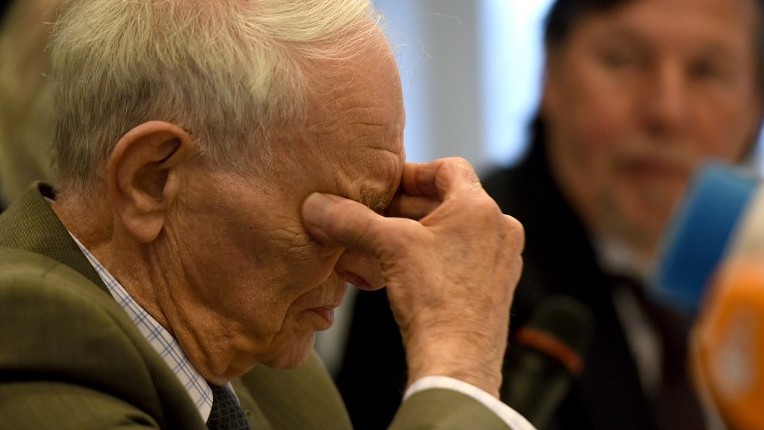
BERLIN, Germany (AFP) — Germany is putting on trial several former members of the Nazi SS this year — but seven decades after the war, they are in their 90s and unlikely to end up behind bars.
Yet that doesn’t diminish the importance of the legal proceedings, experts say, for they serve a role in educating a new generation about the horrors of the Holocaust.
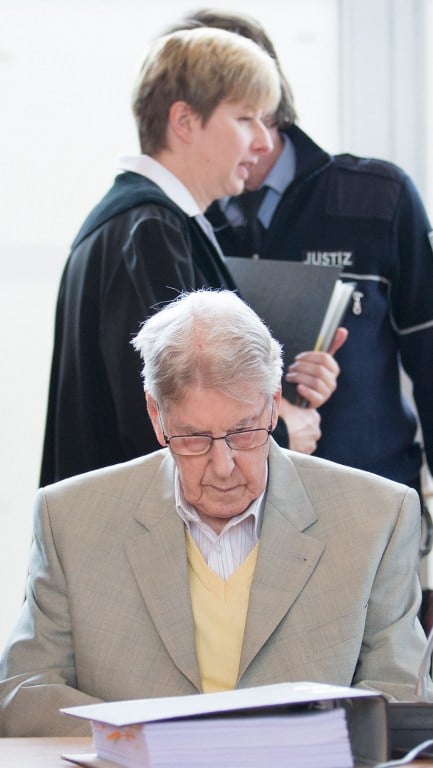
“It’s not about sending these old folk to prison,” an editorial in Sueddeutsche Zeitung stated, echoing other newspapers about the case of former SS guard Reinhold Hanning, 94, who went on trial on February 11 accused of complicity in 170,000 killings.
Many argue that given the immensity of the suffering wrought, no judicial sentence, especially this late, could ever be commensurate to the crimes.
“Today it’s the witness accounts that really matters,” said Daniel Bonnard, a historian at Marburg University.
(Friso Gentsch/Pool/AFP)
Auschwitz survivor Justin Sonder, who is testifying against Hanning, agreed that the sentence “plays no role.”
On Monday, a former Nazi SS medic at the Auschwitz death camp, 95-year-old Hubert Zafke, also faces trial on charges of aiding in 3,681 murders.
While witness testimony in most criminal trials relates specifically to the defendants and their actions, Germany’s latest war crime cases have heard survivors recount in more general terms the suffering they endured under the Nazi regime.
This matters because in recent years Germany has started to go after not just old Nazis known to have personally committed atrocities, but anyone who once served as a cog in the industrial-scale killing machine.
Keeping memory alive
At the Hanning trial, witnesses from the United States, Canada and Israel came to testify about what they endured and witnessed at Auschwitz, although no one was expected to remember the former SS guard personally.
Given his sound mind, he was a “perfect defendant,” said Andrej Umansky, criminal law expert at Cologne University.

In last year’s trial of Oskar Groening, 94, known as the “bookkeeper of Auschwitz,” the defendant himself recognized his “moral responsibility” even as he denied ever killing anyone.
For the numerous students who attended the trial, it was a case of watching living history, he said.
For many of the young people, he added, this dark chapter of German history is “as much in the past as ancient Egypt.”
But Groening’s testimony “shows what happened right down to the small details,” and transformed Auschwitz from an “abstract concept” back into the living hell it was, he said.
In the same spirit, Germany’s Axel Springer media group published a book called “The Last Witnesses” to document the hearings.
Even though the recent cases may not have the same impact as the Allies’ 1945 Nuremberg trials, they keep alive the memory of the Holocaust.
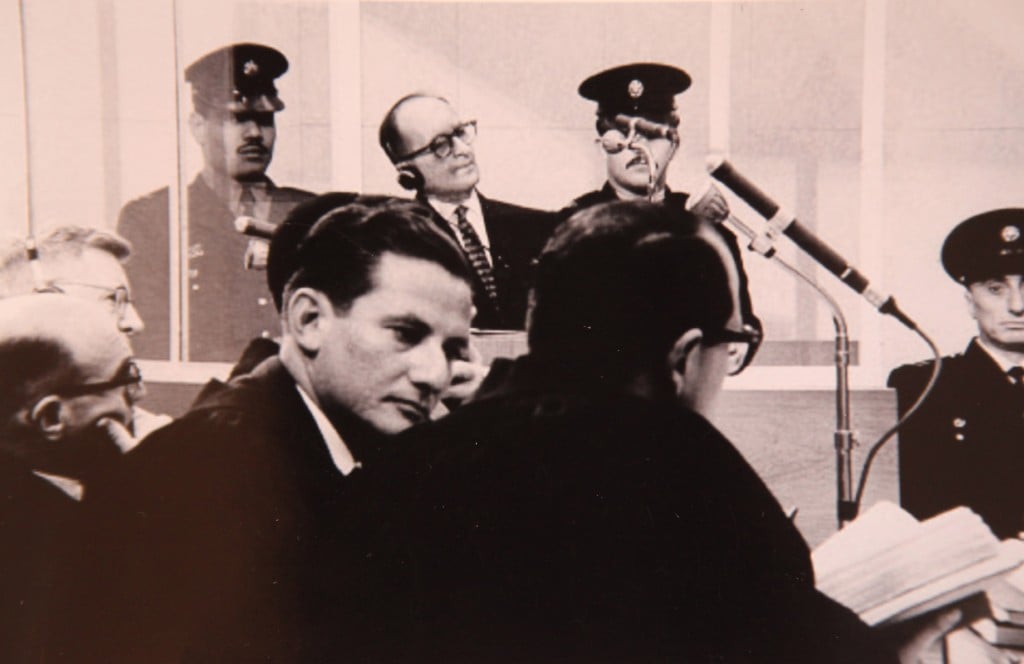
The Nuremberg trials and the 1961 Jerusalem trial of Adolf Eichmann, one of the main architects of the Holocaust, “are constantly revisited by everyone — philosophers, historians, jurors and writers,” said historian Annette Wieviorka.
Nuremberg provided researchers with information about Nazi “doctors, the industries and the entire apparatus,” said Bonnard.
And Eichmann’s trial, which was covered by 450 journalists from around the world, for the first time gave faces and voices to Jewish victims of the Holocaust, humanizing the legal process.
Building consciousness
Such trials have been pivotal in Germany in building a national consciousness about the scale of the war crimes.
The arraignment of 22 former Auschwitz personnel from 1963 to 1965 in Frankfurt marked the beginning of national soul-searching, said Wieviorka.
Before the landmark trials, “the accused were completely free in their movements and socially integrated in the West German society, while survivors travelling to Frankfurt had to be welcomed by the Red Cross,” said Bonnard.
“Until the 1960s, the survivors were marginalized, and witnesses only got the media spotlight with the twin trials of Eichmann and Frankfurt.”
High schools and universities organized trips to attend the Frankfurt hearings that stretched over two years.
“Frankfurt has had all the more impact on the wider public as judicial authorities deliberately set up an exhibition on Nazi crimes at the time of the trial, thereby adding to the didactic process,” said Bonnard.
“This led to an awakening of consciousness, accentuated by the strength of the witness accounts.”







The Times of Israel Community.