

Hebron stabber was still alive when shot by soldier, autopsy said to find
Palestinian doctor auditing examination of high-profile case reportedly says al-Sharif was killed by bullet shot by infantryman; official results yet to be released
 Add ToI as a Preferred Source on Google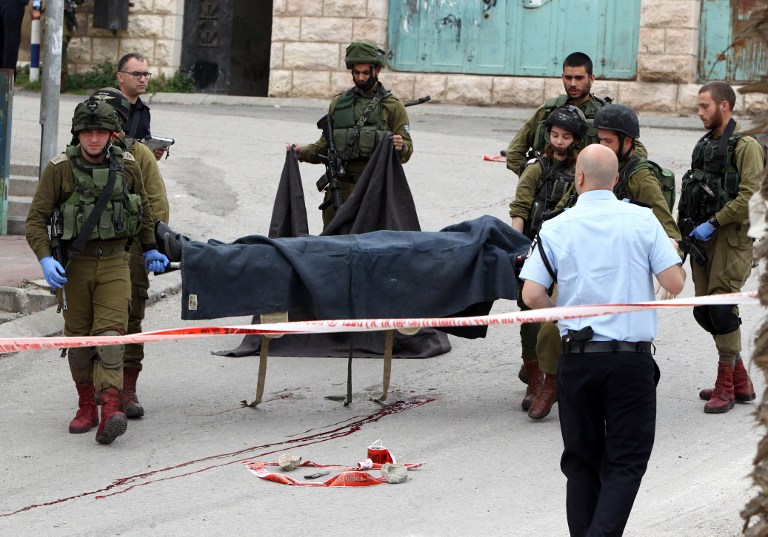
A Palestinian official said an assailant shot through the head by an Israeli soldier in Hebron last month was injured but alive before the bullet pierced his brain, as an autopsy on the victim was completed Sunday.
The Palestinian pathologist attended but did not perform the autopsy in Tel Aviv on Abdel Fattah al-Sharif, whose death, caught on camera, is at the center of a case that has roiled Israeli public opinion and the halls of power after an Israeli soldier apparently killed the wounded and supine assailant.
“After a full autopsy, the fatal wound was in the head,” the Palestinian doctor, Rayan al-Ali, told AFP.
“There were several gunshot wounds. All those wounds were in the muscles, the lower limbs, and there was a wound in his right lung, but it was not fatal and did not lead to his death.”
The Israeli findings, which are also central to whether the soldier will be charged with manslaughter in a military court, have not yet been made public, but Israeli officials did not disagree with the Palestinian doctor’s findings, according to a Haaretz report.
The soldier under investigation, whose name has not been released, was filmed shooting Sharif through the head on March 24, minutes after Sharif and another assailant stabbed and moderately wounded a soldier in Tel Rumeida, an Israeli enclave of the West Bank city of Hebron.
The other Palestinian assailant was killed when troops shot at the two in an effort to stop the attack. In some videos, al-Sharif can be seen moving his legs as he lay wounded on the ground, before being shot in the head.
He was arrested quickly afterward and a prosecutor said initially said he would seek murder charges against the soldier. However, at a hearing on Thursday, the prosecutor said they would seek manslaughter charges instead.
The March 24 incident sparked a national controversy with some politicians and others accusing the army of selling out the soldier by arresting him and putting him under investigation. Prime Minister Benjamin Netanyahu, Defense Minister Moshe Ya’alon and army brass have all defended the investigation.
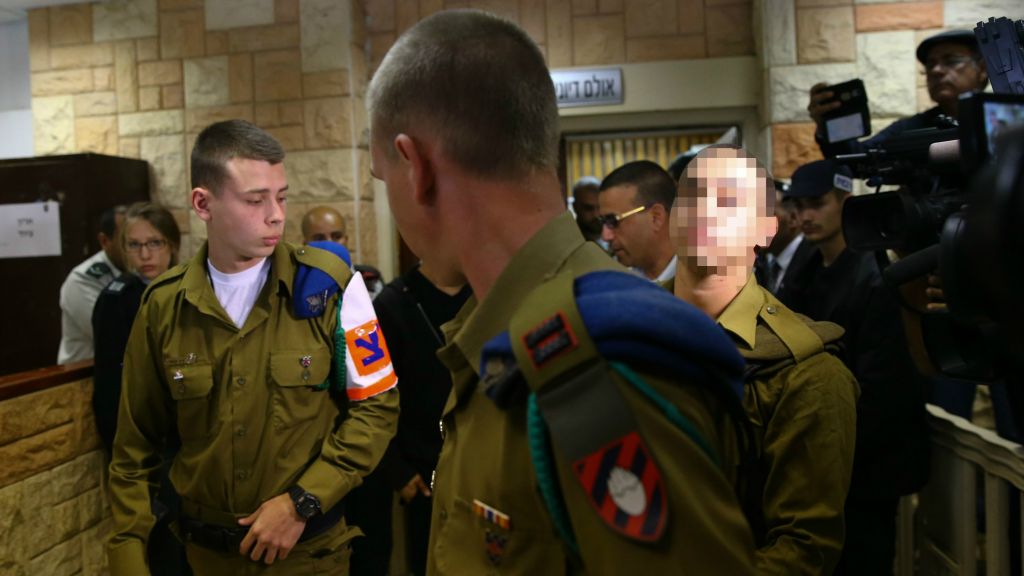
It is not clear why the soldier, who arrived on the scene several minutes after the stabbing incident, decided to shoot Sharif.
IDF prosecutors say evidence points to the intention to kill Sharif despite the fact that the stabber had been subdued and lay apparently helpless on the ground. The soldier has argued that Sharif was moving, and said he believed the Palestinian could have been carrying an explosive vest or other device that posed a threat to bystanders.
According to prosecutors, the autopsy will provide critical evidence that may corroborate or undermine the soldier’s defense.
The High Court of Justice last week agreed to a request by Sharif’s family to allow a pathologist of the family’s choosing to attend the autopsy.
The soldier, who has not been named by the army but whose identity has been shared on Palestinian and pro-Hamas websites, was released from Military Police custody on Friday on the order of the Jaffa court and moved to supervised detention at a military base.
The prosecution has said that the soldier was not cooperating with investigators, even though his lawyers initially said he had promised to reenact the shooting and confront the soldiers who testified against him, the Ynet news website said.
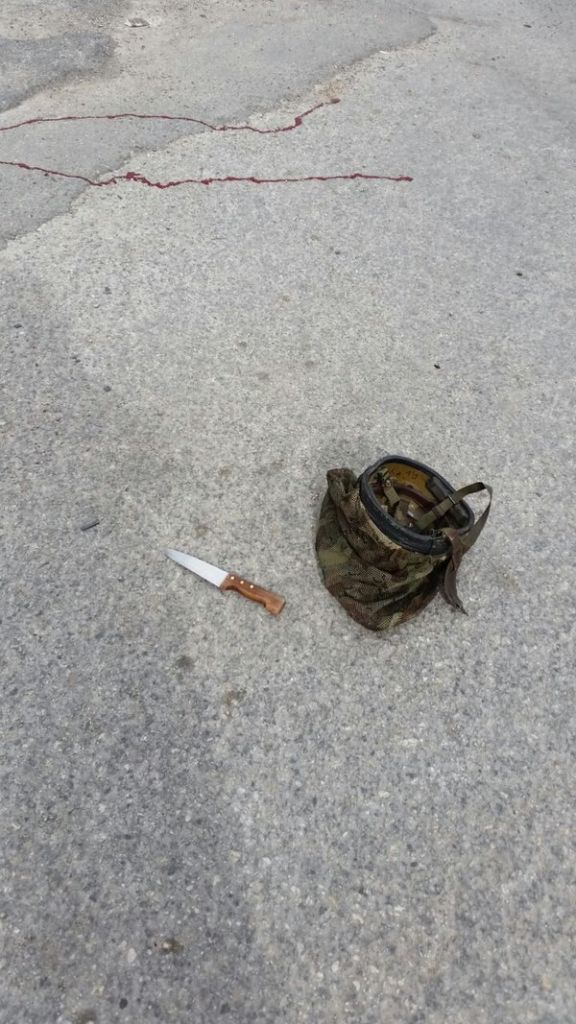
“He refused to hold a reenactment or confrontations (except with one soldier with whom he actually had no dispute), and even indicated that he did not remember things that were said by witnesses at the scene,” said the Military Advocate General’s appeal of the soldier’s release.
The appeal added that “the soldier claimed several times during investigation that the attacker tried to reach for a knife that was ‘within reaching distance,’ while the video [of the incident] paints a different picture, that the knife was a significant distance from the attacker, who was himself in serious condition. He gave evasive answers during investigation whenever he was confronted with anomalies in his version of events. The soldier’s [shifting] version raises serious doubts about the credibility of the defense arguments, to say the least.”
Prime Minister Benjamin Netanyahu on Thursday urged the family of the soldier to trust in the Military Police investigation currently underway.
“I heard your words and as the father of a soldier, I understand your distress,” Netanyahu told the father in a phone call.
“I trust the IDF, the chief of staff and the investigation 100% and I think that you too should trust the commanders and the investigation,” he said. “I am convinced that the investigation will be professional and fair toward your son.”
At a press conference held at their Ramle home earlier this week, the soldier’s family angrily denounced his “lynching” in the media and said Israeli leaders were too quick to judge him before he had an opportunity to defend himself.








The Times of Israel Community.