

Heroic Russians’ WWII mini-sagas dramatized for Instagram in ‘Disappearing’
‘Mini-movie’ creators inspired by viral Israeli ‘Eva.Stories,’ Instagram series based on 13-year-old in Holocaust; Russian project’s goal to raise awareness and funds for elderly
 Add ToI as a Preferred Source on Google
Reporter at The Times of Israel
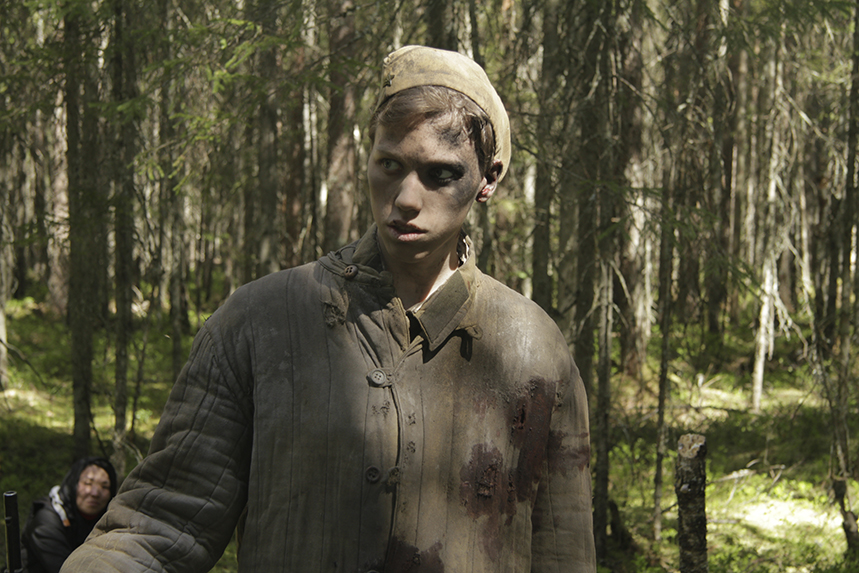
During Nazi Germany’s air assault on Russia, Galina Makeeva survived more than 100,000 firebombs dropped on Moscow by the Luftwaffe.
In an Insta-story based on Makeeva’s wartime experience, an actress portraying her as a young woman frantically extinguishes a fire ignited during a German air raid. But at the end of the mini-movie, called “Firebombs,” Makeeva herself appears on-screen and sings a ditty in Russian.
“This is the real story of Galina Makeeva,” reads closing text. “Without attention these people disappear, just like Instagram stories.”
The nine-part “Disappearing Stories” series was produced by Enjoyable Aging, a Russian NGO seeking to improve conditions for the country’s elderly population. The creators credit “Eva.Stories,” an Israeli Instagram series set during the Holocaust, for inspiring them to depict pivotal moments in the lives of Russian seniors.
Since launching the series on June 22 — the anniversary of Germany’s 1941 invasion of Russia — over 12.5 million have viewed one of the stories, according to the creators. Each of the stories focuses on a Russian elder who saved his or her own life, or the lives of family members, during the Nazi occupation.
“This is a high concept idea, it draws younger people’s attention to the elderly in nursing homes, and it is socially significant,” said Oleg Ageichev, the series’ director and creative head of Mozga Creative Studio.

Only three months after launching, the series garnered web content awards in Berlin and Sicily, with the color-correction and cinematography drawing particular praise.
“We initially set ourselves the goal of getting a picture as close as possible to the art of cinema, but in a vertical format,” said Ageichev, who directed the 2018 fantasy film “Dominika” about a girl who grows up whenever the man caring for her gets angry.
According to Ageichev, “Enjoyable Aging” has seen a seven-fold increase in volunteers since the launch of “Disappearing Stories.” This is in line with the non-profit’s goal of enriching the lives of elders through more social interaction.
“People in nursing homes leave as quickly as Instagram Stories disappear,” said Ageichev.
‘We presented it emotionally’
The Russian healthcare system is free to all but is reported to be plagued by outdated equipment, underfunding, and poorly paid staff. The country’s per capita health expenditure is significantly lower than most developed nations
“There is research that shows real-life human interaction greatly improves the quality of life for lonely elderly people,” said Ageichev. “Of course, we really want young people to pay attention to these people,” said the 36-year old filmmaker.

According to Ageichev, the series was partly inspired by “Eva.Stories,” a popular Instagram Story about a 13-year old Holocaust victim.
However, there are key differences between the projects, he said.
“Eva exists in an environment where mobile phones and Instagram are present at the time of the Holocaust,” said Ageichev, who lives in Moscow.
“Our story exists in the true reality of the 1940s. Moreover, we use more than just the Stories’ interface for design: we use the Stories’ fading factor as an important communication element,” said Ageichev.
In a darkly humorous video about the wartime experience of Maria Matveeva, a German army unit suddenly enters her village. Simultaneously, the young woman runs into the forest with an ax and begins to chop away at a tree.
The scene suddenly moves to Matveena’s house, where the ceiling and walls have become oddly entwined with tree trunks. German officers arrive and declare the house unfit for confiscation.
Although most of the “Disappearing Stories” depict Nazi soldiers, you’d be hard-pressed to find a swastika. This contrasts with most cinematic depictions of the war, festooned with as many swastikas as possible.
The choice to focus on survivors of World War II was meant to instill a sense of patriotism in young adults, said Ageichev. Pitched battles and mortally wounded soldiers feature in several of the mini-movies, and there’s even a small tank that rolls town.
“We really did not want our highly anti-militaristic content to blend in with what people are used to on Instagram: glamorous pictures and the like,” said Ageichev.

“We wanted to get a high cinematographic quality that would set us apart even at the image level, send us back to the story being very sensory and sensuous at the same time,” said Ageichev.
The high production values of “Disappearing Stories” are intended to immerse Instagram viewers in the most pivotal moments of people’s lives. The format relays history in brief, personal flashes, as opposed to focusing on great battles or men sitting in conference rooms, said Ageichev.
“The stories are so specific and factual that, on the one hand, they have no historical value,” said Ageichev. “But on the other hand, it is these micro-fragments that best express the entire horror of the events. We did not just tell the factual story — we presented it emotionally.”









The Times of Israel Community.