

High Court judges query state over efficacy of law banning Al Jazeera
Civil rights group and Qatari outlet argue law is unconstitutional; justices suggest its provisions are too vague, one touts ‘factual’ lower court finding that Al Jazeera is involved in terror
 Add ToI as a Preferred Source on Google
Jeremy Sharon is The Times of Israel’s legal affairs and settlements reporter
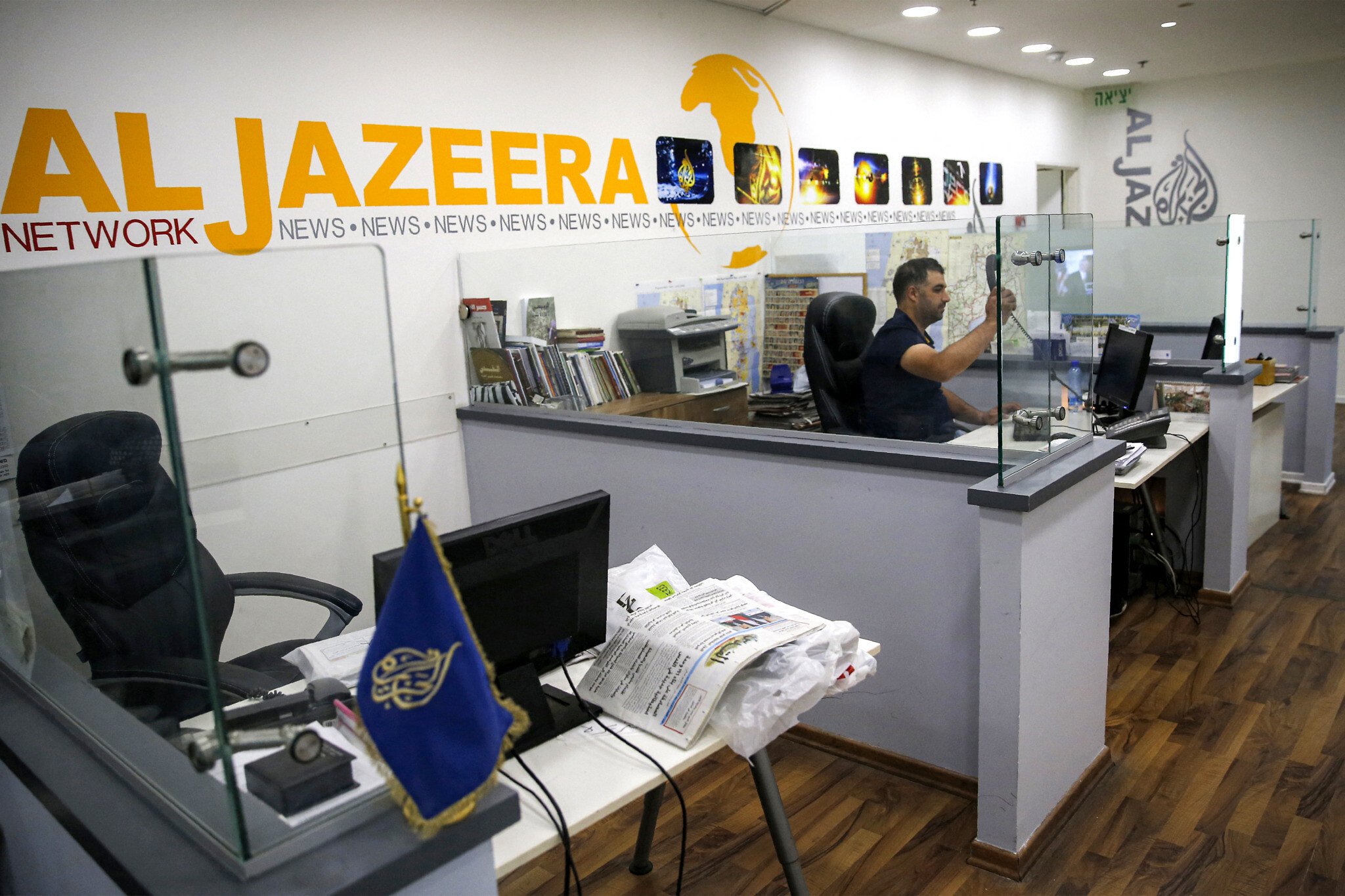
Judges heard petitions on Sunday against the government’s temporary law that allowed it to shutter foreign networks that are deemed to do “real harm to state security.” They expressed concern both over the definition of what constitutes such harm, and the efficacy of the law itself, which has been used to ban Qatari outlet al-Jazeera.
Judge Daphne Barak Erez said during the hearing that the definition of harming state security was “totally amorphous,” while Supreme Court President Isaac Amit asserted that the law was relatively ineffective, given the multiple paths available to media consumers to circumvent Israel’s ability to ban foreign broadcasters.
Nevertheless, other judges on the seven-member panel pointed out, during Sunday’s hearing, that the Tel Aviv District Court has ruled that there is a direct connection between Al Jazeera broadcasts and terror attacks in Israel, and that some Al Jazeera reporters have extremely close ties to Hamas.
The petitions were filed by Al Jazeera and the Association for Civil Rights in Israel (ACRI) against an April 2024 measure known as the Al Jazeera law, which was widely seen as targeting the Qatar-based news network.
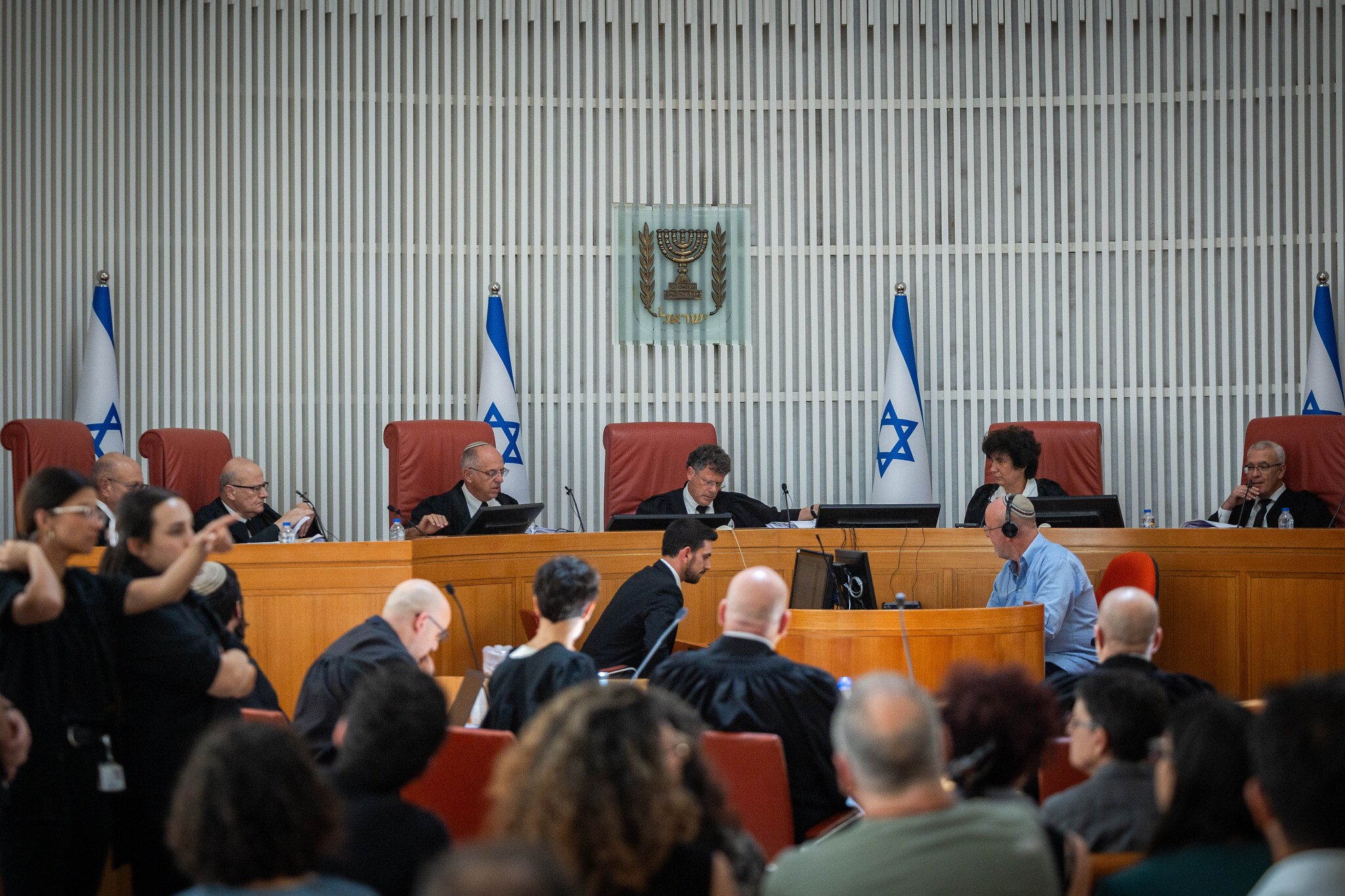
The petitioners argued that the legislation was unconstitutional, asserting that it violates freedom of expression, the right to information, and freedom of the press.
The temporary law, which has been renewed on several occasions, gives the prime minister and the communications minister the authority to order the temporary closure of foreign networks operating in Israel and confiscate their equipment if it is believed that they are “doing actual harm to state security.”
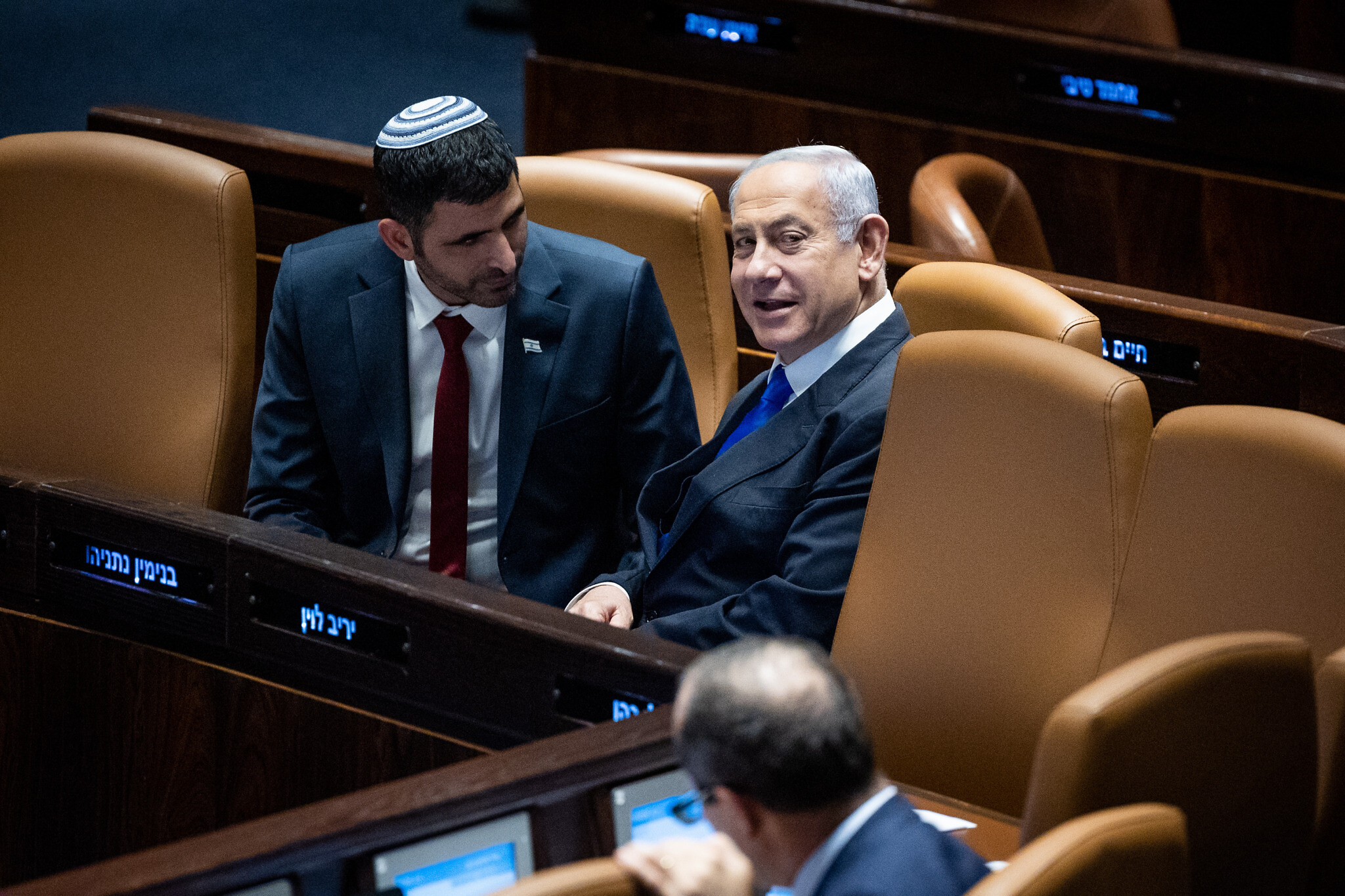
The orders were originally valid for 45 days and renewable for additional 45-day periods, but they have since been made into 60-day orders.
Al Jazeera and the Hezbollah-affiliated Al Mayadeen news channel have both been blocked in Israel under the law.
But Al Jazeera and Al Mayadeen content is still available on YouTube and other social media platforms, while the broadcasts themselves are available to those with satellite receivers, which are popular among Arab Israelis.
Amit pointed out this fact to attorney Ran Rosenberg, who represented the state in Sunday’s hearing.
Rosenberg argued in response that even though there were problems with the efficacy of the law, the government had been trying to balance its obligation to protect state security with its constitutional obligations, and therefore chose not to go further by, for example, blocking the satellite signal.
He also insisted that the government ban has still made it harder to access the content of these channels than would otherwise be the case.
Attorney Hagar Shechter, representing ACRI, argued that the law was entirely unnecessary since there were already tools at the government’s disposal to deal with any threats to state security emanating from media outlets.
She pointed out that Israel’s 2016 anti-terrorism law gives the government the authority to shut down terrorist media outlets, while the 1982 Communication Law allows the government to shut down outlets that incite violence and racism.
The “Al Jazeera law,” she argued, was not only extraneous, but also allowed for a very broad definition of “state security,” as Barak-Erez had already pointed out, and put all the power in the hands of political actors since the communications minister and the prime minister are the officials empowered to issue the orders banning foreign media outlets.

“There is a need to disconnect the political echelon from media outlets,” argued Shechter.
The law does, however, require that in order to issue such directives, a professional position paper, authored by one of the state security agencies and detailing the “factual foundations” of damage to national security by a media outlet, be presented to the government.
Barak-Erez asked the attorney if the law would be more acceptable if the military censor, as a professional body, were involved in the decision-making process to ban any particular outlet.
Shechter said that would make the focus of the law more clearly on issues of national security and reducing its political nature, but she did not state whether it would, in ACRI’s opinion, make the law constitutional.
Shechter also observed that the impact of the law had spread beyond Al Jazeera and Al Mayadeen, noting that Israeli authorities confiscated equipment belonging to the AP and Reuters news agencies under the terms of the new law, although that decision was eventually reversed and the equipment returned.
Addressing Al Jazeera’s attorney, Judge Yosef Elron nevertheless pressed him regarding the threat to state security posed by Al Jazeera and Al Mayadeen.
“The district court determined that Al Jazeera was involved in terrorism,” Elron said.
“These are factual things that happened,” he said.
The Tel Aviv District Court approved requests made by Communications Minister Shlomo Karhi in 2024 to ban Al Jazeera. It found in June that year that there was “a clear and proven causal relationship” between the content of Al Jazeera broadcasts and terror attacks carried out in Israel, and stated that some Al Jazeera reporters in Gaza had become “de facto assistants and partners of the Hamas terror organization.”







The Times of Israel Community.