

Hoisted by your own poor journalism
The fact that Yedioth’s publisher thought he could legislate his way into hobbling rival Israel Hayom says more about the embarrassing state of Israeli papers than the coverage lets on
 Add ToI as a Preferred Source on Google
Joshua Davidovich is The Times of Israel's Deputy Editor
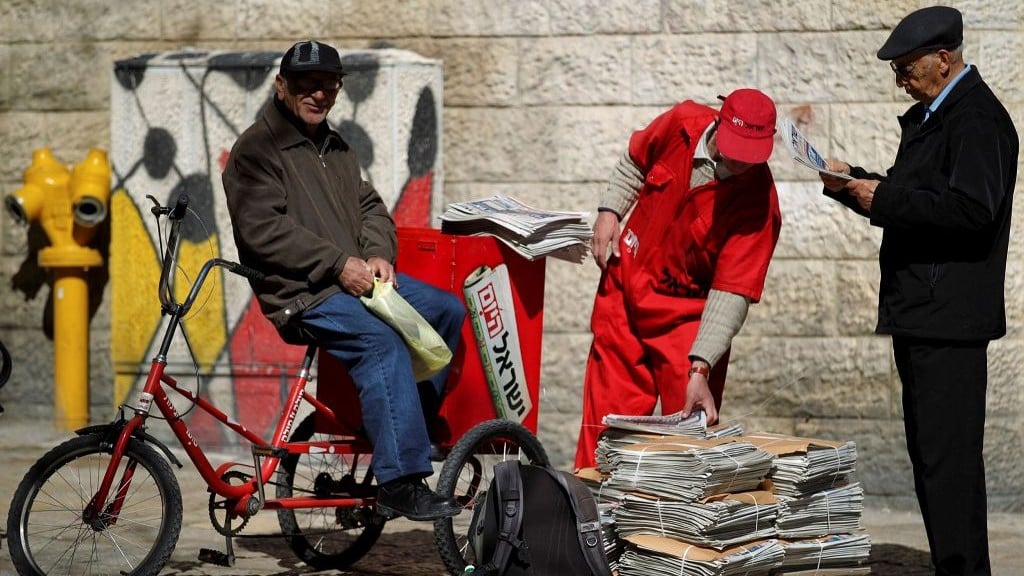
Over a decade ago, I interned (and later freelanced) for a free daily newspaper in a major metropolitan area in the United States. My time at that paper came back to me in 2014 when discussions of a law to ban free dailies as a way to hobble the influence of Israel Hayom came up, and it came back to me again as backroom deals regarding that law have come to light as part of a criminal probe into Prime Minister Benjamin Netanyahu.
While the free dailies then prevalent in the US were certainly one of the thousand cuts bleeding out the print industry at the time, they were a fairly small one and nobody in the US would have ever seriously considered legislation as a means of crippling them.
What was different was that the major dailies they were up against were just plainly better. The free daily could never be considered a serious substitute, and not because they were necessarily bad themselves. In contrast, one looks at the state of Yedioth Ahronoth and immediately understands why it struggles to compete with Israel Hayom, why it’s not considered a major shock that Yedioth has a particular slant against certain political figures, and that it apparently could be bought into changing that slant.
The last few days the tabloid has been in turns contrite and defensive as it’s been embarrassed by revelations that publisher Arnon Mozes sought a deal with Benjamin Netanyahu to reduce the paper’s level of animosity toward him in exchange for legislation to hurt rival Israel Hayom. But perhaps the paper should have also been embarrassed by its blatant political stances that undermine its supposed commitment to truth and the fourth estate. Perhaps the paper should have been embarrassed by the fact that it could barely hold its own against Israel Hayom, a paper that at times has looked more like Pravda than like The New York Times.
Perhaps Yedioth should also be embarrassed by itself Wednesday morning, with a pabulum-filled front page dominated by a supposed expose that is little more than an advertisement for the Shin Bet security service and its groovy high-tech gadgets.
The article, claiming to uncover the Shin Bet’s cyber-defense unit for the first time, breathlessly describes all the office perks workers there get, like a coffee machine and couch, in order to attract and keep talent.
The article also recalls how the high-tech cowboys managed to stave off a large cyberattacker two years ago, without providing much in the way of details.
What the paper mentions as an aside is that the Shin Bet doxxed the hackers in revenge, revealing their personal details online — a move that if not illegal is certainly underhanded for an official government agency. There’s none of that discussion, though. Only a quote attributed to an ether floating through the Shin Bet: “In the world of the hackers there’s nothing worse.”
The same could be said of the world of journalism.
The reporting on the actual scandal has also been somewhat embarrassing, not because of what is being uncovered, but by the fact that everything about the cases against Netanyahu is being reported as fact, with any semblance of sourcing information being tossed to the wind. The hodgepodge of reports, including the drip-drip of leaked transcript excerpts that have become a staple of nightly news reports, are likely the fault of the police giving away information tidbits at a time, with the press hungrily reprinting whatever is thrown its way – and it’s not clear if the public is more informed or more confused.
Israel Hayom’s lead story contains both the daily roundup of various reports on who said what to whom, and who is being grilled by police when, including Israel Hayom editor Amos Regev, who was called in Tuesday.
It’s all written with a frankly professional level of distance considering the paper’s central role in the scandal as a sacrificial lamb. To top it all off, the paper leads with comments from police chief Roni Alsheich saying the investigation should not take too long.
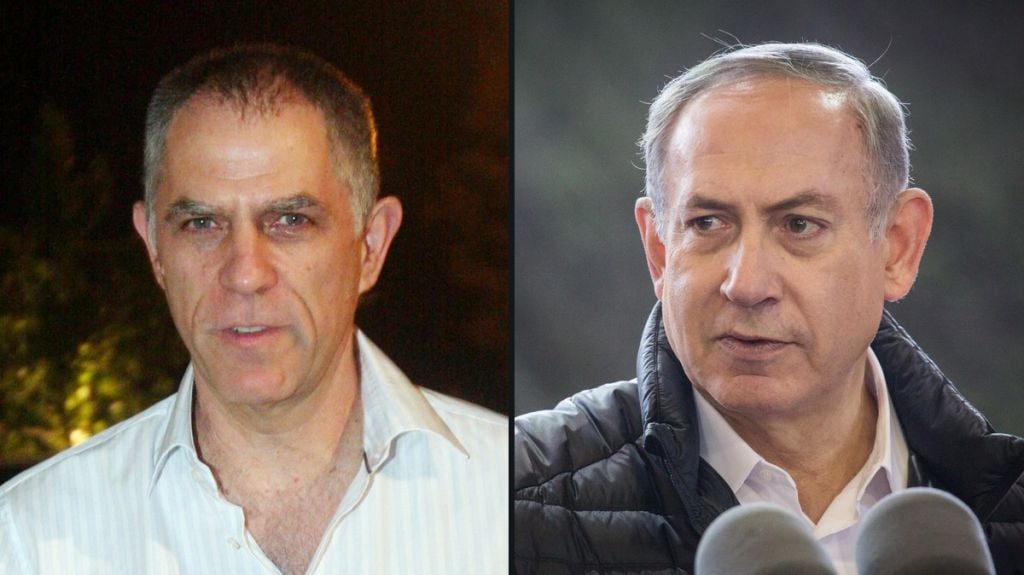
Haaretz leads off with the same news about Alsheich and a similar bric-a-brac of reports, accompanying it with a front page picture of Regev at police headquarters, albeit without a caption to explain the photo – an embarrassing mistake, but at least presumably just a mistake.
On the paper’s op-ed page, Uzi Baram launches a scathing attack on Netanyahu, Israel Hayom and Yedioth, predicting the damage they have caused will be visited upon Israeli journalism as a whole.
“The Netanyahu-Mozes conversations gave the go-ahead to a popular supposition that holds that the media is not fair, that it uses different criteria to measure public figures who have sinned, in accordance with their beliefs, and can be bought off,” he writes. “No outlet should allow itself to believe that only Yedioth is damaged from this affair. The bomb may have fallen on them, but the ricochet damages the media as a whole.”
Not doing itself any favors, Yedioth buries the latest news on the continuing saga behind a report on that fact that Netanyahu’s son Yair testified to police over the gifts affair. The paper’s short story does lead with Mozes being questioned, and also makes sure to quote a Channel 2 report that claims Mozes never really planned on granting the prime minister any favorable coverage.
While Israel is dealing with this bomb, the US has been gearing up for its own blast – namely the inauguration of President Donald Trump.
Haaretz’s Amir Tibon shows he may now be in Washington but he still has a little Israel left in him, describing the disagreements surrounding Trump’s swearing in with the hyperbolic “unprecedented.”
Tibon wrangles in Rabbi Marvin Hier, the head of the Simon Wiesenthal Center, to explain why he agreed to say a prayer at the inauguration despite disagreeing with some of Trump’s policies.
“To me, it’s a mistake to boycott the swearing in. That is behavior that will hurt democracy and create ill will on the other side,” he’s quoted saying. “The smartest thing to do is to criticize any president, but without hurting principles like the peaceful transfer of power.”
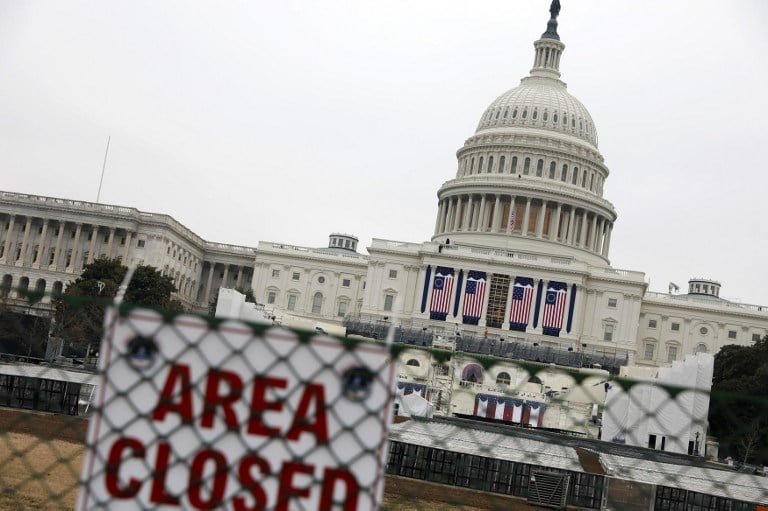
There’s little to argue about for Israel Hayom’s Trump-loving Boaz Bismuth, whose excitement at being in Washington for the inauguration seeps through his column, though he does manage to refrain from including a picture of himself in his dispatch.
“When I got to Washington, it was clear that the capital is in a transitional phase: The end of the Obama era, the beginning of the Trump era, which is in fact already underway in both America and Europe,” he writes. “I got to Washington two days before Trump is sworn in at Capitol Hill as president. The VIPs are ready, the invitees have confirmed they are coming. Now it’s time for the ‘last dance.’”





The Times of Israel Community.