

Hurly-burly of early polling rarely holds water at ballot box
Surveys not only tell us nothing about the post-election political landscape, they also contain a ‘strongly manipulative element’
 Add ToI as a Preferred Source on Google
Raphael Ahren is a former diplomatic correspondent at The Times of Israel.
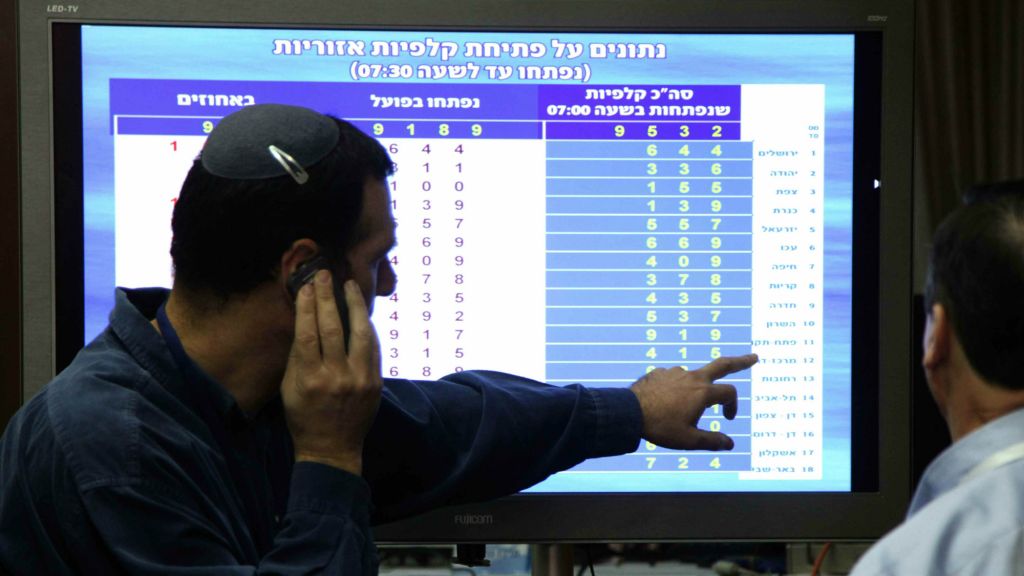
With elections on the horizon, there are few things that excite reporters, pundits and some readers as much as reading the tea leaves with a little help from a representative sample of Israel’s population.
Why wait until March 17, 2015, to find out if Benjamin Netanyahu will still be prime minister, whether Moshe Kahlon can pull off a wild card victory like Yesh Atid did in 2013, if the Herzog-Livni rotation deal pays off for the left, or how Shas will do in its first elections without Ovadia Yosef and Eli Yishai?
But rather than actually answer these and other burning questions, many of the current polls, ubiquitous in the Israeli media, offer few or no true insights into how the political landscape will look after Israel votes three months from now.
Indeed, the many polls being bandied around actually influence and in some cases even manipulate voters, experts say.
“The results of current polls don’t say anything about the actual election results we will see after Election Day,” said Tamar Hermann, the academic director of the Israeli Democracy Institute’s Guttman Center for Surveys. “The publication of political polls at this time contains an element of entertainment but also has a strongly manipulative element.”
Several weeks before the parties hold their primaries and finalize their Knesset slates, it is impossible to even approximately predict the elections’ outcome, she said. Splits and mergers are still a near-daily occurrence, along with new candidates joining the race and veteran politicians dropping out or switching parties.
In this respect, January 29 is an important date, according to Jeremy Saltan, a Jewish Home party official and analyst of political polls, since that day marks the last chance for parties to submit their lists of candidates for the 20th Knesset.
“From that point on, polling will make more sense,” he said.
But even after the party’s candidates are known and no further bets can be placed, the polls still have to be parsed with caution.
Political surveys in Israel are consistently unreliable, even those conducted shortly before the elections.
Even just prior to the last elections, for instance, no one accurately predicted the success of Yair Lapid’s Yesh Atid, which ended up winning 19 seats.
On October 28, 2012 — about three months before Election Day — a Channel 2 Maagar Mochot poll predicted 9 seats for the new centrist party.

Poll results did not become much more accurate as the election came closer: A Maariv/Maagar Mochot survey on January 17, only five days before Israelis headed to the polls, anticipated a mere 8 seats for Yesh Atid. That same poll envisioned 37 seats for the joint Likud-Yisrael Beytenu list, six more than it eventually received.
Similarly, a January 3 poll calculated six seats for the nationalist Otzma Leyisrael party, which failed to pass the two-seat electoral threshold. The list goes on and on.
It’s impossible to make accurate predictions simply because so many voters haven’t made up their minds at the time most polls are being taken, admitted Camil Fuchs, a statistics professor at Tel Aviv University and veteran pollster.
“What we see is a dynamic process,” he said in defense of early surveys. Rather than act as accurate forecasts of the final election results, such polls should be seen as temporary snapshots of public opinion, he said last week during a meeting with reporters in Jerusalem.
“I believe that the dynamic is very important. Covering how support for the different parties moves during the election [campaign] has some value. If somebody doesn’t care, and only wants to know the bottom line — not only do I not know, I couldn’t even say what is the probability.”
Why could no pollster accurately predict Yesh Atid’s triumph? Fuchs, who regularly conducts polls for Channel 10 and Haaretz, calls the party’s surprising success — 14.3% of all voters cast their ballot for Lapid’s party, making it the parliament’s second largest — “a fluke.” Pollsters didn’t see their voters because “they weren’t there.”
Many of Yesh Atid’s 543,458 voters weren’t really staunch Yesh Atid supporters, he explained. Rather, they were traditional Likud voters who had initially moved to the nationalist Jewish Home party, led by Naftali Bennett.
But in the days before the election, political rivals sought to discredit that party by exposing the extremist views of its backbenchers, Fuchs said. “Some of the people got scared, but didn’t return to Likud as expected but stopped at Yesh Atid.”
Historical precedent underlines the dubious value of public polls in Israel. The final polls before the 2006 and 2009 elections erred by an average of 18 and 19 Knesset mandates, respectively.
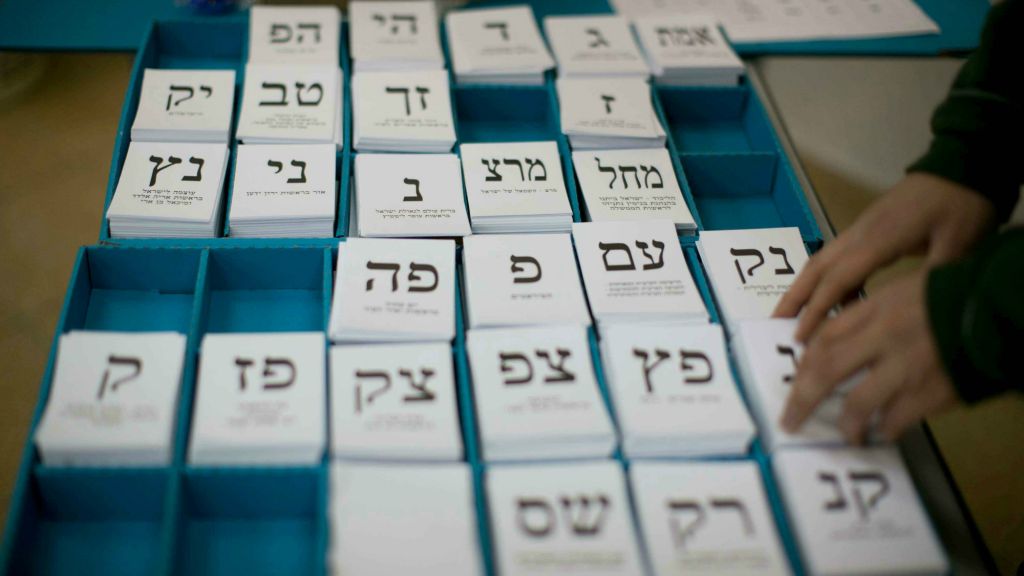
Surveys are not only misleading, they also manipulate voters, experts agree.
“Polls here are not only disconnected from reality, they are actually part of the campaign,” said Hermann, of the Israel Democracy Institute. The timing of media outlets’ publishing survey results — and their decisions on what to highlight — can have a significant influence on public opinion, she noted. Many Israeli newspapers have political agendas and therefore tailor the publication of polls — their timing and placement, and which parts are reported — accordingly, she charged.
Research has shown that polls during a campaign can influence voters in several ways. For one, there is the “bandwagon” effect: people want to support a party or politician seemingly on the rise. Virtually nothing is known about Kulanu, Kahlon’s new party, but it consistently scores relatively high in the polls, which in turn suggests to potential voters that it “must be good,” Hermann said.
Still, the bandwagon effect is somewhat balanced out by the “underdog” effect, polling experts say: Some voters like to support lists whose success at polls isn’t already guaranteed.
Smaller parties in particular suffer from bad polling press. Few voters will change from Likud to Yisrael Beytenu because of a survey, but if polls suggest a party is certain to fail to pass the electoral threshold (which has been raised for the 2015 elections to a record high 3.25%), fewer people will want to vote for it so as not to “waste” their vote. In that respect, early polls become self-fulfilling prophecies akin to death sentences for certain niche parties.
There are many additional problematic elements to polling in Israel, such as small sample sizes, pollsters’ conflicts of interests, poorly phrased questions, and so on.
Polls, Shimon Peres famously quipped, are like perfumes: they smell sweet but shouldn’t be swallowed. But the truth is that political polls actually smell fishy. Certainly before the parties have submitted their final lists, but even afterwards, they should be taken with a grain of salt.










The Times of Israel Community.