

In Oswiecim, in Auschwitz’s shadow, history is a tough burden to shake
‘Visitors believe that we should be in mourning all day, every day,’ Polish resident says, a day before Merkel visits former Nazi death camp
 Add ToI as a Preferred Source on Google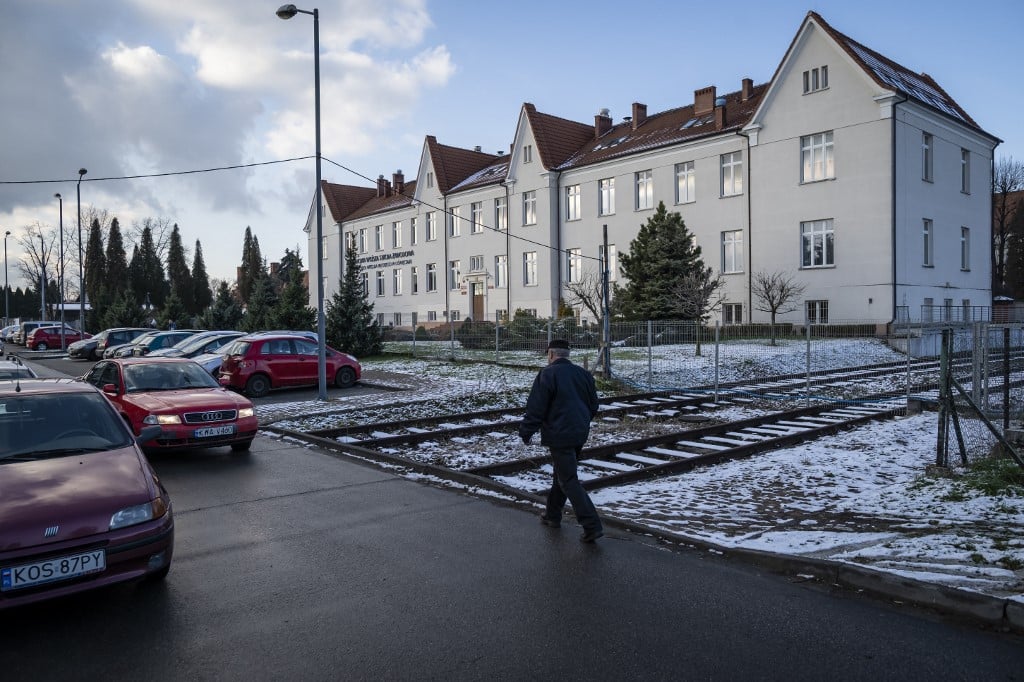
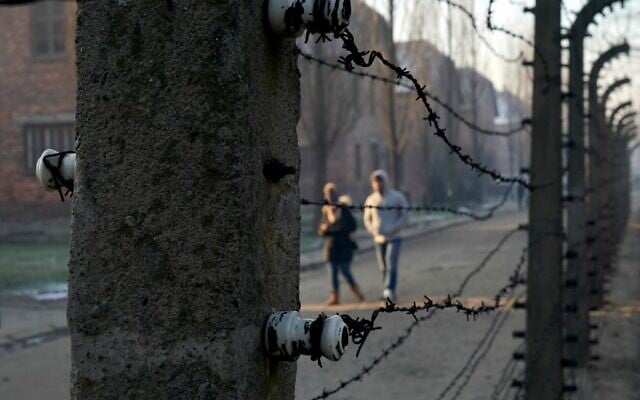
OSWIECIM, Poland (AFP) — Only train tracks and barbed wire separate the former Nazi German death camp Auschwitz-Birkenau from Oswiecim.
Its 40,000 Polish residents try to lead normal lives despite knowing their town will always be associated with the Holocaust, much like Hiroshima is forever tied to the atomic bomb.
On Friday, it will once again be back in the spotlight when German Chancellor Angela Merkel pays her first visit to Auschwitz-Birkenau.
For locals, the burden of the history is tough to shake.
“Visitors believe that even three generations later, we should be in mourning all day, every day,” resident Dawid Karlik told AFP this week.
The 24-year-old is a student at a college located just 200 meters (650 feet) from the camp’s infamous gate bearing the chilling Nazi message “Arbeit macht frei,” or “Work will set you free.”
Hundreds of thousands of Europeans passed through this gate before being gassed to death or killed by hard labor, hunger, disease, medical experiments.
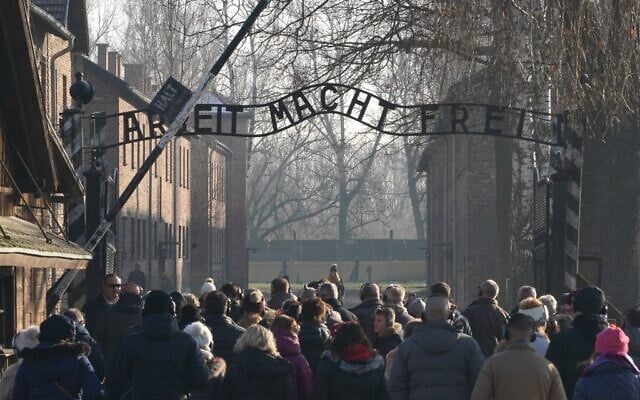
Most of them were Jews, but also Catholic Poles, Roma, Soviet soldiers and others.
“Yes, we know the history. The building where I study had previously served as housing for SS women. But today it’s our school,” Karlik said.
Fellow student Anna Duda added that “it is the Germans who built the biggest death camp here during the war.”
“We, the residents of Oswiecim, had nothing to do with it. But we remember and have to live a normal life here despite the difficult past.”
Karlik works at the library of the Auschwitz-Birkenau Museum, and wants to eventually become a tour guide there.
Empty hotels
This year, the museum expects a record 2.3 million visitors.
And yet, Oswiecim’s hotels stand empty.
Tourists rarely spend the night in Oswiecim, a town with 800 years of history, preferring to stay in the nearby city of Krakow.
In an attempt to revamp the town’s image, high-profile journalist Dariusz Maciborek launched the annual music event Life Festival Oswiecim in 2010.
Rock stars like Santana and Sting have sung and called for world peace in front of thousands of people there. But this year’s edition was canceled because of a lack of funding.
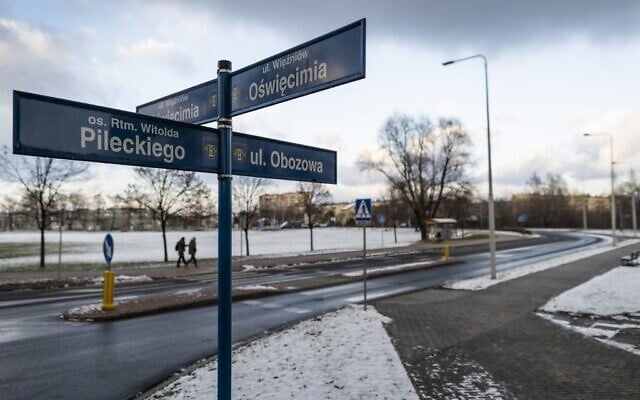
Oswiecim is filled with reminders of the past. Half of the street names have a connection to the camp. At the intersection of the streets named “Deportees” and “Camp,” a mass grave bears the remains of 700 inmates.
There are commemorative plaques everywhere. The one on a building right next to the camp pays tribute to the first Polish inmates shot to death on November 22, 1940, even before the camp became the 20th-century’s largest death factory.
“Those who live here keep the flame alive,” said pensioner Jerzy Tobiasz, pointing to a couple of grave lanterns placed under the plaque.
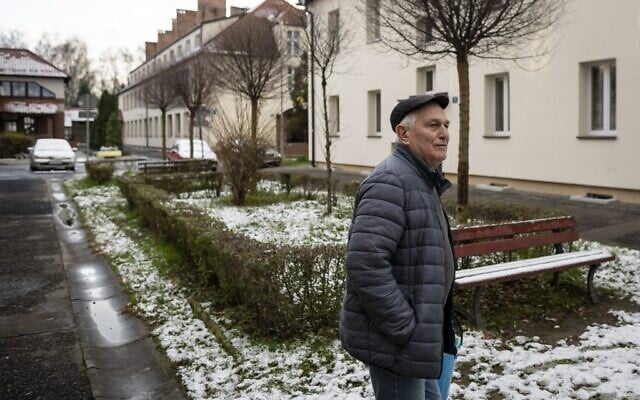
“At least we have the opportunity to welcome heads of state and royals from around the world. I myself saw German chancellor Helmut Kohl, and Pope Francis,” he told AFP.
Merkel will be only Germany’s third chancellor to travel to the camp, after Kohl and Helmut Schmidt.
Save camp items ‘at all cost’
The camp spanned 42 square kilometers (16 square miles), and to build the barracks and the crematoria, the Nazis forced the residents of eight villages to clear out.
In addition to Auschwitz I and Birkenau II, there were several auxiliary camps while inmates were forced to work at affiliated factories.
The museum, which was created after the war at the initiative of survivors, is located on only 200 hectares (495 acres, 2 square kilometers) of land so several of the camp’s buildings are outside the museum grounds.
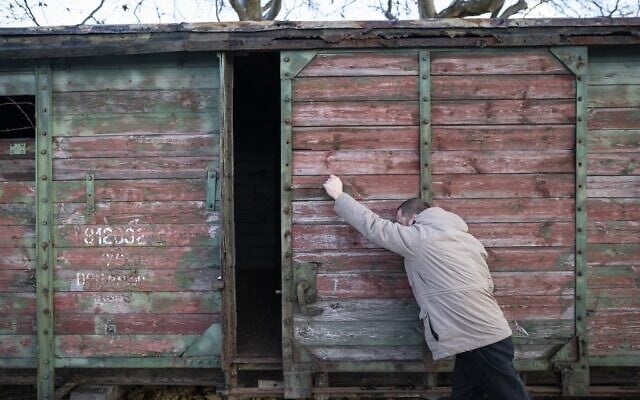
Some 30 volunteers from the Foundation of Memory Sites Near Auschwitz-Birkenau (FPMP) have made it their mission to collect items related to the camp to save them from oblivion.
At first, they visited local scrap dealers to search for old camp work tools or collected SS dishware and furniture found in attics.
This year, their seventh, the group is finishing the renovation of the huge SS canteen and cultural center, located near the camp.
In February, the town entrusted the foundation with the renovation of two other large buildings in ruins near Birkenau: a potato warehouse and a cabbage warehouse.
“We must save them at all costs. Visitors will be able to better understand life in the camp,” said foundation volunteer Dagmar Kopijasz.









The Times of Israel Community.