

In UN speech, Qatar emir lashes Israeli ‘violations’ in Jerusalem
Sheikh Tamim bin Hamad Al Thani blames Jewish state for May war, urges world not to boycott Taliban leadership in Afghanistan
 Add ToI as a Preferred Source on Google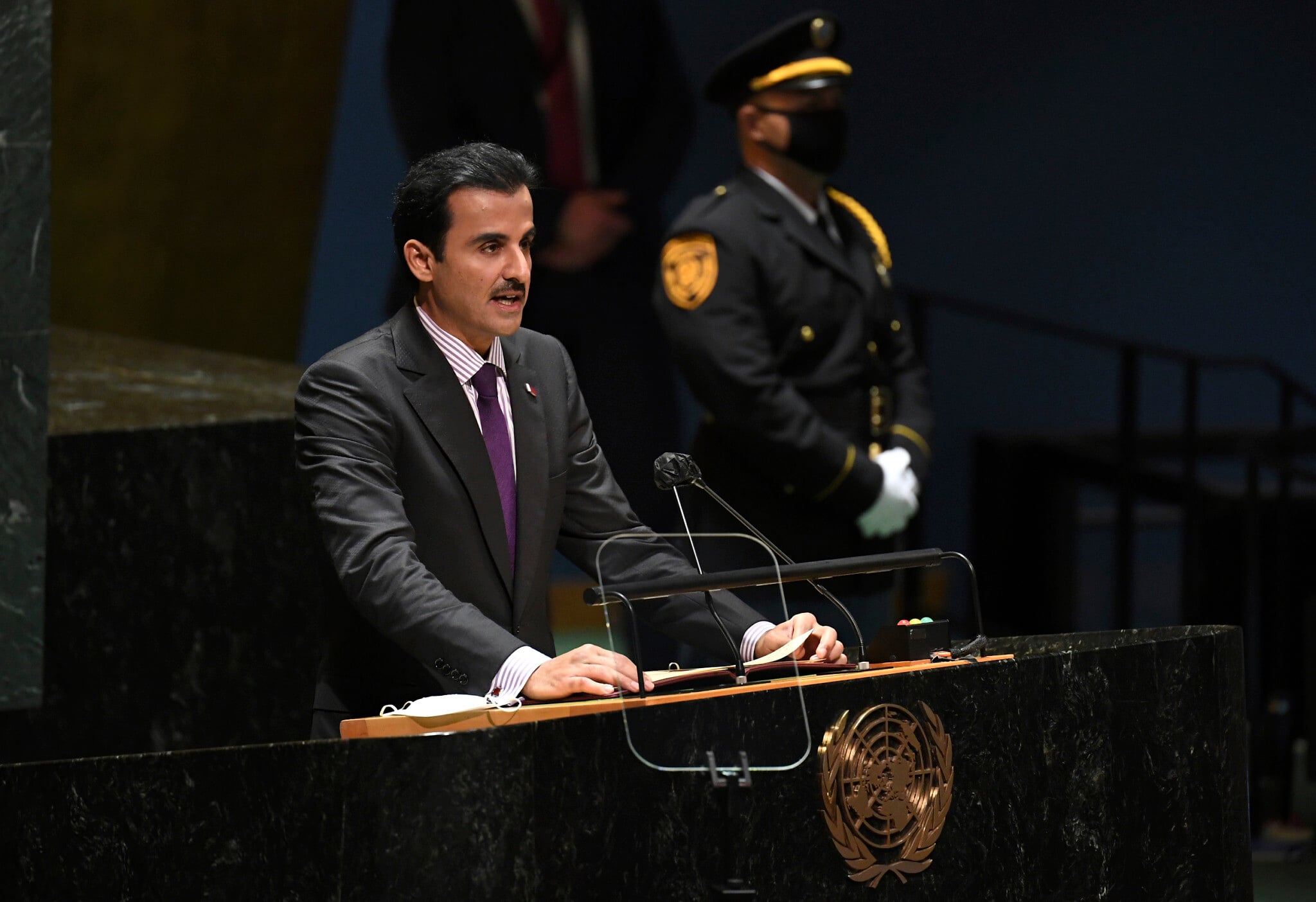
Qatar’s emir criticized Israel during his address to the UN General Assembly on Tuesday, blaming the Jewish state’s Jerusalem policies for the May war in the Gaza Strip.
“This year has witnessed numerous Israeli violations in occupied East Jerusalem and the recurrence of attacks on Islamic and Christian sanctities, especially the Al-Aqsa Mosque during the holy month of Ramadan, and the seizure of Palestinian homes in the context of the Judaization and settlement policies,” Sheikh Tamim bin Hamad Al Thani said.
He said this was followed by “a dangerous military escalation in the Gaza Strip which caused hundreds of casualties among unarmed civilians, aggravating the already dire humanitarian situation in the Strip.”
The fighting that began on May 10 was sparked by a rocket attack on Jerusalem by the Hamas terror group in response to clashes earlier in the day on the Temple Mount and other tensions in the capital. During the ensuing fighting, Hamas and Islamic Jihad succeeded in firing over 4,000 rockets and mortar shells at Israel, most of them at cities and towns in the south, but also hundreds at Israel’s most densely populated metropolis, Tel Aviv. The IDF responded with hundreds of airstrikes.
Qatar is a key donor to Gaza, distributing aid payments to Palestinian residents in the enclave. It pledged $500 million for Gaza following the May 10-21 conflict.
Al Thani said the international community has a responsibility to mediate “a comprehensive, just and peaceful settlement of the Palestinian cause by establishing a Palestinian state.”
The emir, whose nation has played a pivotal role in Afghanistan in the wake of the US withdrawal, urged world leaders gathered at the United Nations against turning their backs on the country’s Taliban rulers.
The sheikh stressed “the necessity of continuing dialogue with Taliban because boycott only leads to polarization and reactions, whereas dialogue could bring in positive results.”
Qatar's Emir al Thani at #UNGA:
– We must find solution to Israel-Palestine conflict
– Attacks took place at Muslim, Christian sites in occupied Jerusalem
– Seizure of Palestinian homes, hundreds of casualties
– Economic activity doesn't mean end to occupation pic.twitter.com/EaK6bor4Zt— TRT World Now (@TRTWorldNow) September 21, 2021
His warning was directed at the many heads of state worried about engaging with the Taliban and recognizing their takeover of Afghanistan.
To date, no nation has yet formally recognized the Taliban’s ascension by force to power or its all-male Cabinet, which is stacked with senior figures who were previously detained in the US detention facility in Guantanamo Bay, Cuba or are on a United Nations sanctions list. The group has said this exclusively Taliban-run Cabinet is only interim, offering hope that a future government could be more inclusive.
US President Joe Biden, who also spoke earlier at the UN on Tuesday, said the end of American military operations in Afghanistan last month would be followed by “a new era of relentless diplomacy” with the rest of the world.
In that same spirit of diplomacy, Al Thani said Qatar agreed years ago to host the Taliban’s political leadership in exile because “we were confident that war offers no solution and that there would be dialogue in the end.”
Qatar is a close US ally and hosts the largest US military base in the Middle East, but the tiny Gulf Arab state also has some sway with the Taliban. Because of its unique role, Qatar hosted direct US-Taliban talks around the American withdrawal from Afghanistan and helped facilitate evacuations from Kabul.
Now, countries like the US and Japan have relocated their diplomatic staff in Afghanistan to Qatar to continue diplomacy from there. Qatar is also assisting with the facilitation of needed humanitarian aid and with operations at Kabul airport.
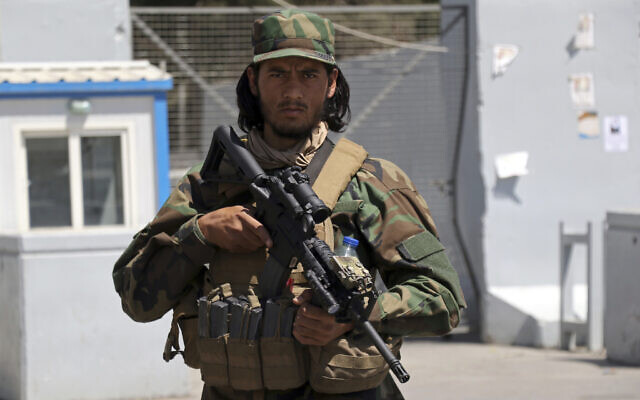
Al Thani urged against repeating past mistakes in Afghanistan “to impose a political system from outside.”
“Regardless of intentions, efforts made and money invested, this experience in Afghanistan has collapsed after 20 years,” he said.
The 41-year-old leader said the international community must continue to support Afghanistan at this critical stage and “to separate humanitarian aid from political differences.” Afghanistan is among the world’s poorest countries and receives billions of dollars in foreign aid a year, though that could change with the US-backed government out of power and the Taliban now in charge.






The Times of Israel Community.