

In waning support for Liberman, a looming crisis of his own making
Yisrael Beytenu leader could find himself consigned to oblivion by falling beneath the 3.25% Knesset threshold — a bar he pushed to raise, among other possible miscalculations

 Add ToI as a Preferred Source on Google
Marissa Newman is The Times of Israel political correspondent.
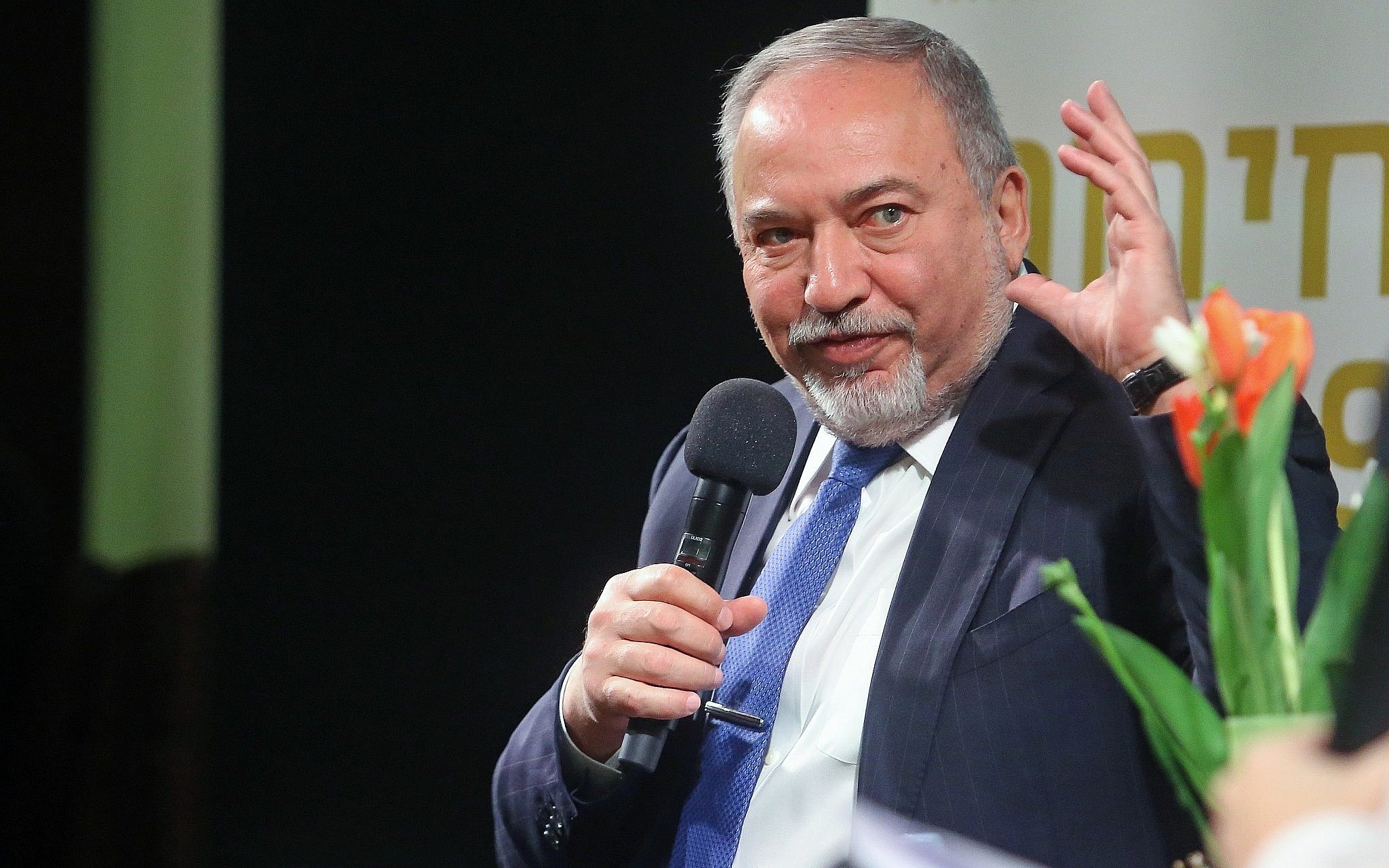
If Avigdor Liberman’s Yisrael Beytenu party falls under the electoral threshold in Tuesday’s national election, as is predicted by some opinion polls, the downfall of the former defense minister will largely be of his own making.
Liberman was, after all, the architect of the very move — the electoral threshold hike to 3.25% — that now endangers the existence of his party. He also turned a popular political ally into a rival. And he walked away from the Defense Ministry five months ago without a memorable record, leaving Netanyahu to burnish his own security credentials in the run-up to the national vote.
Rumors of Yisrael Beytenu’s demise are, at this point, premature, as surveys have for years notoriously failed to match the election outcome and only the final results will determine whether Liberman paved his own path to political obscurity or remains a coalition linchpin.
But should he falter, three of his political (mis)calculations in the past five years will likely be highlighted.
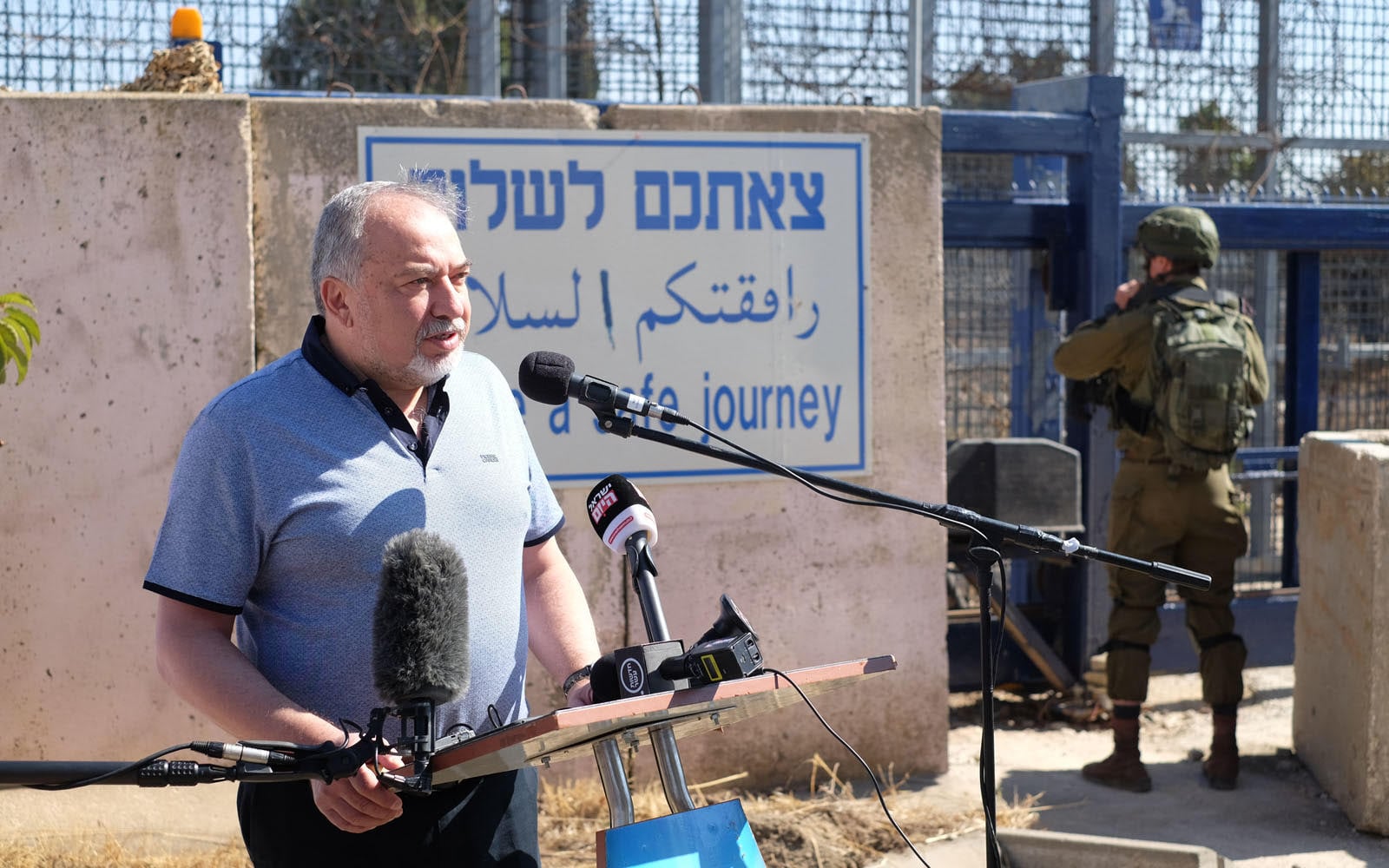
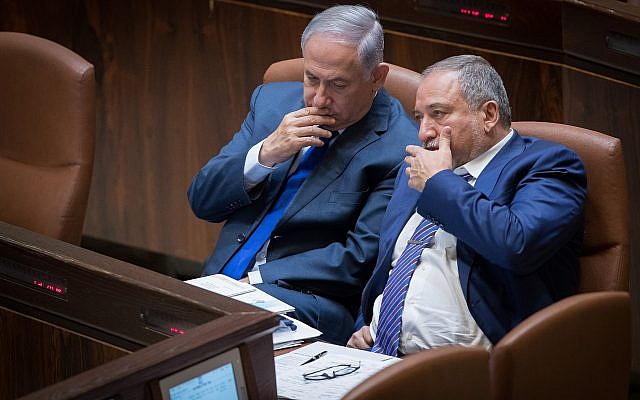
The first dates back to December 2013, when then-foreign minister Liberman and Prime Minister Benjamin Netanyahu decided to raise the threshold to 3.25%, a move that was seen by critics, at the time, as an attempt to keep the small Arab parties out of the parliament. It was approved by the Knesset in March 2014.
If the aim was indeed designed to keep Arab lawmakers from the halls of power, the bid backfired wildly: In 2015, the Arab parties united to form the Joint List, securing 13 seats in the 120-seat Knesset and becoming the second-largest opposition party. Liberman’s Yisrael Beytenu, meanwhile, received just six seats, down from 15 in 2009.
It wasn’t the only political step that appears to now put his political future at risk.
The second came in mid-2016, when Liberman — then languishing in the opposition — cut a deal with Netanyahu to join his coalition. The agreement that put Liberman in the defense post was clinched without the knowledge of the party’s No. 2, MK Orly Levy-Abekesis and did not secure her a ministerial portfolio, although the third candidate on the list, Sofa Landver, became immigration absorption minister.
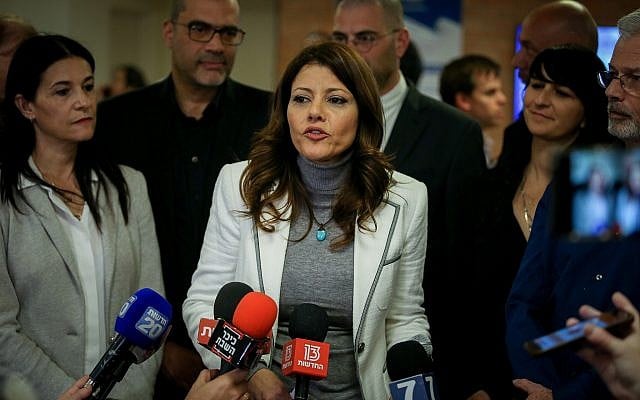
As the ink dried on the deal, an infuriated Levy-Abekesis broke off from the party, continuing to serve in the parliament as an independent lawmaker. She has since founded the centrist Gesher party, which though it enjoyed a brief swelling of support, now appears poised to fall under the threshold on Tuesday. But the popular lawmaker championing social economic benefits could nonetheless siphon hundreds or thousands of votes from the plummeting Yisrael Beytenu.
And what could prove to be the third, and most fresh, misstep may have taken place five months ago, when Liberman walked away from the Defense Ministry in protest of the government’s policies on Gaza, a move that triggered political upheaval.
His resignation was initially seen by some as a shrewd political maneuver, forcing Netanyahu’s hand to either call early elections or accede to demands by the Jewish Home coalition party and appear weak and beholden to his political allies. But when the prime minister forced the Jewish Home’s Naftali Bennett to back down on his ultimatum for Liberman’s old job and Netanyahu took on the defense post himself, staving off elections for several more weeks, Liberman’s resignation again appeared to be ill-timed.
Since taking up the helm of the Defense Ministry, Netanyahu has managed to oversee a Hezbollah tunnel-busting operation on the northern border, a violent flare-up on the Gaza border and an emerging ceasefire with Hamas, and an operation to return the body of IDF soldier Zachary Baumel after 37 years.
Moreover, few election promises remain as ingrained in the mind of the Israeli voter as Liberman’s gruff vow that if appointed defense minister he would assassinate Hamas leader Ismail Haniyeh within 48 hours.
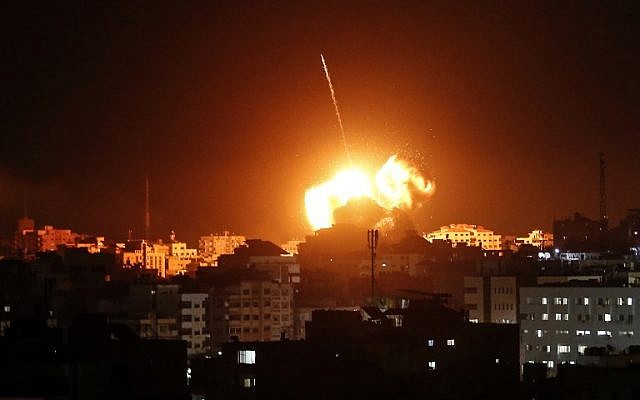
The closest Israel came to taking such a step was the recent bombing of Haniyeh’s office in response to Gaza rocket fire, which whether a purely operational concern or a cunning pre-election dig at Liberman, was ordered by Netanyahu.
The elusive Russian vote
In the final days of the election campaign, Netanyahu has taken to urgently rallying up right-wing voters to support the Likud party, warning them his continued reign could be threatened by Blue and White’s Benny Gantz, in a so-called “gevalt” campaign.
Among the voters targeted: The hawkish supporters of Yisrael Beytenu.
Carried on a groundswell of support by immigrants from the former Soviet Union, the Yisrael Beytenu party has seen that support wane in recent years, winning just six seats in the 120-seat Knesset in 2015. Previously, on a joint ticket with Likud in 2013, the alliance scored 31 seats. In 2009, the right-wing and secularist party had won 15 seats, its best-ever showing.
Over the past five years, the large demographic of Russian speakers has appeared to be shifting away from the party, a move attributed to both corruption allegations that plagued Yisrael Beytenu during the last election and to the successful integration of children of the immigrants from the early 1990s, who are now seeking their political fortunes elsewhere. And other parties, notably Likud, have also courted the so-called Russian vote.
While surveys studying the Russian-speaking public are rarely featured in Israel’s mainstream media, a Times of Israel poll in 2015 showed that among Russian-speakers, Liberman’s favorability rating dropped some 20 percent (from 85% to 66%) in just a year, a change attributed in part to the corruption charges. This was despite the fact that Liberman himself was not implicated in what became known as the Yisrael Beytenu investigation.
In 2014, two thirds of Russian-speakers said that they would vote for Likud-Beytenu and 23% were undecided. A year later, after Liberman split from his alliance with Likud, more than two-thirds of Russian voters said they were not voting Yisrael Beytenu, just 30% said they would, and another 32% said they were undecided, according to that Times of Israel survey.
Up-to-date surveys on the Russian vote are far and few between — and as noted by Israeli transparency watchdogs, could be skewed by the fact that most polls are largely conducted in Hebrew.
But if the trend recorded four years ago proves to be correct, and the splintering of the right-wing takes a toll, Liberman could well find himself left out in the cold on Tuesday night, and not having to look too far for whom to blame.






The Times of Israel Community.