

Iran celebrates US’s struggles to build maritime coalition
Foreign minister says Tehran can ensure security for shipping, blasts American ‘economic terrorism’
 Add ToI as a Preferred Source on Google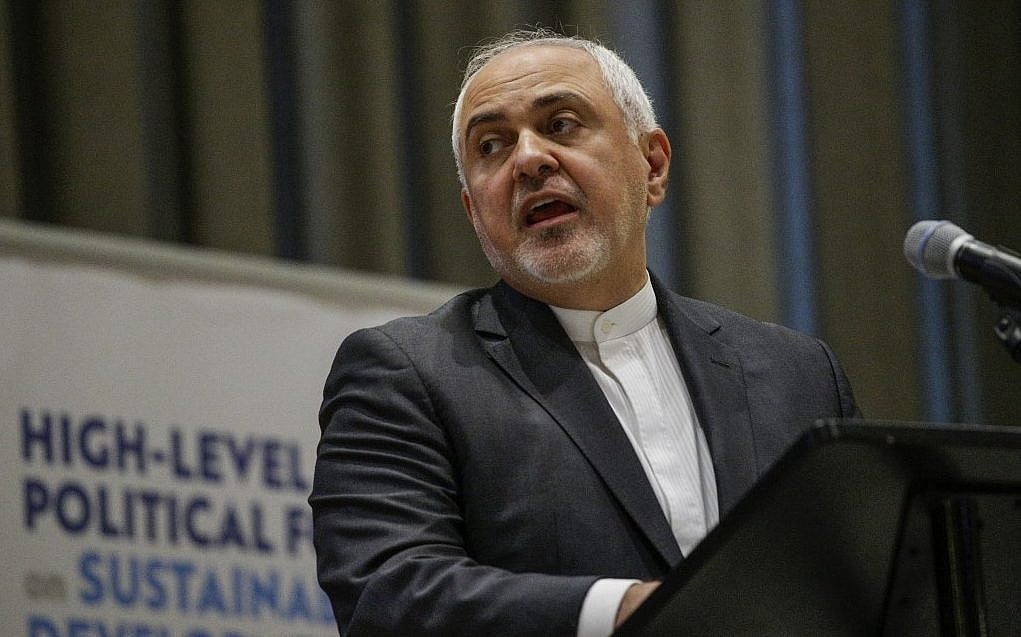
Accusing the United States of trying to deprive his country of its rights, Iranian Foreign Minister Mohammad Javad Zarif on Monday blamed Washington for rising tensions in the region and celebrated its failure to assemble an international force to patrol the Persian Gulf.
According to Reuters, addressing a press conference, Zarif said that “US is standing alone in the world” and “cannot create a coalition,” adding that his country would ensure security for international shipping in the Strait of Hormuz. He also accused the US and Britain of “economic terrorism.”
The comments come several days after Iran’s President Hassan Rouhani lambasted new US sanctions by the Trump administration targeting Zarif, calling them “childish” and a barrier to diplomacy. The administration announced last Wednesday that it had imposed financial sanctions on the foreign minister as part of its escalating campaign of pressure against the Islamic Republic.
The European Union expressed its regret at the US sanctions on Zarif and said it would continue to keep contact with him regardless of Washington’s move.
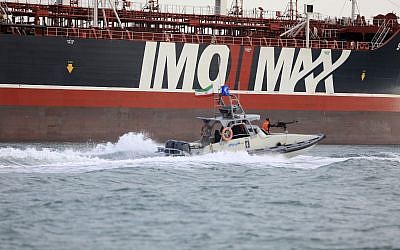
The latest round of US sanctions comes amid a spike in tensions between the US and Iran. The US has boosted its military presence in the Persian Gulf while Iran has begun openly exceeding limits on its nuclear activities set in a 2015 accord with world powers.
Trump withdrew the US from Iran’s nuclear deal, which Germany, Britain, France, Russia and China are still signatories to, before imposing crippling sanctions on the country, targeting key industries like Iran’s oil exports and sending its economy into free fall.
Senior US leaders have expressed confidence that they would be able to convince allies to help protect shipping in the Persian Gulf area against Iranian threats, but as of Sunday they had provided no new details on which nations may be willing to participate. Called “Operation Sentinel,” the plan was triggered in June amid Trump administration concerns that Iran was behind a series of attacks on commercial ships in the Persian Gulf region.
The plan was to have each country provide a military escort for their ships, with US military providing a security backstop, monitoring the zone of operations and providing command and control.
US Defense Secretary Mark Esper broached the idea of a coalition to allies during a NATO meeting, but so far the US has received few public commitments from other nations. Instead, some European nations have expressed concerns that the operation could provoke conflict, while they are more interested in a diplomatic solution.




The Times of Israel Community.