

Iran insists on ‘right’ to enrichment as US builds biggest Mideast force since 2003
Wall Street Journal says accumulation of US air power is largest in region since invasion of Iraq, but is ‘fraction’ of 2003 force; Poland tells citizens to ‘immediately’ leave Iran
 Add ToI as a Preferred Source on Google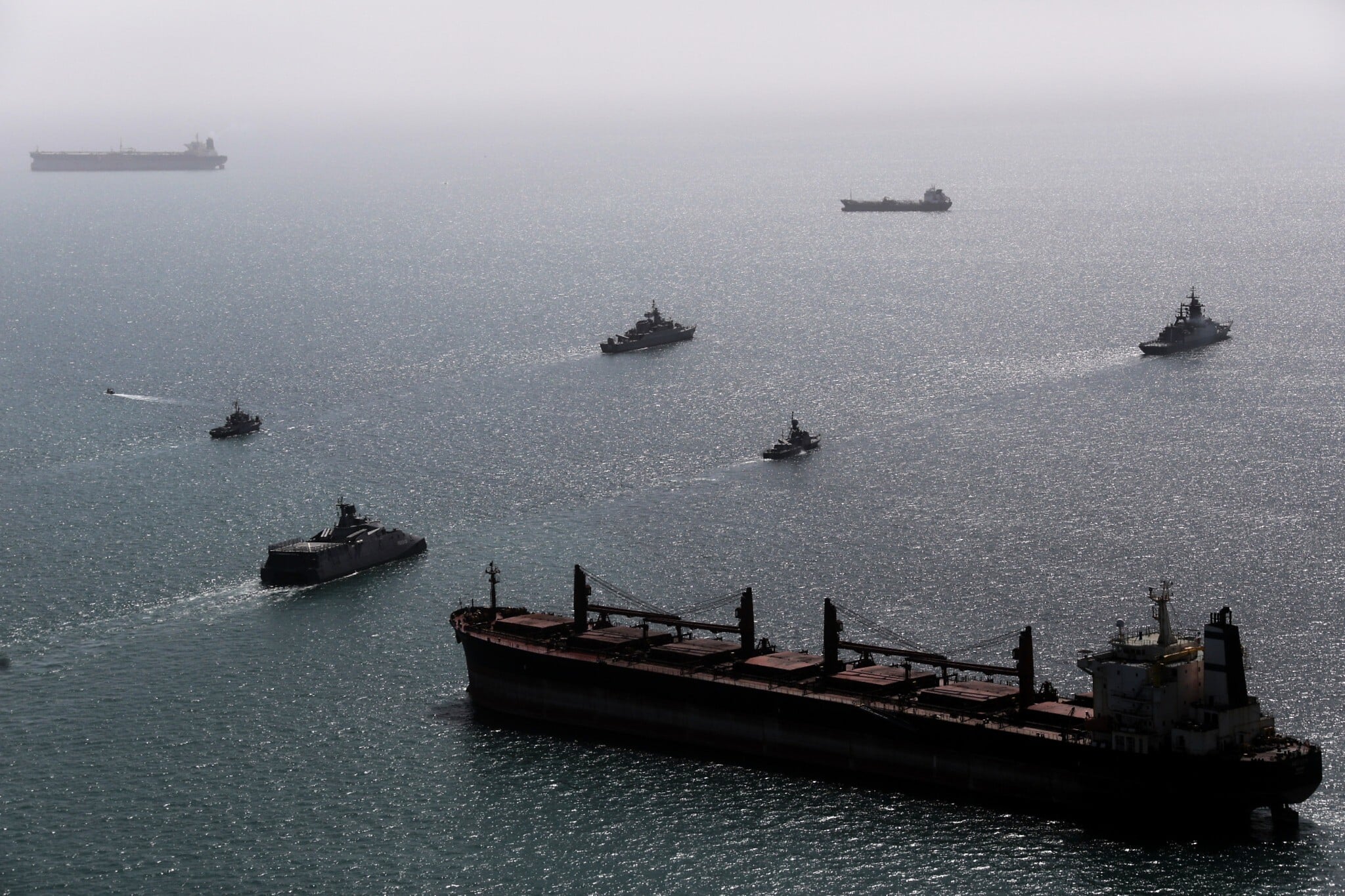
Iran on Thursday repeated its assertion that no country can “deprive” it of its “right” to nuclear enrichment, as US President Donald Trump continued to send US military assets into the Middle East in what a report called the biggest build-up of American air power in the region since the 2003 invasion of Iraq.
The massive military deployment comes amid negotiations between Washington and Tehran on Iran’s nuclear program, with the two sides meeting for a second time earlier this week in Geneva, which Iran described as “positive.” However, a US official a day later described the talks as a “nothing burger,” and the White House said the parties are “still very far apart on some issues.”
The two foes held an initial round of discussions on February 6 in Oman, the first since previous talks collapsed during the 12-day Iran-Israel war in June.
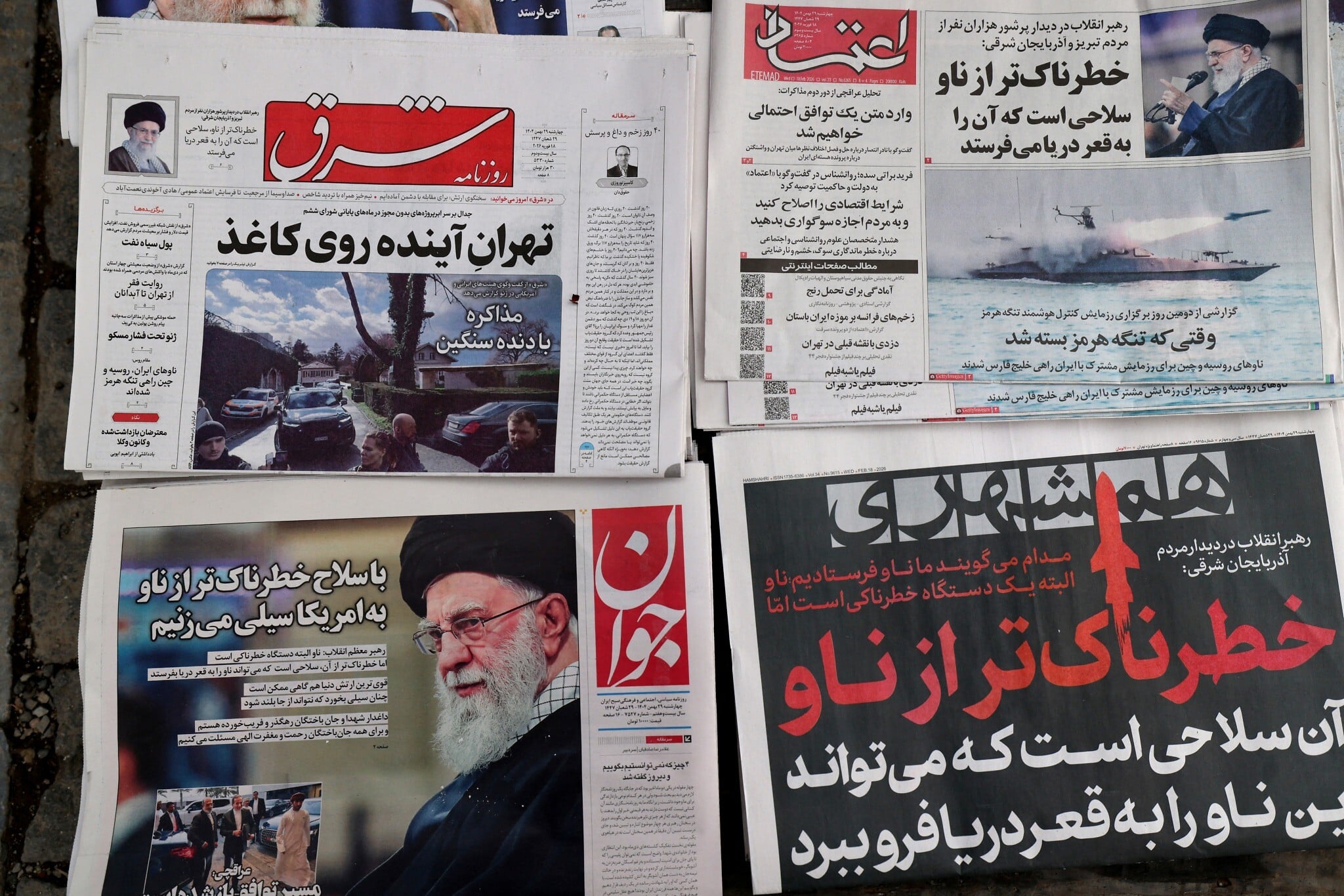
Regarding Iran’s position in the talks, the country’s atomic energy chief Mohammad Eslami doubled down on Tehran’s insistence that it be allowed to continue enriching nuclear material: “The basis of the nuclear industry is enrichment. Whatever you want to do in the nuclear process, you need nuclear fuel,” he said, according to a video published by the Etemad daily on Thursday.
“Iran’s nuclear program is proceeding according to the rules of the International Atomic Energy Agency,” he said, “and no country can deprive Iran of the right to peacefully benefit from this technology.”
Washington has repeatedly called for zero enrichment, but has also sought to address Iran’s ballistic missile program and its support for terror groups in the region — issues that Israel has pushed to include in the talks.
Iran has consistently denied seeking to acquire nuclear weapons, stressing that it only seeks civilian nuclear capabilities. However, it has enriched uranium to levels that have no peaceful application, obstructed international inspectors from checking its nuclear facilities, and expanded its ballistic missile capabilities.
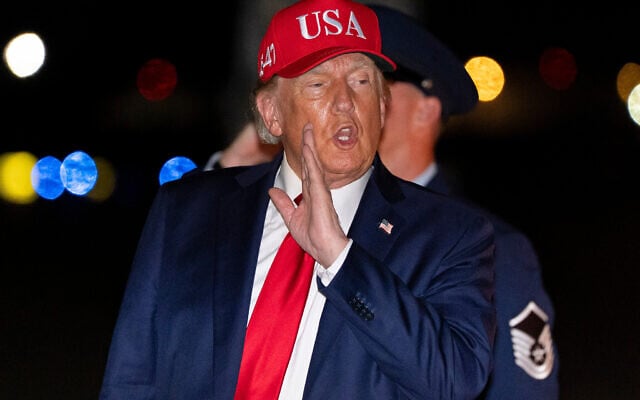
Trump, who has ratcheted up pressure on Iran to reach an agreement, has deployed a significant naval force to the region, which he has described as an “armada.” According to the Wall Street Journal, the current buildup of US air power in the Middle East is the biggest since the 2003 invasion that launched the Iraq War.
That invasion, which began a devastating war that lasted more than eight years, began with what was called a “shock and awe” bombing campaign.
The US is now once again accumulating forces in the region, including aircraft carriers, naval warships, logistics and radar aircraft and “dozens” of fighter jets, including F-16s, F-15s, F-22s and F-35s.
According to the WSJ report, the US Air Force has moved the jets and support aircraft to air bases in Jordan and Saudi Arabia, citing flight-tracking data. The report added that even more fighter aircraft are on their way.
The US also has positioned 13 warships in the region, the report added, as well as moving land-based air defenses into position to defend against any eventual retaliation from Iran if the US does decide to attack.
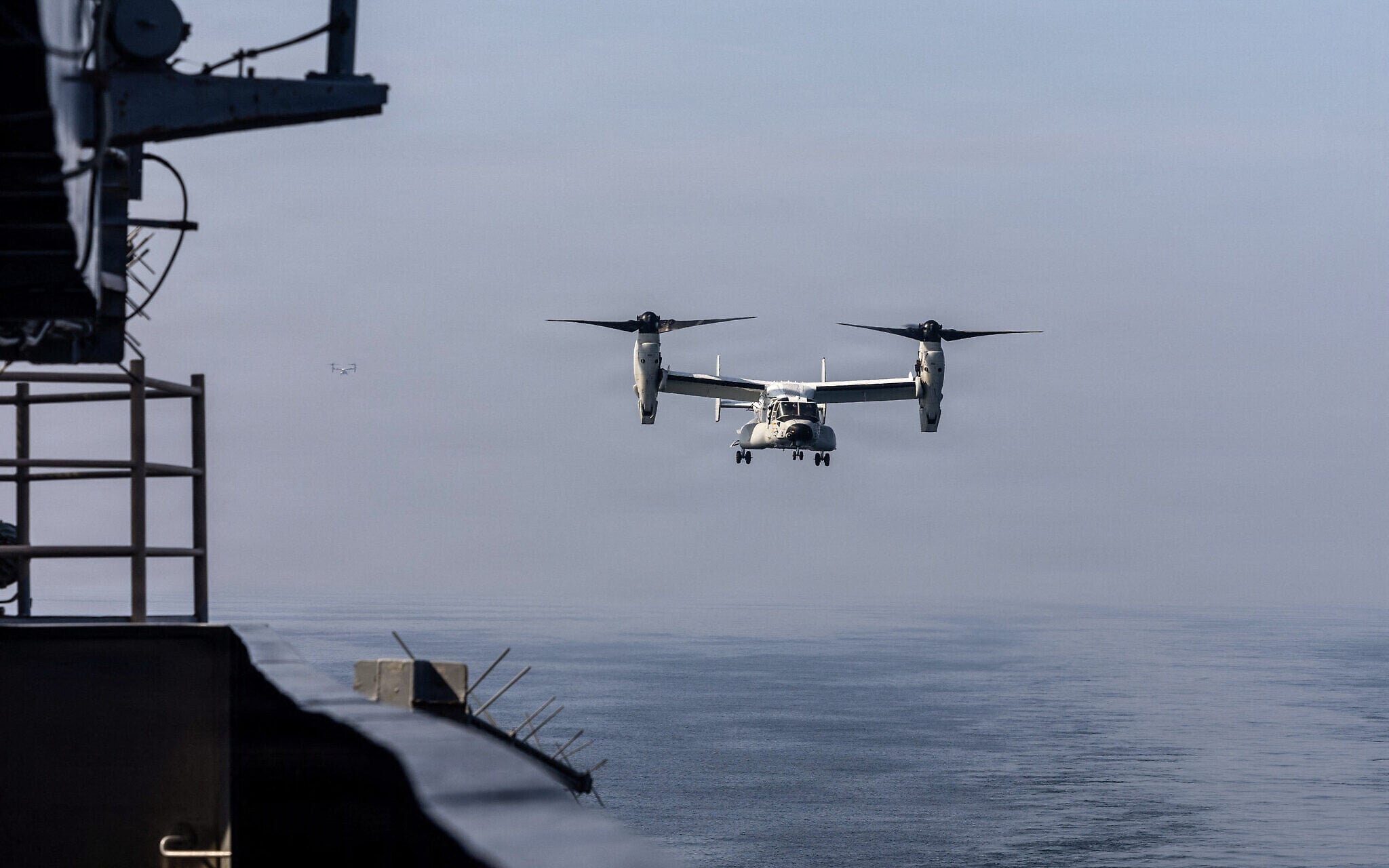
The report added that the American military buildup allows for a much longer campaign than the US strikes on Iranian nuclear facilities during the Israel-Iran war last June, which was carried out with B-2 bombers.
However, the report noted that while the force buildup is the largest for the US in the region since 2003, it is still “just a fraction” of the assets that the Pentagon deployed for the invasion of Iraq, and there has not been a significant deployment of US ground or special forces, indicating that the White House does not envision a drawn-out campaign beyond the use of aerial forces.
The force buildup also comes amid a major military drill by Iran’s naval forces around the strategic Strait of Hormuz, the narrow opening of the Persian Gulf through which a fifth of the world’s traded oil passes.
Separately, the Iranian and Russian navies held on Thursday joint drills in the Sea of Oman and the northern Indian Ocean, which the official IRNA news agency later announced had ended.
Poland tells citizens to leave Iran, Germany pulls troops out of region
Amid the tensions, Polish Prime Minister Donald Tusk said Thursday that any Polish citizens in Iran should leave immediately, warning that due to the potential for armed conflict, evacuation may no longer be possible in a matter of hours.
“Everyone who is still in Iran must leave immediately, and under no circumstances should anyone plan to travel to that country,” he said at a press conference.
He added that “the possibility of heated conflict is very real, and in a few, a dozen or several dozen hours, evacuation may no longer be an option.”
This is the second time in recent months that the Polish government has called for its citizens to leave the country.
Additionally, Germany’s military “temporarily” moved some troops out of Erbil in northern Iraq because of “escalating tensions in the Middle East,” a German Defense Ministry spokesman told AFP on Thursday.
Dozens of German soldiers have been relocated away from the base in Erbil, capital of Iraq’s autonomous Kurdistan region.
“Only the personnel necessary to maintain the operational capability of the camp in Erbil remain on site,” the spokesman said.
German troops are deployed to Erbil as part of an international mission to train local Iraqi forces. The spokesman said the German redeployment away from Erbil was “closely coordinated with our multinational partners.”






The Times of Israel Community.