

Islamic State lost 14% of its territory in 2015
Iraqi Kurds nearly triple their landholdings, as coalition airstrikes, ground forces beat back the terror group, think tank says
 Add ToI as a Preferred Source on Google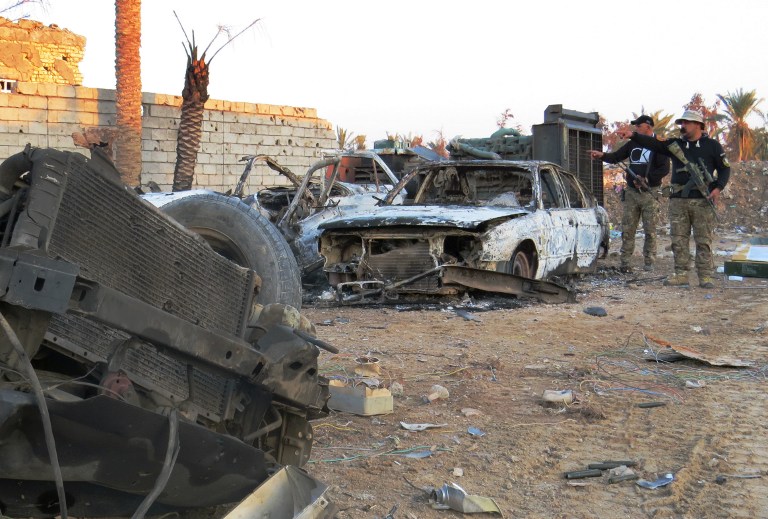
The Islamic State lost around 14 percent of its territory in 2015, while Syria’s Kurds almost tripled the land they control, think tank IHS Jane’s said on Monday.
The development is a blow to the group given that its aim is to capture and hold territory to expand its so-called “caliphate,” where it imposes a severe and bloody form of what it calls Islamic law.
The jihadist group’s losses include the strategically important town of Tal Abyad on Syria’s border with Turkey, the Iraqi city of Tikrit, and Iraq’s Baiji refinery.
Other big losses for the group include a stretch of highway between its Syrian stronghold Raqqa and Mosul in northern Iraq, complicating supply lines.
“We had already seen a negative financial impact on the Islamic State due to the loss of control of the Tal Abyad border crossing prior to the recent intensification of air strikes against the group’s oil production capacity,” said Columb Strack, IHS senior Middle East analyst.
The US-based thinktank said the group’s territory had shrunk 12,800 square kilometers (5,000 square miles) to 78,000 square km (30,000 square miles) between the start of the year and December 14.
However, IS has made some high-profile gains during the year, including the historic Syrian town of Palmyra and the city center of Ramadi, the provincial capital of Anbar, Iraq’s largest province.
The Iraqi military, however, has claimed that it will shortly begin a renewed campaign to take back Ramadi, dropping leaflets for residents on Sunday to tell them to leave their homes within 72 hours. The leaflets showed safe routes of escape and advised residents to take identification documents with them.
IHS said those victories came at the expense of the group’s northern territories, which have been fiercely contested by Kurdish fighters.
Lands under Syrian Kurdish control jumped 186 percent over the year, IHS said.
“This indicates that the Islamic State was overstretched, and also that holding Kurdish territory is considered to be of lesser importance than expelling the Syrian and Iraqi governments from traditionally Sunni lands,” Strack said. “The Kurds appear to be primarily an obstruction to the Islamic State, rather than an objective in themselves.”
Syrian Kurdish fighters dominate a group called the Syrian Democratic Forces, a coalition of Kurdish and Arab fighters battling jihadists in northeastern Syria that has risen in prominence in recent months.
IS has also been beaten back by US-led coalition airstrikes, Iraqi forces and Syrian rebels.
Iraq’s government managed to claw back some six percent of its territory from IS in the past year, while Iraqi Kurds regained two percent of their lands.
The biggest territorial loser among the main actors in the Syrian conflict was the Syrian government, which lost 16 percent and is now left with around 30,000 square km (11,600 square miles), less than half the area controlled by IS and a fraction of Syria’s total area of about 185,000 square km (71,400 square miles).
Times of Israel staff contributed to this report






The Times of Israel Community.