

Islamic State burns Jordanian pilot alive
After gruesome video released, Jordanian state TV confirms Lt. Moaz al-Kasasbeh killed on January 3, Amman vows revenge
 Add ToI as a Preferred Source on Google
Lazar Berman is The Times of Israel's diplomatic reporter
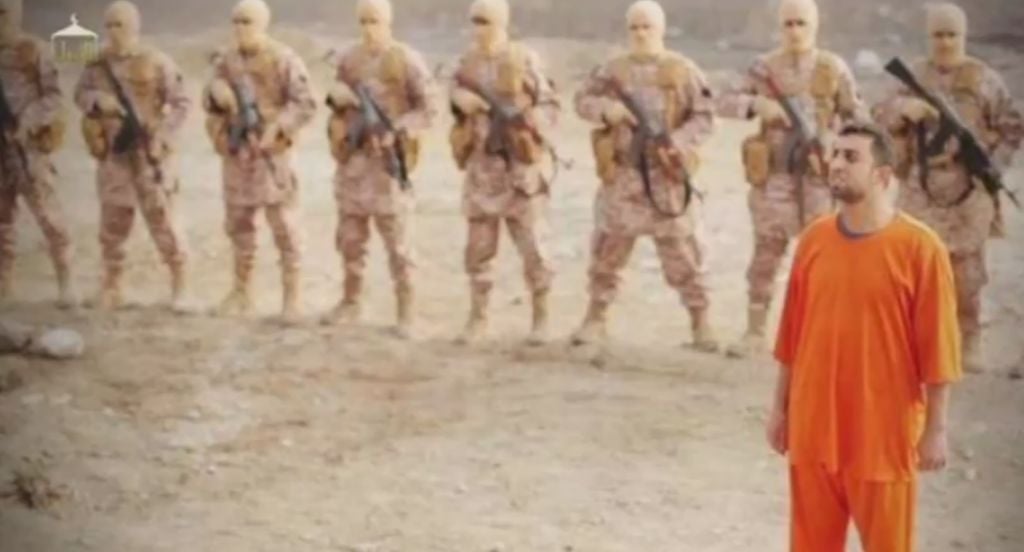
The Islamic State terrorist group released a video Tuesday showing the burning death of captured Jordanian pilot Lt. Moaz al-Kasasbeh.
Stills from a video shared on social media appeared to show Kasasbeh standing in a cage and being surrounded by flames, before being consumed.
The spokesman for the Jordanian armed forces confirmed the death of the “hero pilot” and vowed revenge.
“While the military forces mourn the martyr, they emphasize his blood will not be shed in vain. Our punishment and revenge will be as huge as the loss of the Jordanians,” Mamdouh al-Ameri said in a statement read on Jordanian TV.
At a tribal meeting place where the pilot’s relatives have waited for weeks for word on his fate, chants against Jordan’s King Abdullah II erupted and some family members wept. An uncle shouted in Arabic: “I received a phone call from the chief of staff saying God bless his soul.”
The pilot’s father, Safi, was surrounded by family members.
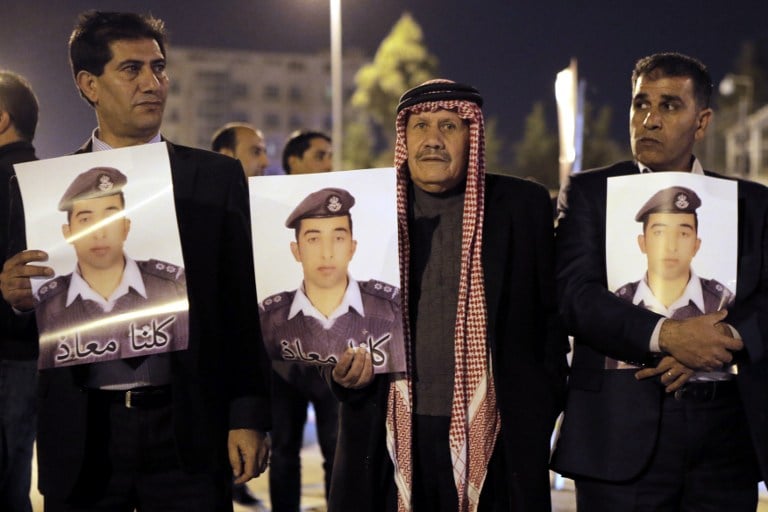
In a brief statement, Jordanian state TV said Kasasbeh was killed on January 3.
The video showing Kasabeh’s death was starkly different from previous Islamic State slayings, which showed the brutal group beheading its victims in the middle of the desert.
The Kasasbeh video appeared to have been shot in a city.
The video was released on militant websites and bore the logo of the extremist group’s al-Furqan media service. The 20-minute-long video featured the slick production and graphics used in previous videos released by the group.
The video included purported images of the pilot showing signs of having been beaten, including a black eye. At the end of the video he is purportedly shown wearing an orange jumpsuit and standing in an outdoor cage. A masked militant lights a line of fuel leading to the cage.
There was no immediate confirmation of the authenticity of the clip.
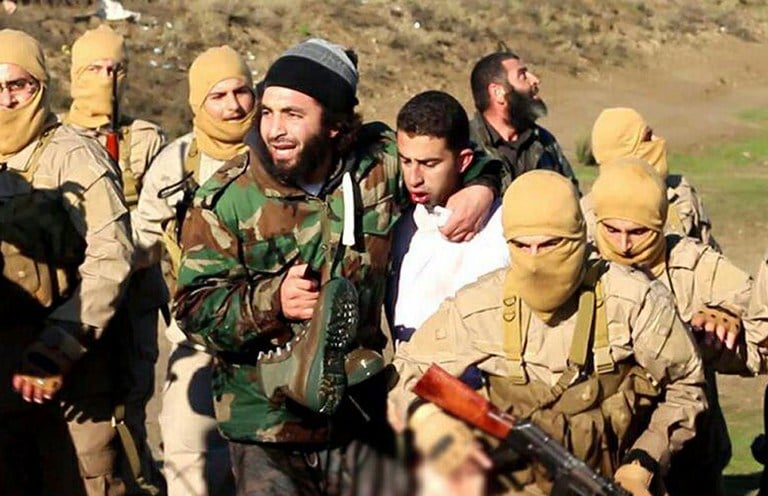
Kasasbeh was seized after his F-16 crashed near the Islamic State group’s de facto capital, Raqqa, Syria, in December. He was the first foreign military pilot the militants have captured since the coalition began its airstrikes in August.
Jordan had been in talks with the Islamic State for Kasasbeh’s release, in return for failed suicide bomber Sajida al-Rishawi.
Jordanian government spokesman Mohammed al-Momani told The Associated Press Monday that they were “still ready to hand over” prisoner Rishawi in exchange for the pilot.
Rishawi faces death by hanging in Jordan for her role in a 2005 hotel attack that killed 60 people. She has close family ties to the Iraq branch of al-Qaeda, a precursor of the Islamic State group.
Last Wednesday, the pilot’s father met with Jordan’s king who he said assured him that “everything will be fine.”
The talks had apparently snagged after the Islamic State refused to hand over proof Kasasbeh was alive.
Last week, Jordan threatened to execute IS-affiliated prisoners in their custody if the pilot was not released.
The killing comes less than a week after the Islamic State released a video showing the beheading of Japanese journalist Kenji Goto. A week earlier, the group beheaded Japanese aid worker Haruna Yukawa.
Both killings drew worldwide condemnation.

King Abdullah II said he would return to Jordan early from a diplomatic trip to the US after the video was released.
He has faced growing domestic pressure to bring the pilot home. However, meeting the Islamic State’s demand for the release of a would-be hotel bomber linked to al-Qaeda would have run counter to the kingdom’s hard-line approach to the extremists.
The release of al-Rishawi, the al-Qaeda-linked prisoner, would also have been a propaganda coup for the Islamic State fighters, who have already overrun large parts of neighboring Syria and Iraq.
Jordan is part of a US-led military alliance that has carried out airstrikes against Islamic State targets in Syria and Iraq in recent months.
The killing took place as Secretary of State John Kerry and Jordanian Foreign Minister Nasser Judeh signed an agreement in Washington that will see American aid to Jordan rise from $660 million to $1 billion per year between 2015 to 2017.
The money is subject to congressional approval. It is intended to help Jordan deal with a massive influx of refugees from Syria, support its security and energy needs as well as promote social, political and economic reform.
Participation in the alliance is unpopular in Jordan, and the capture of the pilot has only exacerbated such sentiments, analysts said.
The pilot’s family has been vocal in its criticism of the government.
The Islamic State group broke with al-Qaeda’s central leadership in 2013 and has clashed with its Syrian branch, but it reveres the global terror network’s former Iraqi affiliate, which battled US forces and claimed the 2005 Amman attack.
Times of Israel staff and AP contributed to this report.




The Times of Israel Community.