

Israel and US to forge $200m tech hub for AI and quantum science development
Initiative eyes partnerships with UAE, Saudi Arabia, Qatar and Kuwait for a regional alliance to counter the Iran-China-Russia axis
 Add ToI as a Preferred Source on Google
Sharon Wrobel is a tech reporter for The Times of Israel

Israel and the US are advancing a strategic initiative to create a joint science center for artificial intelligence and quantum innovation at an investment of $200 million. The center will serve as a hub to promote technology-driven cooperation and diplomacy with Gulf countries in the realms of AI and quantum science and challenge China in the global race for supremacy of next-generation technologies.
The initiative led by Maj. Gen. (res.) Tamir Hayman, the director of Israel’s Institute for National Security Studies (INSS), and Dr. Smadar Itzkovich, founder and CEO of AI & Quantum Sovereignty Lab (AIQ-Lab), is expected to be implemented either through a presidential executive order signed by US President Donald Trump or a legislative process.
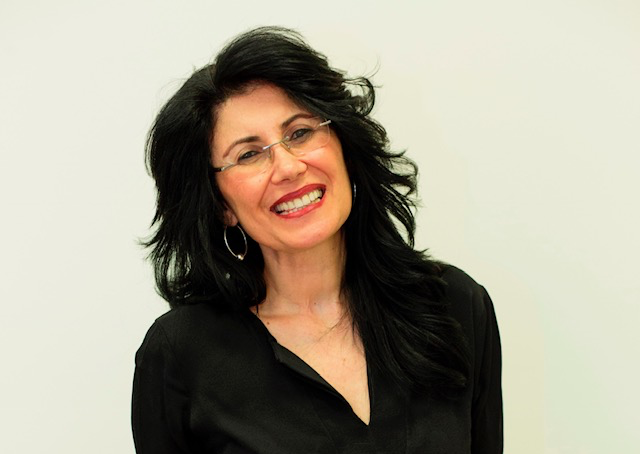
“This is a strategic initiative that aims to reshape the Middle East through US-Israel scientific and technological collaboration in AI and quantum,” Itzkovich told The Times of Israel. “Israel is a powerhouse for physics and quantum technology, and by using our advantage, we can translate it to unbelievable achievements for economic growth and prosperity and for stability and security to create regional sovereignty in the areas of AI and quantum science.”
As part of the proposed initiative for the science center, each nation will contribute $20 million annually, starting in 2026 and through 2030, to support research and development projects at dual headquarters in Tel Aviv and Arlington, Virginia. The technology collaboration will focus on shared, urgent regional challenges, including cybersecurity, medicine and genetics, and water and food security in arid environments.
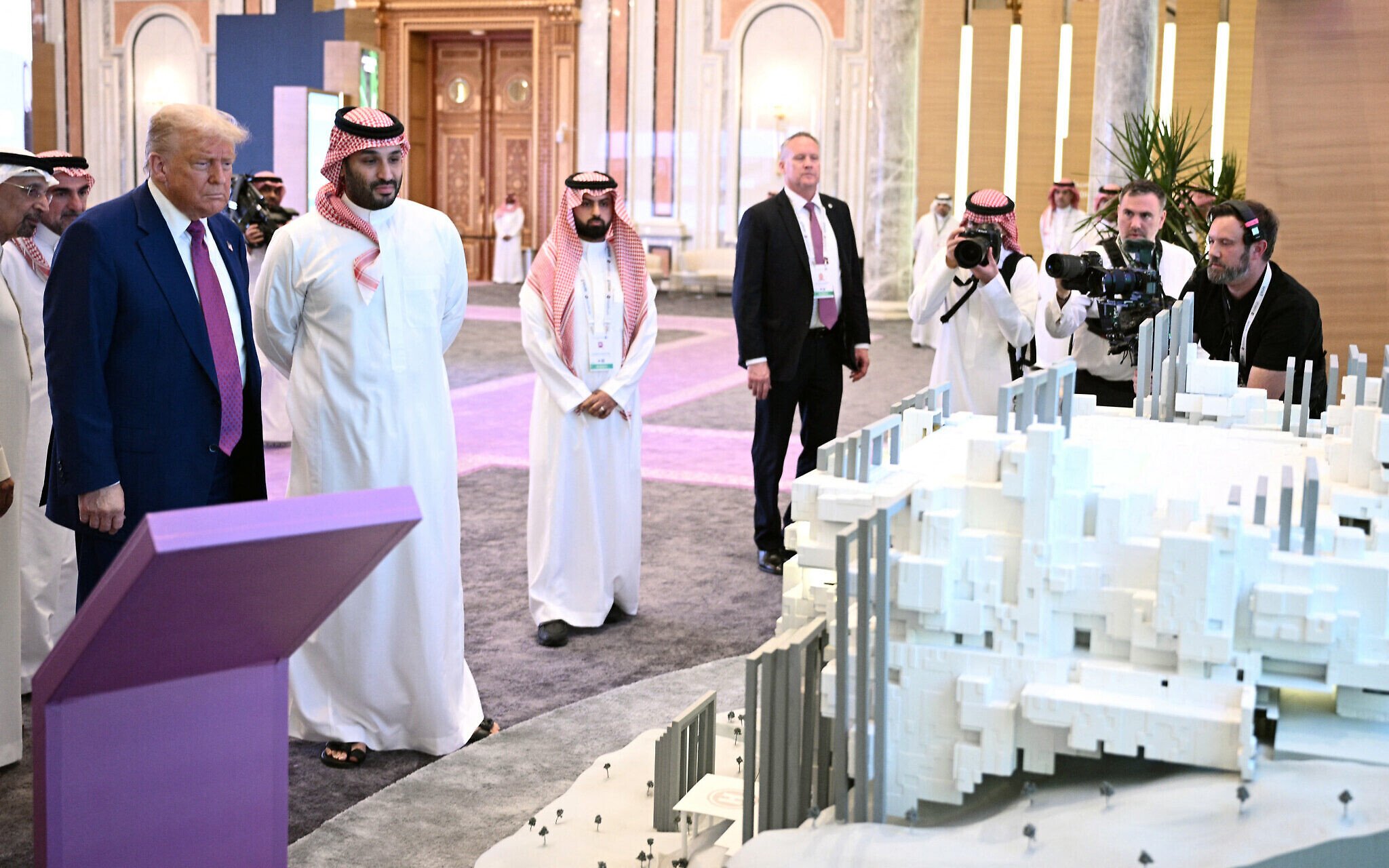
The initiative comes at a pivotal point, as concern has been growing that Israel could be missing out on a regional boom of investments into the next wave of technologies. In May, Trump and United Arab Emirates President Mohamed bin Zayed Al Nahyan announced the joint launch of the largest AI campus outside the US. Meanwhile, Saudi Arabia aims to become a global center for AI and reportedly has plans to create a $40 billion fund to invest in AI.
“This ambition is not merely economic,” said Itzkovitch. “Arab or Gulf countries want to revive the golden age of Arab science and establish the region as a global knowledge hub.”
Israel lacks both the strategy and the massive investments that allow countries like the UAE and Saudi Arabia to make huge leaps forward in the realms of AI and quantum computing. The small Middle Eastern nation has the talent and innovation, but is lacking the much-needed investment in infrastructure, including computing power and chips, which could put the country at a disadvantage as other countries, including its neighbors, are pushing ahead in the global technological arms race.
“We propose a clear roadmap for AI and quantum diplomacy starting with the US partnership and later expanding to include the core Abraham Accords partner countries, as well as Central Asian nations such as Azerbaijan, Kazakhstan and Uzbekistan, and subsequently integrating Gulf countries such as Saudi Arabia, Qatar and Kuwait,” said Itzkovich. “The center holds immense geopolitical potential, and it will serve as a strategic counterweight to the Iran-China-Russia axis and provide a foundation for expanding the Abraham Accords.”
The Abraham Accords, signed in 2020 and mediated by the US, are bilateral agreements for Israel’s normalization of ties with the UAE, Bahrain and Morocco. Last month’s 12-day war against Iran that ended with a ceasefire has led to hopes of a new dawn of cooperation in the region, and possibly wider peace deals with Israel’s neighbors.
“Iran’s strategy is to kill us, and encircle Israel with a ring of fire, fostering terror and instability through its proxies in Iraq, Syria, and Yemen,” said Itzkovich. “We managed to break this ring in the recent war, but they are already trying to reinvent themselves and are using AI to prepare for the next war.”
Itzkovich noted that the synergy of the US-Israel science center will also promote national and regional security, as many of these advanced AI and quantum technologies are dual-use — defining future military, economic and intelligence powers, and science breakthroughs.
“Instead of Iran creating a ring of fire around Israel, we propose to jointly forge a ring of wisdom and science around Iran: a regional alliance founded on knowledge, innovation and mutual security,” Itzkovich remarked.
Quantum computing harnesses quantum mechanics and abstract physics to perform numerous calculations at once to rapidly solve problems that are too complex for the most powerful classical computers to handle. Quantum computers process exponentially more data compared to classic computers, using quantum bits, or qubits, the basic unit of quantum information, to help lead breakthroughs in the areas of economics, technology, security, engineering and science, in fields such as drug discovery, cryptography, financial modeling and supply-chain logistics.
More than 20 countries worldwide have launched national quantum initiatives, led by China and the US, with multi-billion-dollar investments in research, infrastructure, and talent development, according to recent data collated by Earth & Beyond Ventures and Deloitte Catalyst.
“China is quickly closing gaps in AI and quantum software and hardware,” according to Itzkovich. “The US must advance international partnerships like the US-Israel AI and quantum center to maintain AI and quantum supremacy.”
Tech giants such as Amazon, Google, IBM and Intel are investing vast resources into developing commercially viable quantum computers, engaging across the entire technology stack. The growing intensity of global competition underscores how central quantum computing is becoming to the future of innovation, security and economic leadership.
Israel is home to nine quantum computing startups that have raised about $650 million in capital, developing everything from software systems to full quantum processors. Among the startups are Classiq and Quantum Machines.
Israel also has a thriving private-sector AI scene, with some 2,300 AI-related startups that have garnered some $15 billion in private investment in the past decade, according to data compiled by the nonprofit Startup Nation Central and the Israel Innovation Authority.
The nation is host to more than 30 global semiconductor R&D centers, including that of Nvidia, the US-based behemoth maker of the graphics processing units (GPUS) widely used for the computation-intensive tasks required by AI.
Shoshanna Solomon contributed to this report.




The Times of Israel Community.